Editor's Review
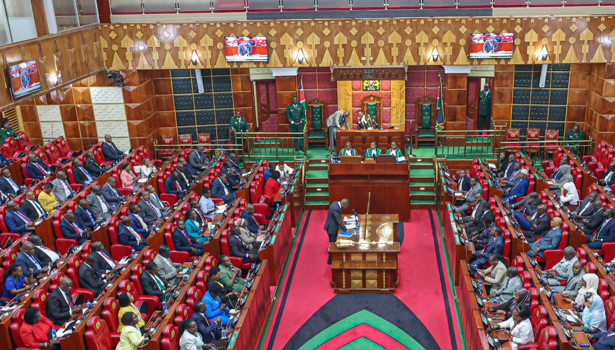
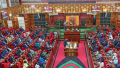
The National Assembly has approved the Air Passenger Service Charge (Amendment) Bill, 2026, setting the stage for revenue collected from air travellers to be directed more strategically towards aviation and tourism sectors.
The National Assembly has approved the Air Passenger Service Charge (Amendment) Bill, 2026, setting the stage for revenue collected from air travellers to be directed more strategically towards the aviation and tourism sectors.
In an update on Thursday, August 27, Parliament said the legislation, sponsored by the Leader of the Majority, amends the Air Passenger Service Charge Act and was subjected to consideration by the Committee of the Whole House before lawmakers approved it.
A key focus of the Bill is to improve how money collected through the passenger service charge is administered and utilised.
The proposed framework is intended to ensure the revenue plays a more direct role in improving aviation safety while also supporting initiatives aimed at growing tourism.
Under the new measures, institutions charged with overseeing aviation safety could receive stronger financial support for programmes designed to improve the safety and efficiency of air transport operations.
Read More
The move is expected to benefit passengers, airlines and other aviation stakeholders by contributing to a stronger safety system and increasing public and industry confidence in Kenya’s air transport network.
The legislation also seeks to strengthen the tourism sector by supporting the air connectivity and promotional activities that are important to attracting visitors to Kenya.
Better support for tourism could help the country remain competitive in the international tourism market while creating opportunities for businesses and communities that rely on the sector.
In addition, the Bill aims to make the administration of passenger service charge revenues more transparent and clearly defined.

Elsewhere, Democratic Party of Kenya (DPK) Party Leader Justin Muturi called on Members of Parliament to push for the immediate tabling of the Election Amendment Bill, 2024, which has remained under consideration in Parliament for 17 months.
In a statement on Wednesday, August 26, Muturi said the prolonged delay was unacceptable, arguing that the Bill arose from the National Dialogue Committee (NADCO), a bipartisan process that followed extensive public participation and was intended to address key electoral and governance concerns.
"This is a personal plea to Members of Parliament to demand the immediate tabling of the Election Amendment Bill, 2024, on the floor of the House.
"It must not be forgotten that the National Dialogue Committee (NADCO) emerged from a highly acrimonious political process and a bipartisan, multilaterally supported initiative that involved wide public participation," the statement read.
Muturi questioned why legislation arising from the dialogue process had remained in a parliamentary committee for such an extended period.
He warned that the continued delay could raise questions beyond ordinary legislative procedures.
"Its recommendations therefore carry a national obligation. How can a Bill arising from such a process remain in committee for 17 months? At what point does prolonged inaction cease to be ordinary legislative delay and become a glaring question of sabotage?" he posed
Muturi said Parliament now has the responsibility to ensure that the Bill is considered before the Independent Electoral and Boundaries Commission (IEBC) awards its technology tender.
He argued that the necessary legal safeguards should be established before major technological and vendor commitments are made for the 2027 General Election.
"The immediate responsibility now lies with Parliament. Members should demand that Speaker Moses Wetang’ula facilitate the Bill’s consideration before the IEBC technology tender is awarded. The law should establish the necessary safeguards before major technological and vendor commitments are made for the 2027 election," the statement noted.
 (1)-1791450846-md.jpg)
-1791444589-md.jpg)

 (1)-1791450846-sm.jpg)
-1791444589-sm.jpg)