
Editor's Review
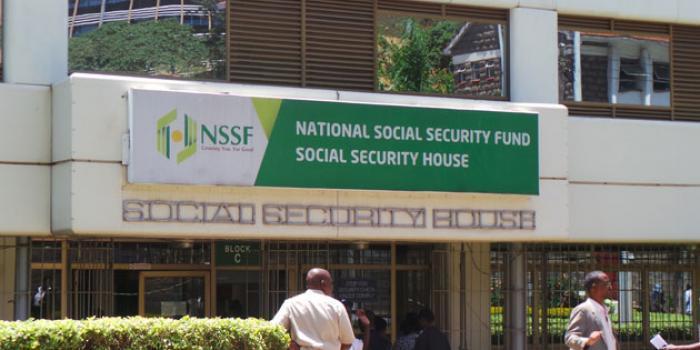
The National Social Security Fund (NSSF) has outlined how members who are permanently relocating from Kenya to countries outside the East African Community (EAC) can apply for the Emigration Benefit.
The National Social Security Fund (NSSF) has outlined how members who are permanently relocating from Kenya to countries outside the East African Community (EAC) can apply for the Emigration Benefit.
In an update on Wednesday, September 9, NSSF said the benefit is available to eligible NSSF members who intend to leave Kenya permanently and have no plans to return.
"If you’re planning to permanently move from Kenya to a country outside the East African Community (EAC) with no intention of returning, you may be eligible to claim your NSSF Emigration Benefit," the notice read.
To apply for the Emigration Benefit, NSSF requires members to visit their nearest NSSF office and present the necessary documentation to support their application.
Applicants are required to provide their NSSF membership card as proof of membership. They must also present a National ID card, valid passport or Alien ID card.
Read More
NSSF also requires a certified copy of the applicant’s retirement letter, certificate of service or termination letter as evidence of their employment status.
Applicants must further provide evidence of the country they are migrating to through a visa for a destination outside the EAC.
Kenyan citizens applying for the benefit are required to provide a sworn affidavit declaring their permanent immigration.
Applicants must also provide their bank details to facilitate payment through Electronic Funds Transfer (EFT).
For non-citizens, NSSF requires a travelling ticket as part of the application documents.

This comes months after the Kenya Revenue Authority (KRA) released a guide to help families navigate the process of deregistering a Personal Identification Number (PIN) after the death of a loved one.
In an update on Monday, April 27, KRA noted that losing a loved one is one of life’s most difficult experiences, and handling tax-related obligations during grief can feel overwhelming.
The authority said the guide is designed to make the process as gentle and straightforward as possible for affected families.
"During this time of grief, administrative tasks may feel overwhelming. At KRA, we want to make the process of handling your loved one's tax affairs as gentle and straightforward as possible. This guide is here to support you," KRA said.
KRA explained that when a person passes away, their PIN must be formally deregistered as part of closing their tax affairs.
This step ensures that the deceased’s tax records are properly updated and no further obligations are attached to their account.
According to KRA, the deregistration process can be initiated by several parties, depending on the circumstances.
These include a legal representative, the executor of the estate, an administrator appointed by the court, or a family member handling the deceased’s affairs.
To complete the process, applicants are required to provide several documents, including a certified copy of the death certificate and, where applicable, a copy of the deceased’s will.
Other key documents include a grant of probate issued by the High Court or letters of administration, as well as a certificate confirming the grant of administration.
Applicants may also be required to submit a gazette notice listing the appointed administrators, a valid identification document of the legal representative, and proof of registration of the estate, including acquisition of a PIN for the estate where applicable.