
Editor's Review
The Ministry of Interior has unveiled a series of measures aimed at strengthening security and streamlining passenger handling at Jomo Kenyatta International Airport (JKIA).
The Ministry of Interior has unveiled a series of measures aimed at strengthening security and streamlining passenger handling at Jomo Kenyatta International Airport (JKIA).
In a statement on Wednesday, September 9, the ministry said the measures are being rolled out as authorities seek to modernise operations at the airport.
One of the measures is the deployment of the Automatic Terminal Information Service (ATIS), which will support the identification and management of arriving and departing flights, including both domestic and international operations.
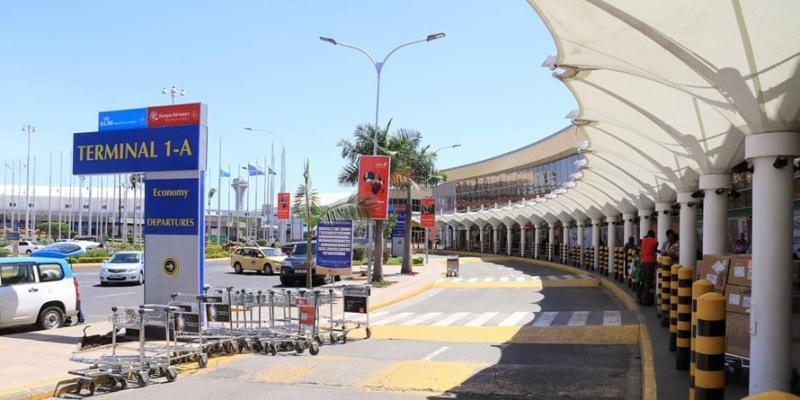
The government is also working to optimise the terminal layout by establishing a centralised system for airline check-in and passenger screening, alongside clearer terminal arrangements for arriving and departing travellers.
The Kenya Airports Authority (KAA) said the modernisation programme further includes the construction of a new terminal, with the contractor already on site.
Read More
The facility is expected to be completed within 54 months and is projected to increase JKIA’s annual capacity by about 10 million passengers.
Meanwhile, during the 69th meeting of the Border Control and Operations Coordination Committee (BCOCC), authorities said work was also progressing on the Advanced Passenger Registration (APR) system.
The system is intended to improve information sharing between agencies and strengthen operational situational awareness.
The data-control facilities linked to the system are expected to become operational within the next month.

According to the ministry, the initiatives are part of the wider Ksh154.2 billion JKIA modernisation programme, which seeks to expand passenger capacity, improve airport operations and reinforce Kenya’s role as a regional aviation hub.
Additionally, KAA has intensified enforcement of baggage-handling requirements at the airport.
Airlines are required to ensure all baggage is correctly identified and handled either as passenger luggage or cargo, depending on its classification.
Travellers heading to Nairobi have been warned against combining their luggage with that belonging to other passengers.
Baggage found to have been attached to another traveller’s luggage will be returned at the owner’s expense.
Cargo, meanwhile, must pass through authorised terminals and follow the prescribed handling procedures.
Airlines that facilitate the movement of cargo outside approved channels risk regulatory measures, including suspension where applicable.
The BCOCC said the directive was intended to address irregular baggage-handling practices by some operators, including the movement of luggage beyond permitted passenger baggage limits.
The committee also cited breaches of aviation safety and baggage-size requirements issued by the International Air Transport Association (IATA), together with carrier-specific carry-on rules contained in a Kenya Civil Aviation Authority (KCAA) Advisory Circular.
Interior Principal Secretary Raymond Omollo, who chairs the BCOCC, called on participating agencies to ensure that resolutions adopted by the committee are implemented fully.
He said decisions made by the committee should result in concrete action rather than remaining as recommendations.
"When we agree on certain things, it is critical that we follow them through. So that it is not just an issue of simply ticking the boxes," Omollo said.
On his part, Immigration Principal Secretary Belio Kipsang underlined the importance of stronger cooperation among agencies operating within the country’s border-control framework.
He called for an intelligence-led and coordinated system in which agencies work collectively towards securing the country without creating unnecessary barriers to legitimate travel and trade.
"We need a relationship between all the agencies. We need a coordinated approach; one that is intelligence-led, walk together, knowing that we have a common focus on ensuring that our country is able to secure itself, while ensuring that we don't compromise on travel and trade," he stated.
JKIA currently handles approximately 8.8 million passengers and more than 358 kilotonnes of cargo each year.