
Editor's Review
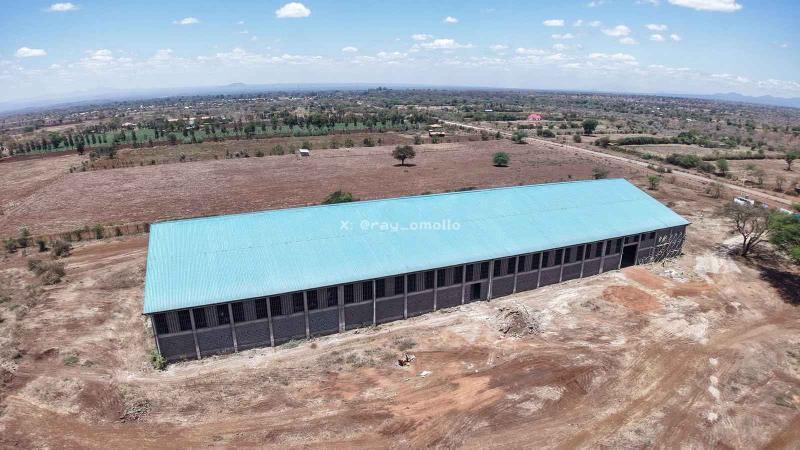
The construction of the Oloitokitok Agro-Processing Factory in Kajiado County has reached 70 percent, with the government expecting the facility to be completed next year.
The construction of the Oloitokitok Agro-Processing Factory in Kajiado County has reached 70 percent, with the government expecting the facility to be completed next year.
In a statement on Tuesday, September 15, Interior Principal Secretary Raymond Omollo said the project is part of President William Ruto’s efforts to increase agricultural productivity.
Omollo said the project was strategically located in the Rombo cluster, an area recognised as Kenya’s largest tomato-producing zone.
"President William Ruto's commitment to raising agricultural productivity through the Agricultural Transformation, a critical pillar of the Bottom-Up Economic Transformation Agenda (BETA), is taking shape in Oloitokitok, where the Oloitoktok Agro-Processing Factory is under active construction," the statement read.

Read More
According to Omollo, the facility is being managed by the Ewaso Ng'iro South Development Authority (ENSDA) and is expected to provide a major boost to tomato farmers in the region.
He said the project had faced delays after construction began in 2020 but was later revived following additional government funding.
"Construction of the factory started in 2020 but later stalled. The Government has since injected additional funding and works are now 70% complete, with completion expected next year," the statement added.

Omollo said the factory is expected to address the large volumes of tomatoes currently lost after harvesting by providing farmers with facilities to process and preserve their produce.
"The factory will tackle persistent post-harvest losses by processing 24,000 metric tonnes of tomatoes annually in its first phase, with capacity ultimately scaling to the region's entire 70,000-tonne annual production," the statement further read.

Omollo said farmers between Rombo and Kimana currently produce approximately 50,000 tonnes of tomatoes annually.
However, about 40 percent of the produce is estimated to be lost, depriving farmers of significant income.
Omollo said the introduction of processing equipment would help reduce wastage while giving farmers a more dependable market for their produce.
"The new processing equipment will help address these losses, while also stabilising tomato prices by providing farmers with a reliable market," the statement noted.

Omollo stated that the facility will produce bulk tomato puree and paste while also providing cold-storage facilities to help farmers preserve their produce before processing or sale.
"It will produce bulk tomato puree and paste, provide cold-storage facilities and offer farmers a reliable market, reducing dependence on exploitative brokers," the statement explained.
Once fully operational, the factory is expected to create up to 200 direct jobs and approximately 3,000 indirect employment opportunities, providing additional economic benefits to residents.
The processing line will also be able to handle mangoes, oranges and other fruits during periods when tomato production is low, allowing the facility to remain productive throughout the year.

To ensure that the factory has a steady supply of raw materials, Omollo said the government is expanding the Rombo Clusters (Kisioki) Irrigation Development Project.
According to the PS, the irrigation project would support thousands of farmers involved in tomato and horticultural production, strengthening the connection between agricultural production and processing.
"The gravity-fed canal system will support more than 30,000 farmers engaged in tomato and horticultural production, strengthening the region's agricultural value chain from farm to market," the statement concluded.

This comes days after Omollo issued an update on the ongoing upgrading of the 66.5-kilometre Illasit-Njukini-Taveta Road.
In a statement on Monday, September 14, he said 28 kilometers of the road have already been paved to bituminous standards, noting that major drainage structures and heavy-duty box culverts have been completed.
"The 66.5-kilometre road, being upgraded by the Kenya National Highways Authority (KeNHA), runs parallel to the border from Illasit Junction to Taveta Junction and is currently under active construction.
"About 28 kilometres have already been paved to bituminous standards, with major drainage structures, heavy-duty box culverts and the Ole Suyianka Bridge completed," he said.
Omollo also said the project was initially scheduled for completion in late 2027; however, intensified works have brought forward the target completion date to December 2026.
He highlighted that the former seasonal gravel track is being transformed into a modern highway with a 7-metre carriageway, 1.5-metre paved shoulders on either side, improved junctions and street lighting at major market centers.
According to Omollo, the road will cut travel time between Illasit and Taveta from more than two hours to about 40-45 minutes once completed.
"Once complete, the road will cut travel time between Illasit and Taveta from more than two hours to about 40–45 minutes, reducing post-harvest losses and giving farmers faster access to markets, including the Oloitoktok Agro-Processing Factory," he added.
Omollo noted that the road project will strengthen trade through the Taveta One-Stop Border Post and improve connectivity between the Amboseli and Tsavo West tourism circuits.
-1779977622-md.jpg)





-1779977622-sm.jpg)