Editor's Review
Young people in Kisii are increasingly turning to agriculture as a business and source of income, creating opportunities for themselves instead of waiting for formal white-collar employment.
Young people in Kisii are increasingly turning to agriculture as a business and source of income, creating opportunities for themselves instead of waiting for formal white-collar employment.
Their ventures range from poultry farming and sugarcane production to specialised grass and tree nurseries, with some of the young entrepreneurs starting with limited resources before receiving additional support through the NYOTA Fund.
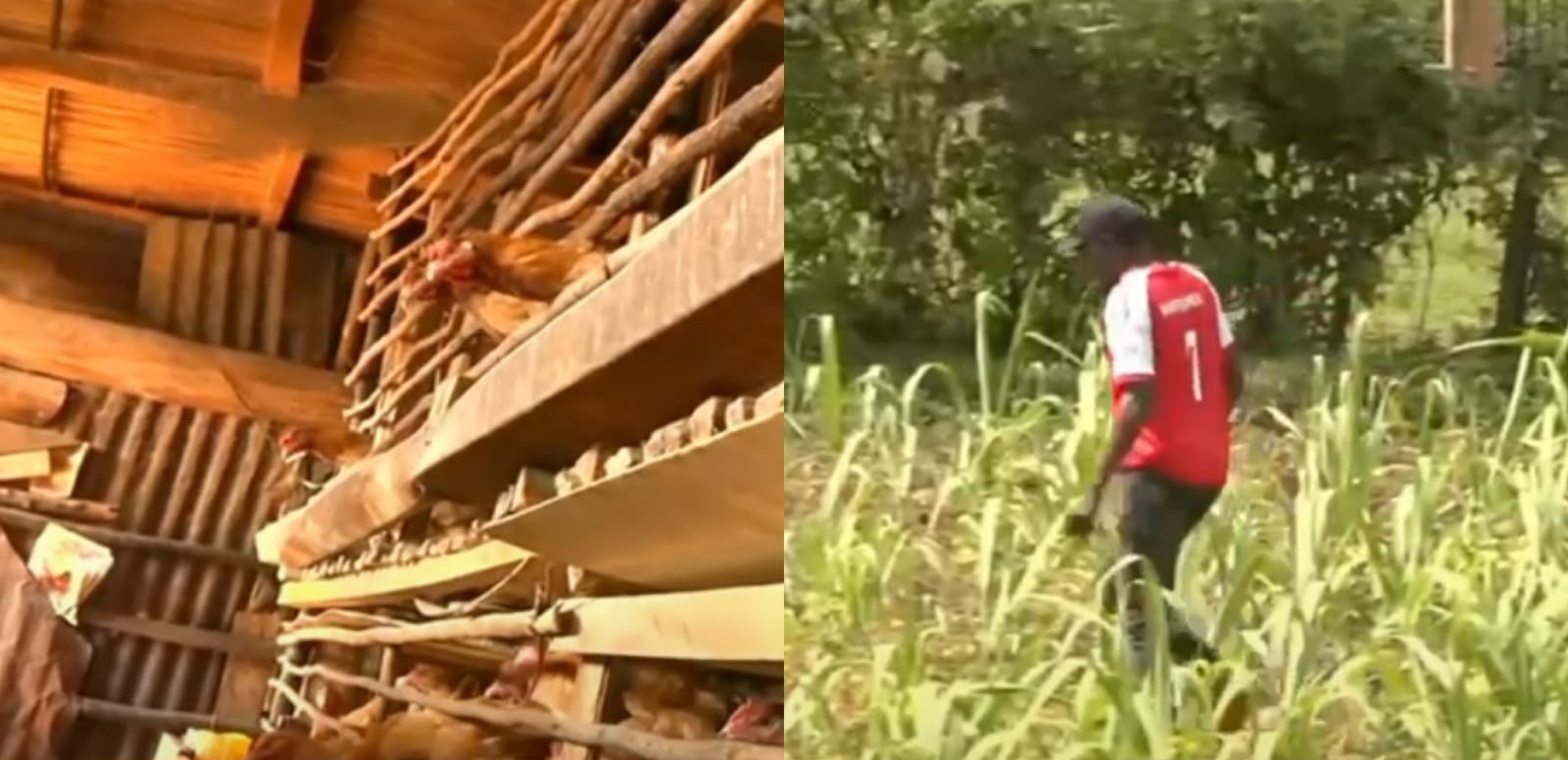
In Getare Village along the Kisii-Nyamira border, 24-year-old Denis Mosioma has built a growing poultry enterprise that began with only 10 chicks.
Denis started the venture in a small three-sheet poultry house with a capacity of about 20 birds.
The business has since expanded to more than 150 chickens, although he says the high cost of feeds has remained one of the major challenges.
Read More
Support from NYOTA provided Denis with the boost he needed to strengthen and expand the enterprise, helping him continue growing the business despite the challenges facing poultry farmers.
His progress has also become an example to other young people in Getare Village, encouraging them to consider poultry farming as a source of income instead of remaining idle or depending on others for financial support.
In Nyaguta Village, Kiogoro in Nyaribari Chache, 27-year-old Michael Moranga is combining university education with commercial farming.
While pursuing a bachelor’s degree in education, Michael is growing sugarcane and specialised grass for commercial purposes.
His farming venture was already taking shape when he received NYOTA support, which helped him view agriculture as a business with room for further growth.
Michael has ambitions of expanding production and accessing larger markets, including Nairobi.
His plans demonstrate how young people pursuing education can also develop agricultural enterprises capable of generating income.
In Kiumbu, Reuben Nyabuto is pursuing a similar path through poultry farming, despite experiencing setbacks along the way.
Disease wiped out nearly 70 of his chicks, dealing a major blow to the venture.
However, Reuben chose to rebuild rather than abandon poultry farming, treating the loss as part of the learning process as he works towards expanding his business.

Daniel Ombongi, an architect by training, has also ventured into agriculture as an additional source of income.
Daniel is growing sugarcane and running a tree nursery, with both ventures expected to start generating returns in the near future.
His decision to combine his professional training with agriculture highlights the growing interest among young people in developing multiple sources of income.
The experiences of Denis, Michael, Reuben and Daniel point to a changing approach to employment among young people in Kisii, with agriculture increasingly being viewed as a business opportunity rather than simply subsistence activity.
Through poultry, crop production and agribusiness, the young entrepreneurs are working to create sustainable incomes, achieve financial independence and eventually create employment opportunities for others.
Elsewhere, the government has disclosed how billions of shillings have been allocated and disbursed to youth programmes over the past four financial years.
The programmes covered in the breakdown were the National Youth Opportunities Towards Advancement (NYOTA), Vijana Vuka Na Afya (VIVA), WHO'Z NEXT, Youth Empowerment Centres (YECs), and President's Award Kenya.
NYOTA received no allocation or disbursement in the 2022/23 and 2023/24 financial years. In 2024/25, the programme was allocated Ksh553.51 million, out of which Ksh279.01 million was disbursed.
The allocation increased to Ksh940.05 million in 2025/26, while the amount disbursed rose to Ksh1.108 billion.
VIVA, another youth-focused programme, received Ksh85.16 million in the 2022/23 financial year, with Ksh104.88 million disbursed.
In 2023/24, the programme had an allocation of Ksh160.84 million and a disbursement of Ksh177.56 million. The allocation increased to Ksh247.50 million in 2024/25, while Ksh186.68 million was disbursed.
For the 2025/26 financial year, VIVA received an allocation of Ksh256 million, with Ksh120.45 million disbursed.
WHO'Z NEXT had no budgetary allocation or disbursement during the 2022/23, 2023/24 and 2024/25 financial years.
The programme was allocated Ksh10 million in 2025/26, with the full Ksh10 million reported as disbursed.
The government also provided funding for Youth Empowerment Centres across the four financial years.
In 2022/23, YECs received an allocation of Ksh50 million, of which Ksh32 million was disbursed. The allocation fell to Ksh30 million in 2023/24, with Ksh12 million disbursed.
In 2024/25, the programme was allocated Ksh19.42 million, with the entire amount disbursed. The allocation increased to Ksh45 million in 2025/26, although Ksh11.90 million had been disbursed.
President's Award Kenya recorded equal allocations and disbursements throughout the four financial years.
The programme received Ksh20 million in both allocation and disbursement in 2022/23, with the same Ksh20 million allocated and disbursed in 2023/24.
In 2024/25, the allocation and disbursement increased to Ksh38.8 million, while in 2025/26, both figures stood at Ksh35.02 million.

-1769418151.png)