Editor's Review
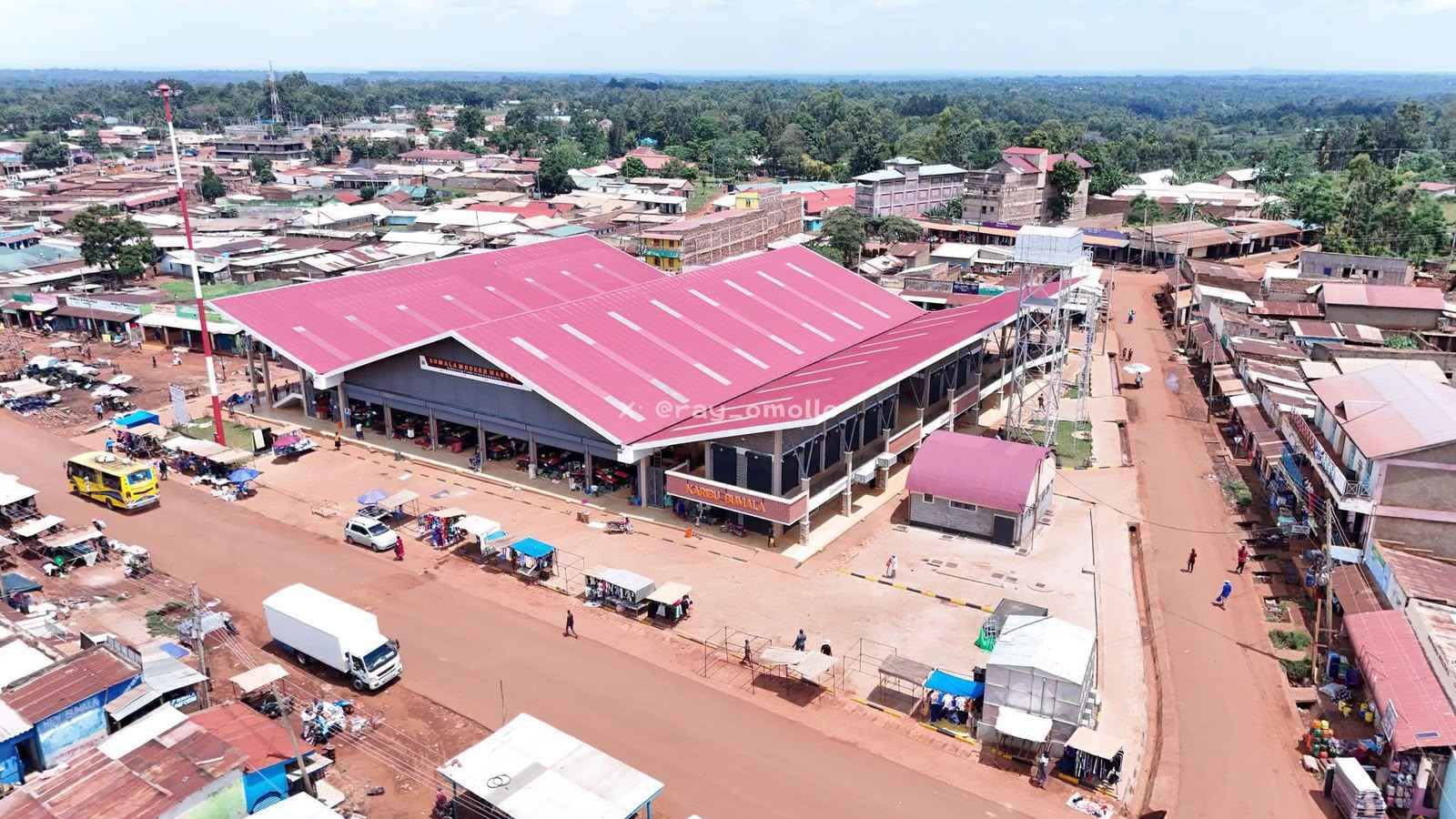
The completed Bumala Modern Market in Busia County is expanding opportunities for traders while strengthening the local economy.
The completed Bumala Modern Market in Busia County is expanding opportunities for traders while strengthening the local economy.
In an update on Monday, September 28, Interior Principal Secretary Raymond Omollo said the market is among investments under the Economic Stimulus Programme (ESP), providing traders with a modern space designed to support both daily commerce and busy market days.
He said the practical impact of such investments can be seen in communities where traders have gained better working environments and improved opportunities to earn a living.
"Whatever differing views may exist about the Economic Stimulus Programme (ESP), its practical impact is visible in communities where modern markets are giving traders better places to work and earn a living," he wrote.

Read More
Omollo said the Bumala facility has been equipped with several amenities intended to improve the experience of traders and customers while supporting different aspects of business operations.
The market provides cold storage facilities, a SACCO office, ICT hub, crèche, first aid room, food court and meeting spaces, giving traders access to services within the same facility.

Omollo said the amenities have improved key aspects of trading, including hygiene, convenience and access to financial and digital services.
"These amenities have improved hygiene, convenience, business efficiency and access to financial and digital services," he added.

Beyond providing trading spaces, the market has also created opportunities for businesses and workers involved in activities supporting commerce around the facility.
Omollo said the operational market is contributing to economic activity in sectors including transport, logistics and small enterprises, creating opportunities beyond the traders operating inside the market.
"The now operational market has generated opportunities in trade, transport, logistics and small enterprise," he further said.

Elsewhere, the Busia ATC Estate affordable housing project is taking shape as the Government advances the construction of more than 2,000 housing units under the Boma Yangu Affordable Housing Programme.
In a statement on Sunday, September 27, Omollo said the project is being implemented in two phases on a 10.5-acre site and will provide homes for social, affordable and market-rate homebuyers, while also supporting economic activity in Busia Town.
"The Affordable Housing Program (AHP) remains one of the Government's strategic interventions for creating sustainable jobs and expanding economic opportunities for thousands of Kenyans, particularly the youth," he said.
Omollo said the ongoing development demonstrates the Government's focus on linking affordable housing with broader economic opportunities for communities hosting the projects.
"This commitment is evident in the ongoing Busia ATC Estate development under the Boma Yangu Affordable Housing Programme, a transformative project that is reshaping the urban appearance of Busia Town while stimulating economic activity across the region," he added.
Phase I of the project is currently 25 percent complete and consists of 11 residential blocks containing 1,025 housing units.
Phase II has reached 18 percent completion and will provide an additional 1,026 units once completed, bringing the total number of units across the two phases to more than 2,000.
The development is expected to widen access to decent housing for residents while supporting the construction industry and associated businesses within the region.
Omollo noted that the economic impact of the project extends beyond the construction site, with local workers, artisans and businesses participating in the supply and delivery of various components.
"The project is creating jobs and business opportunities throughout the construction value chain. Local youth and women have secured employment on-site, while Jua Kali artisans are supplying key components, ensuring that the economic benefits of the project are felt across the community," he concluded.
 (1)-1790588005.jpg)