Editor's Review
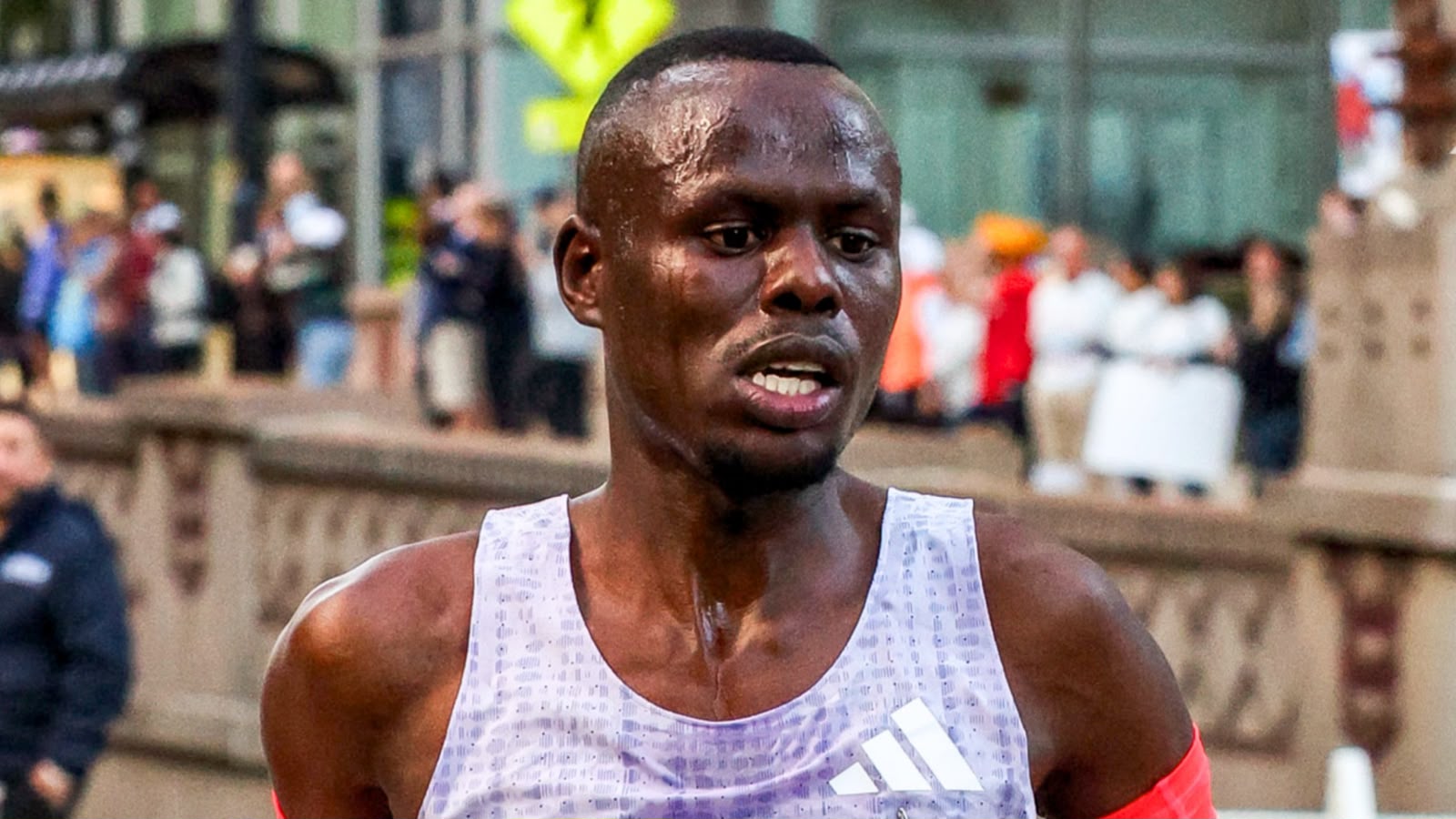
Kenyan marathoner Philemon Kiplimo Kimaiyo has been handed a two-year ban after admitting to anti-doping rule violations following an adverse analytical finding for Chlortalidone.
Kenyan marathoner Philemon Kiplimo Kimaiyo has been handed a two-year ban after admitting to anti-doping rule violations following an adverse analytical finding for Chlortalidone.
In a statement on Monday, September 28, the Athletics Integrity Unit (AIU) said the case stems from an out-of-competition urine sample provided by the athlete on July 19, 2026 in Mwaita, Kenya, during testing conducted under the Testing Authority of World Athletics and the AIU.
The sample initially recorded a specific gravity (SG) of 1.002, below the 1.003 level required for a sample to be suitable for analysis under the World Anti-Doping Agency (WADA) International Standard for Testing and Investigations (ISTI).
"Therefore, in accordance with Annex F of the ISTI, the Athlete was requested to provide further Samples and, following the collection of three (3) further Samples which also returned an SG below 1.003, the Athlete provided a subsequent (fifth) Sample with a Suitable Specific Gravity for Analysis, which was given code 1780921," the statement read.
According to the AIU, on July 29, 2026, the WADA-accredited laboratory in Paris, France, reported an adverse analytical finding in the sample after detecting Chlortalidone.
Read More
"Chlortalidone is a Prohibited Substance under the WADA 2026 Prohibited List under the category S5. Diuretics and Masking Agent It is a Specified Substance prohibited at all times," the statement added.
The AIU subsequently reviewed the finding under Article 5 of the International Standard for Results Management (ISRM).
It established that the athlete did not have a Therapeutic Use Exemption (TUE) for Chlortalidone and found no apparent departure from the ISTI or the International Standard for Laboratories (ISL) that could reasonably have caused the adverse analytical finding.
The athlete was interviewed by AIU representatives on August 25, 2026, when he was formally notified of the adverse analytical finding and informed that it could result in anti-doping rule violations.
"Therefore, on 25 August 2026, the Athlete attended an interview with AIU representatives, during which he was notified of the Adverse Analytical Finding in accordance with Article 5.12.1 ISRM, including that it may result in Anti-Doping Rule Violations pursuant to Rule 2.1 and/or Rule 2.2 ADR (the "Interview")," the statement further read.
During the interview, the athlete received a Notice of Allegation of Anti-Doping Rules Violations and was informed of his rights, including the right to request further analysis.
He also provided an explanation for the presence of the prohibited substance.

The athlete told the AIU that he did not know what Chlortalidone was and said that about a week before the test, he had taken painkillers belonging to his wife to treat pain experienced after long runs.
He said he could not recall the name or appearance of the medication.
"He confirmed that he took no other medications that week, save for vitamins and dietary supplements which he was unable to identify, and undertook to provide photographs of the relevant packaging," the statement noted.
On September 1, 2026, the athlete signed an Admission of Anti-Doping Rule Violations and Acceptance Consequences Form, confirming that he admitted the violations and accepted the consequences outlined in the notice issued during the 25 August interview.
The AIU said it had no evidence that the violations were intentional and consequently imposed the mandatory two-year period of ineligibility.
The sanction takes effect from September 1, 2026, while all the athlete's results obtained since July 19, 2026 have been disqualified.
The disqualification includes the forfeiture of titles, awards, medals, points, prizes, and appearance money arising from those results.
"The Athlete has accepted the above Consequences for his Anti-Doping Rule Violations and has expressly waived his right to have those Consequences determined by the Disciplinary Tribunal at a hearing," the statement explained.
The AIU said the decision remains subject to appeal to the Court of Arbitration for Sport (CAS) in Lausanne, Switzerland.
If either WADA or ADAK files an appeal, the athlete will also be entitled to exercise his right of cross-appeal.
This comes months after Kenyan-born runner Jonah Koech, who represents the United States in track and field, was handed a three-year ban after accepting an anti-doping rule violation.
In a statement on Monday, August 10, the United States Anti-Doping Agency (USADA) said the 29-year-old athlete, who is based in Colorado Springs, was found to have returned highly unusual blood values in his Athlete Biological Passport (ABP).
"This case is proof that the Athlete Biological Passport can both deter and detect doping. To ensure a fair playing field, every anti-doping organization needs this tool and the resources to use it effectively," USADA CEO Travis Tygart said.
According to USADA, the case was triggered by blood samples taken from Koech on July 30 and August 8, 2025.
The samples were collected immediately before and after he won the 1500-meter race at the 2025 USA Track & Field Outdoor Championships.
An expert panel unanimously determined that the blood profile shown in the samples was consistent with blood doping.
USADA subsequently collected additional samples from Koech to provide further information for his Athlete Biological Passport.
The expanded blood profile was later reviewed by the ABP expert panel, which reported an Adverse Passport Finding to USADA in February 2026.
Koech accepted a three-year period of ineligibility for the use of a prohibited substance or method that resulted in the Adverse Passport Finding.