Editor's Review
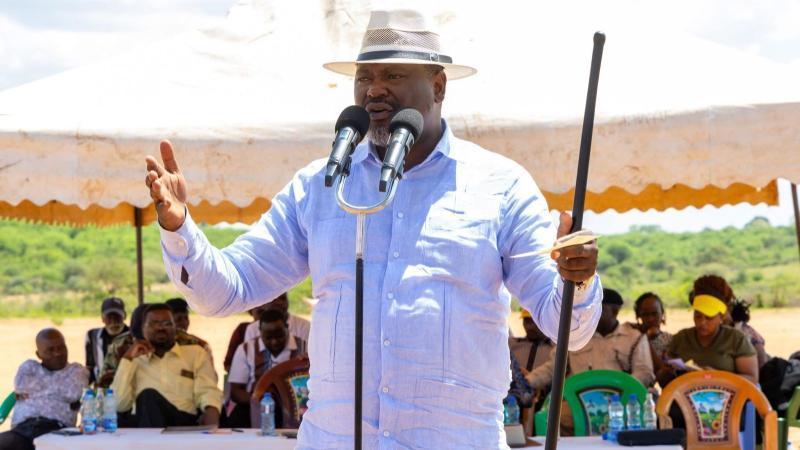
The National Cohesion and Integration Commission (NCIC) has determined that Public Service Cabinet Secretary Geoffrey Ruku's remarks at Kiang’ondu in Tharaka Nithi County were divisive.
The National Cohesion and Integration Commission (NCIC) has determined that Public Service Cabinet Secretary Geoffrey Ruku's remarks at Kiang’ondu in Tharaka Nithi County were divisive.
In a statement on Wednesday, October 7, NCIC said the remarks undermined equal dignity and fell below the restraint and responsibility expected of a Cabinet Secretary.
“The Commission finds that Hon. Geoffrey Kiringa Ruku’s remarks at Kiang’ondu, Tharaka Nithi County, in July 2026 crossed from legitimate advocacy for identity and equitable development into divisive ethnic generalization and collective blame.
“The remarks undermined equal dignity and harmonious relations and fell below the restraint and responsibility expected of a Cabinet Secretary,” read the statement in part.
NCIC issued a cessation notice to the Public Service CS, directing him to stop repeating, publishing, endorsing, or encouraging the impugned collective ethnic allegations.
Read More

“The Commission has issued an immediate cessation notice, set out a remedial conciliation process, and directed an ethnic and diversity audit of national public establishments,” NCIC stated.
CS Ruku was directed to publicly withdraw, in both Kiswahili and English, allegations that Kikuyu people regard Kenya as their property or are collectively responsible for inequitable development and public appointments within seven days.
NCIC also directed Ruku to affirm the equal citizenship, dignity, and freedom of political choice of all communities while recognizing their right to preserve their distinct identities.
The commission further directed the Public Service CS to participate in discussions on verified disparities and appropriate institutional remedies and develop and plan a peace caravan in collaboration with the commission as a non-partisan initiative involving communities from Mt Kenya East and West.
CS Ruku is also required to organize and fund a restorative peacebuilding and social cohesion activity.
NCIC warned Ruku that it will take lawful action against him if the conciliation is unsuccessful or the agreed measures are materially unimplemented.
CS Ruku was on September 1 grilled by the commission over the inflammatory remarks.
In a statement, Ruku said he honored the summons as part of his responsibility as a public official and out of respect for the Constitution and constitutional bodies.
He explained that his appearance before the commission was intended to provide clarification regarding the remarks in question.
"In fulfillment of my patriotic duty and respect for our Constitution and constitutional bodies, today I appeared before NCIC to clarify my remarks that were alleged to be inflammatory," he said.
Ruku defended his remarks on the political and development history of Mt. Kenya East, arguing that the region had experienced marginalization for decades despite consistently supporting leaders from Mt. Kenya West.
"It is a fact Mt. Kenya East has been marginalised for six decades while supporting Mt. Kenya West leaders. It is also a fact that Mt. Kenya East has faithfully and unconditionally supported Mt. Kenya West’s presidency bids," he added.
Ruku, however, stressed that the grievances raised by Mt. Kenya East did not amount to a rejection of the Constitution, saying the region and its leaders continued to recognise their constitutional rights to peacefully raise concerns.
"Nevertheless, Mt. Kenya East, its people, and leaders respect Kenya’s constitution and freedoms to assemble and present grievances and petitions peaceably," he further said.
Ruku further rejected any suggestion that the region's demands had threatened national peace or cohesion, maintaining that calls for development and recognition were legitimate grievances arising from what he described as decades of being denied their due.
"We have not breached peace or cohesion in the country by demanding respect and what we are owed as development for the past decades," he concluded.