Editor's Review
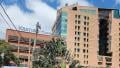
Health Cabinet Secretary Aden Duale has inspected the 133-bed Ebola isolation facility at Nairobi Hospital following the confirmation of an imported Ebola case.
Health Cabinet Secretary Aden Duale has inspected the 133-bed Ebola isolation facility at Nairobi Hospital following the confirmation of an imported Ebola case.
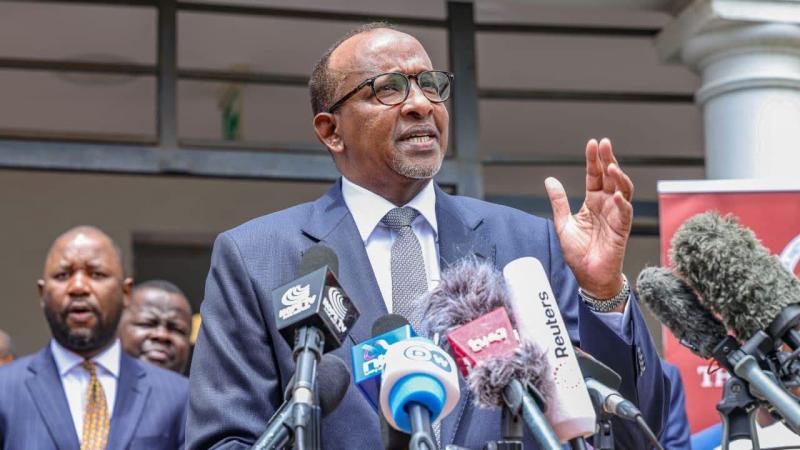
In a statement on Wednesday, October 7, Duale said the government was closely monitoring the situation while assuring Kenyans that the country was not experiencing an Ebola outbreak.
"Undertook a health inspection tour of the 133-bed Ebola Isolation Unit at Nairobi Hospital following confirmation of one imported case of Ebola Virus Disease (EVD) from the Democratic Republic of Congo (DRC), which unfortunately resulted in death on 6 October 2026," he wrote.

Duale said the patient's movements were traceable, enabling health authorities to identify people who may have come into contact with the deceased.
Read More
"I reassured the public that Kenya does not have an Ebola outbreak. We are dealing with one confirmed imported case whose journey from the DRC through Uganda to Kenya was traceable, allowing health authorities to identify and follow up with people who may have come into contact with the deceased," he added.
According to Duale, health authorities had initially identified 55 contacts linked to the case before two additional people were identified, bringing the total number of contacts being followed up to 57.
"We initially identified 55 contacts, with two additional contacts bringing the total to 57. Ten have so far been traced and quarantined at the National Police Service Hospital in Nairobi, while efforts to locate the remaining contacts continue," he further said.

The government has also designated five health facilities to handle suspected or confirmed Ebola cases as part of measures to strengthen the country's preparedness and response capacity.
"We have designated five facilities for the isolation and treatment of suspected or confirmed cases: Kenyatta National Hospital, Moi Teaching and Referral Hospital, National Police Service Hospital, Port Reitz Hospital and Nairobi Hospital, whose isolation facility has 133 beds, including 45 HDU and ICU beds. This capacity can be expanded if necessary," Duale noted.
Duale said preparedness measures had also been intensified at Kenya's border points, particularly those receiving travellers from countries in and around the affected region.
"Preparedness has also been strengthened at our borders, with temporary isolation centres identified at Malaba and Kocholia, while Alupe is undergoing renovation. Traveller screening has been intensified at Gate 16, particularly for passengers arriving from countries in and around the affected region. All travellers are required to complete health declaration forms truthfully to support surveillance and contact tracing," the statement read.

Follow the inspection, Duale said he was satisfied with the measures put in place to prevent possible transmission of the virus to other patients and staff at the facility.
"At Nairobi Hospital, I was reassured by the strict separation between the infectious disease isolation unit and the main hospital campus. The facility has clearly designated zones and protocols to prevent contact between EVD patients and other patients," he stated.
Duale urged Kenyans to remain alert and seek medical attention promptly if they develop symptoms or believe they may have been exposed to Ebola, while cautioning against panic and misinformation.
"I urge Kenyans to remain vigilant without panic. Anyone experiencing symptoms or concerned about possible exposure should seek care promptly at a recognised health facility. The public should rely on official Ministry of Health platforms for accurate information and use the toll-free 719 health information line for guidance," he said.

Duale said Kenya had the expertise, personnel, laboratory facilities and infrastructure required to respond to suspected or confirmed Ebola cases.
"We have the technical expertise, trained personnel, laboratory capacity and infrastructure required to detect, isolate and manage suspected cases. Our focus remains on early detection, rapid diagnosis, timely isolation, appropriate treatment and effective contact tracing as we continue strengthening preparedness and working with regional and international partners," he concluded.
Meanwhile, the World Health Organization (WHO) has urged countries against imposing travel or trade restrictions on Kenya, the Democratic Republic of Congo (DRC) and Uganda following the confirmation of an imported Ebola case in Kenya.
In a statement on Tuesday, October 6, WHO Director-General Tedros Ghebreyesus said the organisation was working with the governments of the three countries to strengthen measures aimed at identifying possible contacts and preventing further transmission of the virus.
"WHO is supporting the governments of Kenya, the DRC, and Uganda in contact tracing, surveillance, screening, and other response measures to rapidly identify potential cases and prevent further spread of the virus," he wrote.
Tedros said the WHO was monitoring the situation and assessing measures being taken by countries in response to the outbreak.
"WHO advises against any restriction of travel to, or trade with, the affected countries based on the currently available information. We continue to closely monitor and, where necessary, verify travel and trade measures in relation to this epidemic," he added.