
Editor's Review
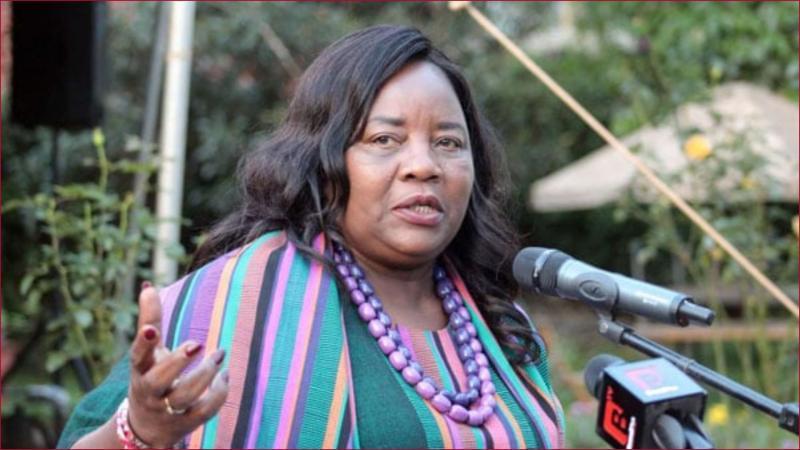
Mama Ida Odinga has opened up about how she received the news of her husband, former Prime Minister Raila Odinga’s death.
Kenya's Ambassador and Permanent Representative to the United Nations Environment Programme (UNEP) Ida Odinga has opened up about how she received the news of her husband, former Prime Minister Raila Odinga’s death.
In an interview on Wednesday, October 14, Ida revealed that she first tried reaching her sister-in-law, Kisumu Woman Rep Ruth Odinga, but was unable to get through.
She then called her daughter, EALA MP Winnie Odinga, who was with Raila at the time he collapsed while taking a walk.
"I could not get Ruth, so I called Winnie, who was also there, and Winnie told me he was taking a walk and he collapsed, but they are trying to resuscitate him," she said.
Ida explained that Winnie initially informed her that medical personnel were attempting to revive Raila and that he was being taken to the intensive care unit (ICU).
Read More
However, the situation took a tragic turn shortly afterwards when Winnie called again with the devastating news.
"She said they were taking him to ICU, and they were trying to resuscitate him, but I’ll keep you informed. 10 minutes later, Winnie calls me and tells me, we’ve lost the battle. She said Dad is gone, and that is how I received the news. It was not easy," she added.
Ida also spoke about the difficulty of adjusting to life without her husband, revealing that she still struggles to accept his death.
"It has not been very easy; it has been difficult. Personally, I don’t believe he is gone. When he was here, he would stay and come home late. Every time I go home, I keep on hoping that he is going to come back, and you wait and wait until late hours, then you realize that he is not coming," she further said.

Ida further disclosed that Raila had travelled to India for what she understood to be a routine medical check-up, maintaining that she would have accompanied him had she known the gravity of his condition.
"When Raila left for India, he was just going for check-up. There was nothing serious. Had it been that serious, I would have gone with him. I wouldn’t have let him go alone," she stated.
Ida also reflected on the limited time the family had to mourn Raila immediately after his death, explaining that his wishes concerning his burial arrangements required him to be laid to rest within 72 hours.
According to Ida, the anniversary of his passing provides an opportunity for the family and those who knew him to grieve and remember him in their own way.
"When Baba passed on, we had very little time to mourn him because in his will, he had asked to be interred within 72hrs. This anniversary gives us, as a family, and the many people who associated with him, an opportunity to mourn him in our own way," she said.
This comes days after President William Ruto attributed his distribution of national development projects to Raila.
Speaking on Wednesday, October 7, he explained that Raila challenged his government to ensure equitable and inclusive transformation across the country.
Ruto intimated that Baba believed that no person and no region should be left behind; not because of where they live, their tribe or how they voted.
"Raila stated that the government must do this, not to be popular or win the next election, but because it is the right thing to do. I accept that challenge. I will carry it and promise to keep it alive.
"That is why our programmes reach every corner of our republic. Equity is not tokenism; it is justice," he stated.
Ruto recounted that the departed former Prime Minister had planned to open up neglected regions of the country through development.
He committed to ensuring that dream came alive by launching development projects in marginalised areas such as Western and North Eastern Kenya.
Ruto noted that the dualling of the Ritoni-Mau Summit Highway and the SGR extension from Naivasha to Kisumu through Malaba would open up Western Kenya for more opportunities.
He added that his knowledge of Kenyan roads by heart was inspired by the late Odinga, who made a habit of understanding the country's road networks.
"If there is one thing that I learnt from Jakom, it is to remember places. He had a fantastic memory of where the roads lead. He knew a road is not just tarmac but a gateway to the community," he added.
-1792041733-md.jpg)


-1792041733-sm.jpg)