Editor's Review
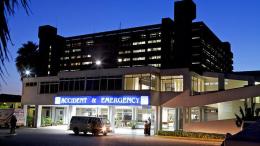
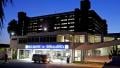
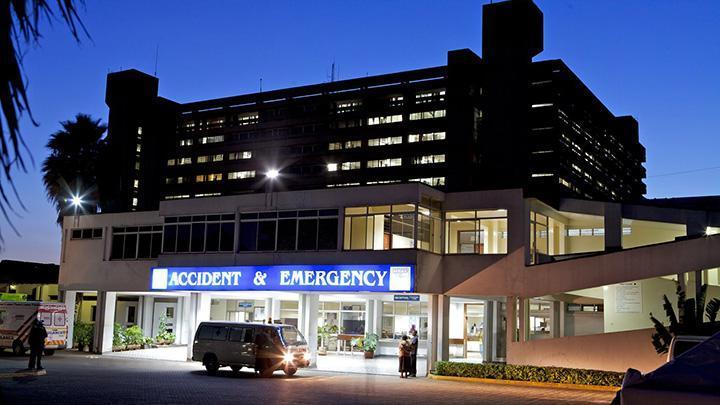
Kenyatta National Hospital (KNH) has achieved a major medical milestone after successfully conducting Africa’s first-ever tubeless tracheal reconstruction.
Kenyatta National Hospital (KNH) has achieved a major medical milestone after successfully conducting Africa’s first-ever tubeless tracheal reconstruction.
In a statement on Friday, October 16, the hospital said the five-hour operation was performed on September 24 at the hospital’s Prime Care Centre on 26-year-old Dennis Kaiser Omondi, who had struggled with breathing difficulties for nearly two decades.
According to KNH, Omondi’s medical condition dates back to 2008, when he was diagnosed with a benign adenoma, a non-cancerous growth in the windpipe.
Further medical examinations revealed that his trachea had narrowed, restricting airflow, and that he had developed an abnormal opening connecting the windpipe to the skin of his neck.
The complications affected his ability to breathe comfortably, his voice and his ability to carry out routine activities.
Read More
During the surgery, the medical team adopted a tubeless technique that left the surgical area free of a conventional breathing tube.
The method also enabled the use of a bronchoscope, a small camera inserted into the airway, to identify the diseased section accurately and guide its removal while preserving healthy tissue.
The procedure required detailed preparation and close collaboration between the surgical and anaesthesia teams to maintain adequate oxygen levels and protect the patient throughout the operation.
KNH said Omondi continued breathing naturally during the surgery.
The surgeons removed the narrowed sections of the windpipe, repaired the abnormal opening known as a fistula, and joined the healthy ends of the trachea to re-establish an open airway.
According to the hospital, the approach has several benefits, including reducing damage to the delicate inner lining of the windpipe, supporting faster healing, simplifying the operation and significantly shortening the time spent in surgery.
Dr Joseph Mutie, a Consultant Cardiothoracic and Vascular Surgeon, said the technique represented a significant advancement in the management of complex airway conditions.
"This technique, the first in Africa, gives surgeons a clearer view of the affected windpipe, helping them work more precisely when treating complex airway conditions. It is an important step forward in the treatment of these conditions in Kenya," he said.

Omondi reported improvements in his health following the procedure, saying he could now breathe more comfortably and had resumed his normal routine.
"I have noticed an improvement in my voice, and I have resumed my daily activities, including running my retail shop in Kisumu. I can now climb a flight of stairs with greater ease, which is a significant improvement after years of breathing difficulties," he stated.
This comes weeks after the Defence Forces Memorial Hospital (DFMH) recorded a major medical milestone after conducting its first-ever red blood cell exchange procedure.
In a statement on Monday, October 5, the Kenya Defence Forces (KDF) said the procedure was performed at the hospital’s Renal Unit on Friday, October 2, using the newly acquired Spectra Optia® apheresis system.
According to the Force, the procedure involved a 15-year-old female patient living with sickle cell disease.
KDF said the successful procedure marked an important development in the hospital’s provision of specialised, technology-enabled medical care.
"Defence Forces Memorial Hospital (DFMH) has achieved a major medical milestone after successfully conducting its first red blood cell exchange using the newly acquired Spectra Optia® apheresis system," the statement read.
According to KDF, the red blood cell exchange was made possible through the hospital’s new apheresis capability, which allows clinicians to process blood selectively and carry out specialised therapeutic procedures.
Apheresis is an advanced blood-processing procedure that separates specific components of a patient’s blood while returning the remaining components to the body.
The technology can therefore be used to tailor treatment to particular medical conditions.
In a red blood cell exchange, abnormal or sickled red blood cells are removed from a patient’s circulation and replaced with compatible donor red blood cells.
The procedure reduces the proportion of sickled cells in the bloodstream and can form part of specialised management for patients with sickle cell disease.
KDF said the successful procedure would broaden DFMH’s ability to manage complex blood disorders and deliver specialised interventions to eligible patients.
"Its successful completion marks an important expansion of DFMH’s capacity to manage complex blood disorders through specialised and technology-enabled care," the statement added.
KDF said the acquisition of the Spectra Optia® system is also expected to support the hospital’s ability to undertake additional therapeutic apheresis procedures and strengthen advanced transfusion services.