Editor's Review
The Ministry of Health has confirmed a third case of Ebola, involving a 65-year-old woman who is a close relative of the first and second patients.
The Ministry of Health has confirmed a third case of Ebola, involving a 65-year-old woman who is a close relative of the first and second patients.
In a statement on Saturday, October 17, the Ministry said the woman was identified as a primary contact and had been in quarantine since October 6, 2026.
She developed symptoms, including fever, a sore throat and malaise, prompting her isolation and the collection of specimens for laboratory testing.
"The Ministry of Health confirms a third case of Ebola (Bundibugyo Virus Disease). The patient, a 65-year-old woman, is a primary contact and a close relative of the first and second cases," the statement read.
The Ministry confirmed that the patient tested positive for Ebola at both the National Virology Reference Laboratory and the Kenya Medical Research Institute (KEMRI) laboratory.
Read More
She was subsequently transferred to the Infectious Disease Unit (IDU), where she is receiving supportive care from trained health workers.
Health officials said placing the patient in quarantine before she developed symptoms had enabled early detection and treatment, improving her chances of recovery while reducing the risk of further transmission.
The Ministry noted that quarantine measures had also helped protect other family members and the general public from possible exposure, lowering the likelihood of community transmission.
Providing an update on the second patient, the Ministry said the individual remained stable and was responding positively to treatment, adding that further information would be shared as the patients' conditions progressed.
"The second patient remains in stable condition and is responding well to supportive care. The Ministry will share updates on progress of all reported cases," the statement added.
The Ministry also sought to reassure Kenyans that the risk of infection remained low, noting that there was no evidence of community transmission.
It reported that the majority of identified contacts had been traced and placed in quarantine as part of efforts to break the chain of transmission.
"The Ministry wishes to reassure the general public that the risk remains low as there is no evidence of community transmission of the disease. Out of the 130 contacts listed, 127 (97.7%) have been traced and are in quarantine. This is above the global benchmark of 85% required to break the chain of transmission," the statement further read.
Authorities are continuing efforts to locate the three remaining contacts, while health officials have cautioned that additional cases could emerge among people already in quarantine before their monitoring period ends.

The Ministry said any new infections detected among the quarantined contacts would be identified and managed promptly to minimise the possibility of further spread.
"Efforts are ongoing to trace and quarantine the three (3) remaining contacts. In addition, cases among quarantined contacts are possible until their monitoring ends; if they occur, they will be detected and treated just as quickly," the statement noted.
As part of the response, the Ministry has distributed personal protective equipment (PPE), infection prevention and control (IPC) commodities, and public health screening equipment to all 28 high-risk counties and points of entry.
The additional supplies are intended to strengthen preparedness and protect health workers handling suspected and confirmed cases, as well as personnel involved in screening travellers at ports of entry.
"These additional supplies will further strengthen infection prevention and control measures at the quarantine centre, health facilities and points of entry ensuring every health worker is fully protected," the statement added.
The Ministry has also introduced enhanced screening requirements for travellers arriving from 10 high-risk countries.
Travellers from the designated countries will be required to complete a digital surveillance form before boarding their aircraft at the point of departure and present the resulting QR code to port health officers upon arrival in Kenya.
The Ministry confirmed that aircraft arriving from the affected countries were undergoing enhanced public health screening at Kenya's international airports, with hundreds of thousands of travellers screened since the outbreak began.
"All aircraft arriving from these countries are being subjected to enhanced public health screening at Kenya International Airports. Cumulatively, by 15th October 2026 the Ministry has screened 685,027 since the outbreak began in May 2026," the statement concluded.
This comes a week after the US Embassy in Nairobi issued a health alert to American citizens living in Kenya following the confirmation of the first Ebola virus case in the country.
In the alert on Wednesday, October 7, the embassy informed US citizens that the Ebola virus is a severe and often fatal disease.
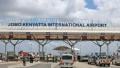
"The government of Kenya reported a case of Bundibugyo virus disease on October 6. Health officials are conducting contact tracing of the patient. According to the Kenyan Ministry of Health, the individual traveled by land from the Democratic Republic of the Congo to Uganda, with onward travel to Jomo Kenyatta International Airport (JKIA) via Jambojet flight 8523 on October 3, 2026.
"Ebola is a rare, severe, and often fatal hemorrhagic fever illness," the alert read in part.
The US Embassy urged Americans to alert their healthcare provider if they experience Ebola symptoms.
"If at risk for Ebola, alert your healthcare provider if you are experiencing symptoms consistent with Ebola to receive guidance prior to presenting for care," the Embassy said.
The Embassy also advised American nationals to continue taking malaria prophylaxis as recommended by their doctors, noting that symptoms of malaria can resemble those of Ebola and may lead to preventable health concerns.
"Continue to take malaria prophylaxis as recommended by your doctor. Symptoms of malaria can mimic symptoms of Ebola, leading to preventable health scares," said the embassy.
The US citizens were advised to monitor their health for 21 days following travel to an area experiencing an Ebola outbreak.
"Monitor your health for 21 days following travel to an area experiencing an Ebola outbreak," the alert added.