Editor's Review
The United States has announced sanctions against Rwanda’s Ministry of Defense and Zigama Credit and Savings Society over their alleged support for the M23 armed group.
The United States has announced sanctions against Rwanda’s Ministry of Defense and Zigama Credit and Savings Society over their alleged support for the March 23 Movement (M23) armed group operating in the eastern Democratic Republic of the Congo (DRC).
In a statement on Wednesday, October 28, the US Department of State accused Rwanda’s military of supporting M23 through troop deployments, weapons supplies and training.
Join our WhatsApp Channel for the latest news updates.
"The United States is sanctioning Rwanda’s Ministry of Defense and Zigama Credit and Savings Society, a financial institution that serves Rwanda’s security services, for supporting the March 23 Movement (M23) armed group in the eastern Democratic Republic of the Congo (DRC)," the statement read.
The US government further accused Rwandan forces of fighting alongside M23 in North and South Kivu provinces, where the armed group has been involved in the conflict with Congolese government forces.
Read More
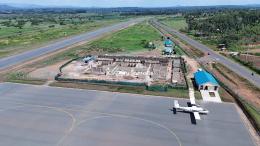
The State Department said the alleged military support included the provision of weapons and training, as well as the deployment of equipment that could pose risks to civilian aviation.
"Thousands of Rwanda Defense Force troops fight alongside M23 in North and South Kivu provinces and have supplied the group with weapons and training. Rwandan troops have also brought in surface-to-air missiles and jamming equipment that endanger civilian aviation," the statement added.
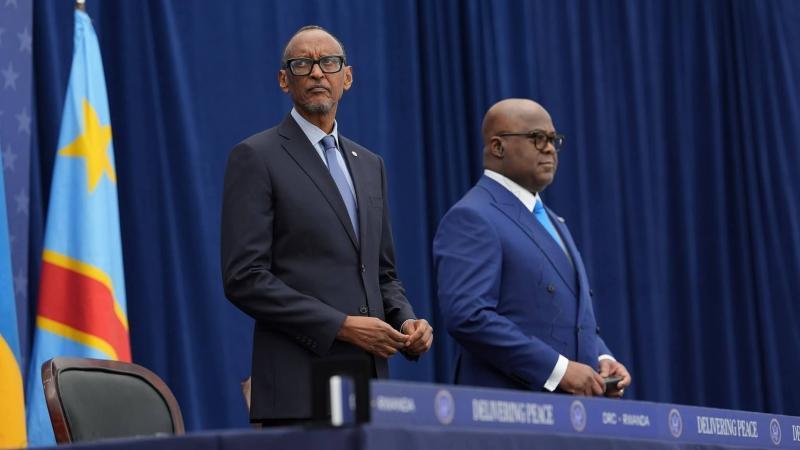
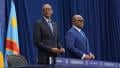
The sanctions come amid renewed US pressure on Rwanda to honour commitments made under the Washington Accords for Peace and Prosperity, signed on December 4, 2025, when President Donald Trump brought together the leaders of the DRC and Rwanda.

Under the agreement, both governments committed to ending the conflict and expanding trade and investment across Africa’s Great Lakes region.
However, Washington said Rwanda’s alleged support for M23 violated its obligations under the agreement and undermined its objectives of achieving peace and prosperity in the region.
The US government called on Rwanda to end its backing of the armed group and withdraw its troops from eastern DRC, while warning against the exploitation of the country’s natural resources by armed groups and their state sponsors.
"Rwanda must stop supporting M23 and any successor armed groups and withdraw its forces from eastern DRC. Moreover, armed groups and their state sponsors must not profit from the DRC’s natural resources," the statement further read.
The State Department also raised concerns over conditions in mining areas controlled by M23, particularly gold and coltan-producing regions in North Kivu, including Rubaya.
According to the US government, civilians in these areas face forced labour, hazardous working conditions and illegal taxation, raising concerns about the links between the conflict and the exploitation of mineral resources.
Washington urged its international partners and private-sector companies to scrutinise their supply chains to ensure they do not benefit from minerals linked to conflict-related abuses.
"The United States calls on all actors to respect the DRC’s sovereignty and territorial integrity and will use every available tool to hold accountable those who prolong this conflict," the statement concluded.
This comes a week after Foreign Affairs Principal Secretary Korir Sing’Oei responded to the United States government's decision to raise its travel advisory for Kenya to Level 3.
Speaking on Wednesday, October 21, the PS said the US is within its rights to advise its citizens on travel decisions, describing the Ebola virus as a sensitive matter that warrants caution.
"The United States is duty-bound to advise its citizens with respect to decisions that it deems important. This issue around Ebola is a sensitive matter, and it is important for them to advise their citizens," he said.
Sing'Oei also clarified that the upgrading of the travel advisory to level 3 does not amount to a travel ban against Kenya.
"As you can see, Kenya has been put in category 3, which is more cautionary, and there are no implications with respect to barring travelers coming from Kenya associated with that advisory," he added.
Sing'Oei also mentioned that Kenya and the US have been working closely on the Ebola issue.
"We have been working closely with the United States over the last almost six months," he added.

 (1)-1793259019-md.jpg)


 (1)-1793259019-sm.jpg)