Editor's Review
County askaris and police officers have been accused of exploiting small-scale traders and boda boda riders through persistent harassment, threats of arrest and demands for bribes.
County askaris and police officers have been accused of exploiting small-scale traders and boda boda riders through persistent harassment, threats of arrest and demands for bribes.
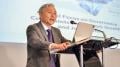
In its Kenya Economic Update report released on Wednesday, November 4, 2026, the World Bank identified boda boda riders and informal market traders, commonly known as mama mbogas, as among the groups most affected by bribery and harassment from traffic police and county authorities.
Join our WhatsApp Channel for the latest news updates.
It noted that informal workers accounted for 83.8 per cent of Kenya's workforce, with boda boda riders estimated to number between 1.6 million and 2 million across the country.
The report explained that these workers already faced challenges such as unstable incomes, limited access to capital, intense competition and regulatory requirements, including driver's licences, motorcycle registration and daily market fees.
Read More
It stated that corruption further worsened their financial situation by reducing the money they took home after a day's work.
"Governance constraints contribute to the challenges of informal workers, most importantly by lowering 'post-corruption' earnings, and increasing uncertainty. Informal workers face demands for bribes from frontline institutions such as traffic police, inspection services, and municipal agencies," the report stated.
The World Bank estimated that boda boda riders spent between 5 and 20 per cent of their daily earnings on bribes, translating to approximately Ksh50 to Ksh100 daily, alongside occasional larger demands.
The report noted that the payments came on top of other expenses, including fuel, motorcycle import taxes, county charges and Savings and Credit Cooperative Organisation (SACCO) fees.
On earnings, the World Bank estimated that boda boda riders made approximately Ksh1,100 daily, depending on their location and operating costs, while informal market vendors earned between Ksh300 and Ksh1,500 in average daily net income.
The report also highlighted complaints from traders in Dagoretti Market, Nairobi, who accused county askaris of repeatedly harassing small-scale businesses and demanding payments beyond the amounts officially required.
In one social media complaint documented in the report, a trader questioned the failure of elected leaders to protect small businesses from exploitation.
"The county askaris are constantly harassing small traders in Dagoretti Market. The total amount of money mama mbogas (fresh produce vendors) are forced to pay to askaris per year is more than what they are required to pay. What has our MP done to protect these hustlers from exploitation and create a conducive environment for them to thrive?" the trader complained.
Another vegetable vendor described how local authorities allegedly threatened to close down businesses or impose fines when traders failed to meet weekly payment demands.
"I face constant harassment from local authorities. The city council collects money weekly, and if I don't have it, they threaten to shut down my stall or fine me. It's exhausting, and it puts a massive strain on my finances. I often have to borrow just to cover the bribes and still manage to feed my family and pay business rent," the vendor stated.

The World Bank explained that the enforcement powers granted to police officers and city inspectors created opportunities for bribery, as officers could use threats of arrest, fines and impoundment to extract money from informal workers.
It noted that police officers had leverage over boda boda riders and other motorists because they could threaten to report criminal offences or impound their vehicles.
For county inspectors, the report cited the Nairobi City Inspectorate Act (2017), which allowed inspection officers to arrest individuals without a warrant for violating county laws, including trading without a licence, operating in restricted areas or obstructing streets.
The report observed that threats of arrest under these enforcement powers could be used to demand bribes.
It also noted that Nairobi county officials had defended inspections on safety grounds and had called for the arrest of individuals seeking to record inspection and arrest activities.
Beyond the complaints documented on social media, the World Bank cited survey findings showing that police harassment and bribery were widespread among informal workers.
A survey conducted in Kisumu County involving 296 informal workers found that boda boda riders accounted for 25.3 per cent of respondents, while general traders represented 21.6 per cent.
Among the boda boda riders surveyed, 46.8 per cent reported experiencing police harassment, mainly through threats of arrest and fines.
The report found that most of those who faced such threats ended up paying bribes to avoid further police action.
"When faced with such threats, an overwhelming majority (78.7 percent) paid bribes to avoid further police action. Informal traders faced harassment less frequently, but when it happens, most resort to paying bribes to avoid further police action," the report stated.
The World Bank further cited Transparency International's bribery index, which showed that 48 per cent of self-employed Kenyans paid bribes in the 2025 survey round.
It also observed that the likelihood of paying a bribe after coming into contact with public institutions was particularly high in Kenya, with only Uganda recording a higher likelihood among the countries compared.
The report further established that corruption disproportionately affected poorer Kenyans, who were more likely to pay bribes to police officers than wealthier individuals.
Meanwhile, World Bank has revised its 2026 economic growth forecast for Kenya by 0.3 percentage points owing to stronger economic performance in the first half of the year.
According to the report, the expected Gross Domestic Product (GDP) for 2026 was put at 4.6%, up from the 4.3% that was forecast in its July 2026 update.
Stronger growth in industry and services offset a slowdown in agricultural activity, helping the economy record a better performance than previously anticipated.
"Agricultural growth slowed to 4.2 per cent in H1 2026 from 4.7 per cent in H1 2025 (year-on-year), reflecting below-average short rains that weighed on crop production," read the report in part.
"By contrast, industrial growth accelerated to 4.9 per cent from 4.3 per cent, supported by stronger construction activity (+6.3 per cent from +5.9 per cent), particularly in cement and galvanised sheet industries and improved manufacturing performance (+3.3 per cent from +2.1 per cent), driven by food and beverages production and vehicle assembly."
Despite the improved outlook for 2026, the lender projects growth to decline slightly in 2027.
The report projects Kenya's economy to expand by 4.4% in 2027. Notably, the country will be headed to the polls next year, and the report notes that political uncertainty poses a risk to the economy.
Specifically, risks of violence during and after the election period could impact investor confidence and the private sector in general.
"Election-related uncertainty, including the risk of violence and post-election disruptions, could weaken investor confidence, delay private investment decisions, reduce private and foreign investment inflows, disrupt tourism and trade, and weigh on economic growth," read the report in part.
"Prolonged political contestation could slow progress in addressing Kenya's underlying structural challenges."
 (1)-1793777157-md.jpg)


-1793771398-md.jpg)

 (1)-1793777157-sm.jpg)