
Editor's Review
IEBC has moved to clarify its plans for livestreaming and the role of the National Tallying Centre ahead of the 2027 General Election.
The Independent Electoral and Boundaries Commission (IEBC) has moved to clarify its plans for livestreaming and the role of the National Tallying Centre ahead of the 2027 General Election.
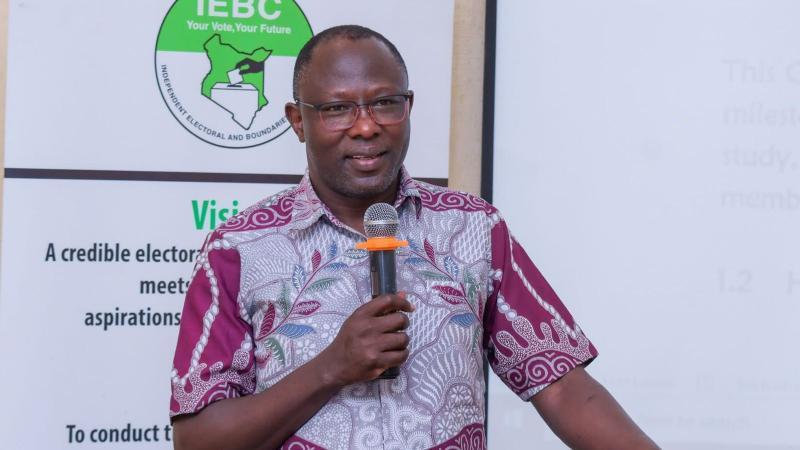
Speaking during a consultative breakfast meeting with political reporters on Tuesday, November 24, IEBC Chairperson Erastus Ethekon maintained that results declared at polling stations would remain final and that journalists would have access to constituency tallying centres.
Join our WhatsApp Channel for the latest news updates.
Ethekon sought to dispel concerns that the national tallying process could be used to interfere with results declared at lower levels, insisting that the remaining process involved verification and administrative procedures.
"Nobody has refused journalists to go to the polling stations, or to participate at the tallying centres at the constituencies. You will have your cameras there while we do the final stages of verification and announcing the results," he said.
Read More
Ethekon further questioned the political debate surrounding the National Tallying Centre in Bomas, maintaining that the process would not involve changing results already declared at polling stations.
"I don't understand what is all this propaganda about national tallying centre. Results at the polling stations are final. The rest is secretarial work. Something that all of us can do," he stated.
On election livestreaming and accountability, Ethekon maintained that the presence of journalists, political party agents, international observers and other stakeholders would provide sufficient public scrutiny of the electoral process.
He challenged those questioning the commission's transparency measures to explain what additional safeguards they expected, given the number of stakeholders expected to observe the exercise.
"All these journalists will be there. Party agents will be there. The international community will be there. International media will be there. Electoral observers will be there. What more accountability are we asking?" he posed.

Ethekon maintained that it would undertake its constitutional responsibility of verifying and tallying presidential results to establish whether candidates had met the required national threshold, while allowing public and media scrutiny of the process.
He also noted that the Supreme Court had already provided guidance on the management of election results, adding that the commission would not be reinventing the established framework.
Further, as part of efforts to strengthen engagement with the media, Ethekon announced plans to establish a dedicated communications hub where selected journalists would be hosted to follow the commission's activities and receive regular updates.
The initiative was expected to provide journalists with direct access to information about the commission's preparations and daily operations ahead of the 2027 polls.
"We need to inform them on what IEBC is doing every day, every week," he said.
Ethekon also urged journalists to interrogate political claims about the electoral process, verify information and provide context to help Kenyans distinguish facts from speculation and misinformation.
He underscored the importance of the media in strengthening democracy, accountability and public confidence in elections.
Ethekon noted that the General Election would involve several stages beyond voting day, including voter registration, political party activities, candidate nominations, voter education, campaigns, counting, tallying, declaration of results and the resolution of electoral disputes.
He called on journalists to develop a deeper understanding of the electoral process and examine the systems, procedures, technologies and safeguards underpinning the elections.
"The Commission welcomes scrutiny and recognises the media's responsibility to question our decisions, examine our preparedness and hold us accountable. We do not expect you to agree with every position taken by the Commission.
"Rather, we encourage independent, professional and evidence-based journalism that strengthens transparency, accountability and public confidence," he noted.
Ethekon further cautioned against the use of media platforms to advance partisan interests or amplify unverified allegations.
He also highlighted the media's role in civic and voter education, noting that journalists would be instrumental in helping millions of Kenyans understand their constitutional rights and responsibilities.
"The credibility of an election is shaped not only by what happens at polling stations but also by the information environment in which citizens make their choices. Your work can help build public confidence, strengthen accountability and protect our democracy," he stated.
-1795506249-md.jpg)
-md.jpg)



-1795506249-sm.jpg)
-sm.jpg)