Editor's Review
The High Court had decided that excluding counties from the Road Maintenance Levy Fund was unconstitutional.
The National Assembly has retained its control of the Road Maintenance Levy Fund (RMLF) after the appellate court sustained its appeal.
Parliament celebrated the decision Saturday, November 14.
The High Court had declared that counties must be named as beneficiaries whenever money is drawn from the kitty, ruling that the existing legal framework for sharing the fund is constitutional.
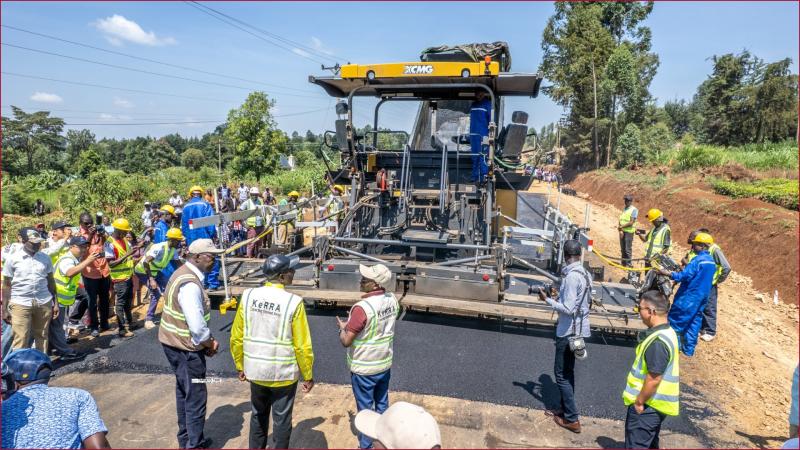
The RMLF is a pool of money raised through a fuel levy and used to build and maintain roads across the country.
The decision disposed of two appeals heard together. One was filed by the National Assembly and the other by the Kenya Roads Board (KRB). Both challenged the High Court's judgement of June 5, 2025.
Read More
A bench of Justices Agnes Murgor, Abida Aroni and Joel Ngugi found that parliament has the constitutional authority to set up the system under which road maintenance money is managed and shared across the country.
The High Court case turned on two questions; whether the laws on road classification and on dividing the fund were constitutional and whether county governments had a right to be paid directly from the fund to carry out their duties.

On the second question, the appellate judges overturned the earlier finding.
"The High Court's declaration that any appropriation from the Road Maintenance Levy Fund which does not provide for county governments as beneficiaries is unconstitutional, unenforceable, illegal, null and void is hereby set aside," ruled the Appellate Court Judges.
The Court of Appeal also confirmed that Section 47 of the Kenya Roads Act, 2007, and its First Schedule are constitutional. The provision sorts roads between the national government and county governments.
The decision leaves the work of three agencies unchanged: the Kenya National Highways Authority (KeNHA), the Kenya Urban Roads Authority (KURA) and the Kenya Rural Roads Authority (KeRRA). Each will continue to run the roads assigned to it.
The judges further upheld Section 6 of the Kenya Roads Board Act, which sets out how the fund is split among KeNHA, KURA, KeRRA, the Kenya Wildlife Service (KWS) and the KRB.
As a result, road maintenance and development projects will keep being financed through the foregoing agencies as before.
The court said the fund must be spent through the national framework by the agencies named in law.
The National Assembly took the same position in both courts. It argued that the fund was created under a specific law that assigns clear roles to institutions and provides a mechanism for sharing money to maintain classified public roads.
Parliament also argued that the road classification and the sharing formula should stand unless they are changed through the proper constitutional and legislative process.