Editor's Review
President Ruto also promised to help the KBC journalist get a visa.
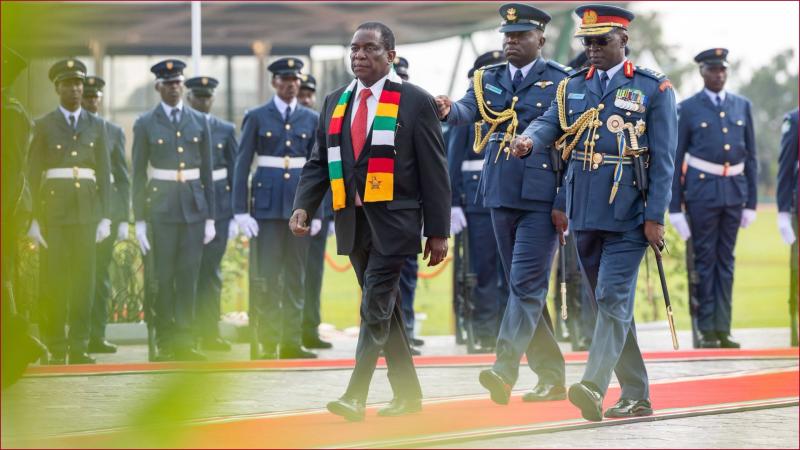
A question about Zimbabwe's inflation and unstable currency by a Kenyan journalist drew a sharp rebuke from President Emmerson Mnangagwa in Nairobi Friday, November 27, when he was in Kenya for a day's official visit.
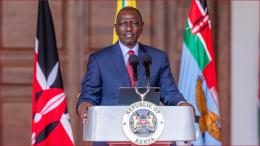
Mnangagwa ended by offering to fund the journalist's fact-finding trip to Harare, with President William Ruto promising to help the reporter get a visa.
The exchange took place at a joint press briefing at State House, Nairobi, where Austin Miramba, a radio presenter with the Kenya Broadcasting Corporation (KBC), asked about Zimbabwe's high inflation and the volatility of its currency, the Zimbabwe Gold (ZiG).
Miramba drew a comparison with Kenya's own experience. He noted that the Kenyan shilling had come under heavy pressure a few years ago, with the US dollar trading at about Ksh162, before government intervention brought it back to about Ksh130.
He then asked Mnangagwa what lessons Kenyans could learn from Zimbabwe's challenges and how the president was tackling them.
Read More
Mnangagwa pushed back against the premise of the question. He told the journalist that his picture of the Zimbabwean economy did not match the current situation and that he appeared to be relying on stale information.
"Young man, you are highly misinformed. Zimbabwe's economy is very stable. Our currency is very stable," Mnangagwa said.
He questioned Miramba's sources of information, asking him to discard them because they were misleading him.
The president invited Miramba to see the country for himself and change his mind.

Mnangagwa did not deny that Zimbabwe had faced economic trouble. He said those problems belonged to the past and credited regional and continental backing for the turnaround.
"Yes, we had those challenges, but I'm happy that with the support of SADC and the entire African continent, we have been able to resolve those economic challenges, and Zimbabwe is thriving," he said.
The president then turned the rebuke into an offer. He said he would cover the cost of Miramba's trip and set out what the visit would involve: free movement, unrestricted questioning and no state minders.
He also asked for a debrief at the end.
"I invite you to come to Zimbabwe, and I will pay for your visit. So you can satisfy yourself as to what is happening. I will allow you to visit any part of the country, ask any question, no security will be following you behind, and then at the end of the day you will come tell me at state house on what is happening in Zimbabwe, you are welcome," Mnangagwa said.
Reacting to it, Ruto said Kenya would help make the trip happen.
He vouched for the journalist, saying he was simply curious and had no ulterior motive.
Ruto also tied the episode to a wider concern about reliable information, pointing to a media cooperation agreement the two countries had signed earlier in the day.
"We will facilitate, Mr. President, the visit of our young man. We'll give him a visa. I confirm that he's just an inquisitive young man. He has no other intention. And it is good that we signed an agreement on matters to do with communication, because in this era of fake news and misinformation, and disinformation, people are bound to come across all manner of information, and therefore it is important that we have reliable sources of information," Ruto said.
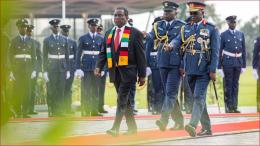
Mnangagwa was in Nairobi to co-chair the inaugural Zimbabwe-Kenya Bi-National Commission with Ruto.
The visit followed Ruto's state visit to Zimbabwe, where the two leaders agreed to strengthen cooperation and set up a higher-level mechanism to oversee their commitments.
The presidents signed seven memoranda of understanding covering immigration, housing, trade, customs, media, culture and diplomatic training.
State House Nairobi said the new deals bring the total number of bilateral instruments between the two countries to 24.
State House also listed mining as a cooperation area, pairing Zimbabwe's platinum-group metals and lithium with Kenya's gold and niobium.
At the same event, Ruto called for the "immediate and unconditional lifting" of unilateral sanctions on Zimbabwe, saying they hurt ordinary citizens.
Kenya also welcomed Zimbabwe's election to the UN Security Council for 2027 to 2028.
On the currency, the ZiG is a gold-backed currency that Zimbabwe introduced in April 2024 after years of turmoil.
Annual ZiG inflation has been in single digits since January 2026, averaging 4.2% through July.
The official exchange rate held at around ZiG26 to the US dollar as of early September 2026, though a parallel-market premium of about 20% persisted.
Some economists have cautioned that tight central bank control of the exchange rate can suppress inflation temporarily while creating deeper distortions.
-1775459963-md.jpg)

-1775459963-sm.jpg)