Editor's Review
We have witnessed guests appearing on live television and radio programmes while drunk or poorly prepared, carrying firearms into studios and occasionally teasing programme hosts.
By Victor Bwire
Journalistic interviews are professional engagements intended to provide audiences with information, facts, reasons and opinions on particular topics, enabling them to draw their own conclusions about the validity of what is being said or discussed. They are also meant to prevent monologues and one-directional conversations that resemble eulogies. Through interviews, programme hosts interrogate guests, establish trends, dig out facts, and allow audiences to assess speakers' emotional intelligence, body language, and seriousness on the subject under discussion.
Unfortunately, this does not always happen in our media stations. Serious discussions are instead turned into joking sessions, exchanges of empty rhetoric and shouting matches.
Ordinarily, programme hosts, working jointly with research and production teams, have a responsibility to obtain sufficient briefing, clarity and background information on the subject matter. They should also dress appropriately, remain sober and professionally composed, and engage guests in preliminary conversations to break the ice before the interview begins.
On the contrary, we have witnessed guests appearing on live television and radio programmes while drunk or poorly prepared, carrying firearms into studios and occasionally teasing programme hosts. There have also been instances where guests physically fight, insult or ridicule one another during media interviews.
Read More
When an interview degenerates into a shouting match, valuable airtime is wasted, particularly when the programme could have helped citizens make decisions on important public-interest issues, such as which candidates to vote for during elections or which political parties to join. The role of the media during an election is to empower citizens to make informed choices. The media, therefore, has a duty to provide coverage that gives citizens sufficient, accurate and reliable information on electoral matters.
The media also has a responsibility to debunk myths and stereotypes, counter misinformation and hold leaders accountable. It should provide citizens with information about candidates, their interests, policy positions and motivations for seeking leadership positions rather than entertaining jokes and unnecessary theatrics that add little or no value to public discourse.
Media interviews, particularly live radio and television programmes, have gained considerable prominence in Kenya. Politicians are constantly jostling for opportunities to appear on these platforms to advance their positions and express their views on national issues.
With the August 2027 General Election approaching, politicians want easy-going, unprepared journalists and programme hosts who will allow them to fill the airwaves with hogwash, make unverified claims and defame others without being required to substantiate their allegations. Unfortunately, weak and ineffective media interviewers and programme hosts are enabling this behaviour.

With much of the media being partisan, partly because of ownership interests and, in some cases, compromised journalism, journalists and politically intoxicated political commentators and guests end up confusing, irritating or boring audiences. On the positive side, however, there are highly professional, bold and tough media interviewers in our newsrooms who make their sources sweat, perspire and sometimes avoid such interviews altogether.
Journalists who approach interviews unseriously deny Kenyans the opportunity to obtain information, assess the emotional intelligence of sources and evaluate their knowledge and performance on important matters. At the extreme, they risk making audiences believe that the media is no longer a source of credible, independent and trustworthy information as it once was.
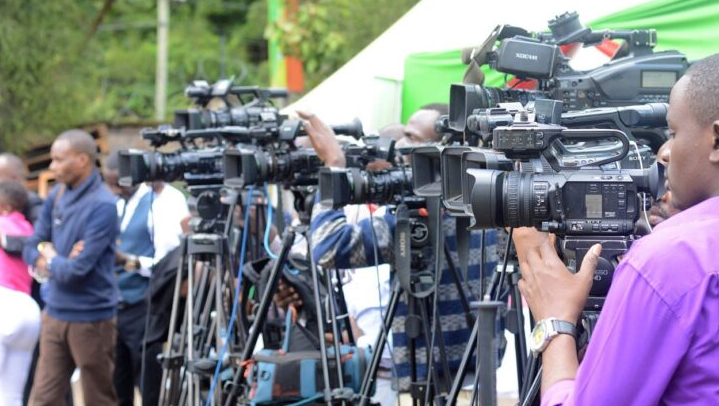
Journalists, television and radio hosts, and more recently, podcast hosts, are allowing guests to leave studios after making wild, unsupported claims, cracking inappropriate jokes or making offensive gestures. Such conduct undermines media credibility and exposes media houses to public ridicule.
Increasingly, political divisions are taking up considerable space in our media houses, and the consequences are evident. From the selection of guests and moderation of discussions to the choice of responses allowed on air and the amplification of social media posts, the media is increasingly struggling to maintain its independence and professional standards.
Freedom of expression comes with responsibility. Journalists and, by extension, media houses must be strict not only when selecting guests for live programmes but also when it comes to safeguarding their staff and adequately preparing programme hosts before broadcasts.
It is imperative that media houses establish clear guidelines on when guests should arrive ahead of programmes. Hosts should also familiarise themselves with guests and assess their suitability to participate in particular discussions.
It is time for the media to revisit its public-interest role and guard against being used as a vehicle for national shame, a platform for individuals to vent their frustrations, or an avenue for politicians to engage in barbaric behaviour.
The media must resist being drawn into political wars that are not its own. Journalists are not contestants; they are recorders and chroniclers of events.
The media must maintain accuracy, fairness, balance, and impartiality in its coverage of all candidates participating in the election. Media houses should demonstrate that the main parties and candidates seeking office are given equitable opportunities to be heard and questioned, while ensuring that smaller parties and candidates are not treated unfairly.
Fair and balanced coverage also means that individual stories, as well as the overall pattern of coverage over time, reflect the views and positions of different political parties and candidates.
There is general agreement among media practitioners that journalists should be prepared, engaged and proactive. They should not be afraid to ask tough questions on matters relating to the conduct and administration of elections.
By allowing guests to control discussions and inflame public emotions through statements that could incite discrimination, hostility or violence based on ethnic hatred, media houses risk violating fundamental journalistic principles.
Politicians and their supporters are increasingly taking over television and radio discussions to air their hatred towards one another. This is unhealthy, particularly as the country approaches another electioneering period.
Victor Bwire is the Director, Media Training and Development at the Media Council of Kenya.