
Editor's Review
KRA has increased the Customs Minimum Benchmark for general containerised consolidation cargo, with the revised threshold taking effect on August 20.
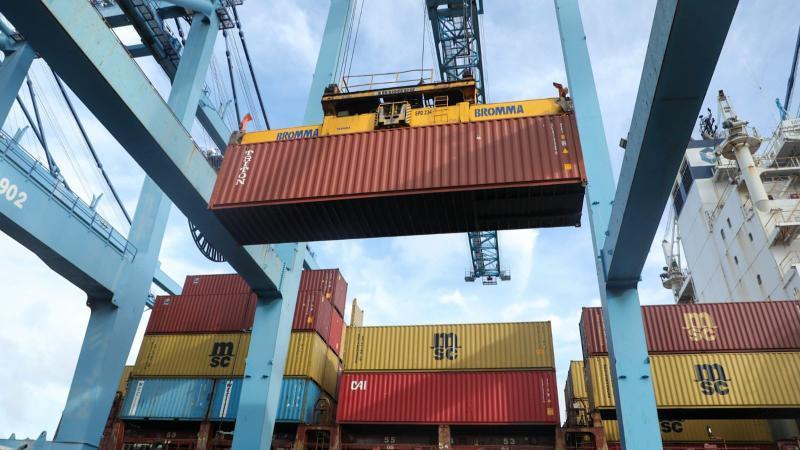
The Kenya Revenue Authority (KRA) has increased the Customs Minimum Benchmark for general containerised consolidation cargo from KSh2.5 million to KSh3.2 million, with the revised threshold taking effect on August 20, 2026.
In a statement issued on Tuesday, August 25, the authority said the adjustment followed a transitional period that included consultations with the Kenya International Freight and Warehousing Association (KIFWA), small traders, cargo consolidators and other private-sector stakeholders.
KRA said the review is aimed at strengthening customs controls, protecting government revenue and ensuring businesses that comply with tax requirements are not disadvantaged by traders who reduce their tax obligations through inaccurate declarations.
"This is not about targeting small traders. It is about creating a level playing field where businesses compete fairly.
"A trader who declares goods correctly and pays the taxes due should not be disadvantaged by another trader who gains an unfair cost advantage through undervaluation, under-declaration or concealment of good," the statement read.
Read More
KRA noted that cargo consolidation remains an important option for small-scale importers as it enables several shipments to be transported in a single container, helping lower the cost of importing goods into Kenya.
However, the authority said the arrangement has also been abused through practices including undervaluation, under-declaration, misdescription, misclassification and concealment of high-value goods.
KRA further raised concerns about larger importers using consolidation arrangements to reduce their tax liabilities, saying such practices distort competition between businesses.
The authority clarified that the Ksh3.2 million benchmark is not a fixed customs value that applies to every container.
Instead, it provides a minimum reference point, while goods with a higher actual customs value must be declared accurately and assessed under the applicable tariff and customs valuation procedures.
"The Ksh3.2 million benchmark does not mean that every container is valued at Ksh3.2 million. If the actual value of the goods is higher, that value must be declared and the correct taxes paid. The benchmark is intended to strengthen valuation controls, not to provide a ceiling for the value of imported goods," the statement added.

KRA also said the review considered the length of time the previous benchmark had remained unchanged.
The Ksh2.5 million threshold had been in place for about six years despite changes in economic conditions, import values and the nature of goods entering the country.
KRA said the revised benchmark will provide a more current and predictable reference point for customs administration while helping address revenue leakage.
"Fair competition requires businesses to compete on the basis of efficiency, quality and innovation, rather than through avoidance of taxes. Protecting the integrity of the customs system also protects compliant businesses and supports local manufacturing," the statement further read.
This comes days after KRA Customs and Border Control Department posted its highest-ever monthly revenue collection.
In a statement on Wednesday, August 12, KRA said the department collected Ksh92.53 billion during the month, surpassing the National Treasury’s target of Ksh86.16 billion by Ksh6.37 billion.
The figure represents a 107.39 per cent performance against the set target and a 15.3 per cent increase from the Ksh80.29 billion collected in July 2025.
The latest record comes shortly after Customs posted Ksh89.1 billion in June 2026, which had been the department’s highest monthly revenue collection at the time.
A significant share of the July gains came from non-oil revenue, which climbed to Ksh61.50 billion; the first time monthly non-oil Customs revenue exceeded the Ksh60 billion mark.
KRA attributed the improved collections to greater reliance on technology in Customs operations, enhanced cargo management systems and strengthened compliance measures.
The authority is using data and digital tools to improve cargo risk assessment, streamline declaration processing and combat illicit trade and revenue losses.
The reforms are also intended to make Customs procedures more efficient, transparent and predictable for traders while ensuring the government receives all revenue owed to it.
Commissioner for Customs and Border Control Dr. Lilian Nyawanda said the latest figures demonstrate the impact of the measures implemented by KRA and provide a positive beginning to the new financial year.
"The record collection in July is a significant milestone for KRA and a strong start to the new financial year. It demonstrates that our investments in technology, compliance, trade facilitation and stakeholder collaboration are delivering results," she said.



-1792658467-md.jpg)
-1768823097-md.jpg)