
Editor's Review
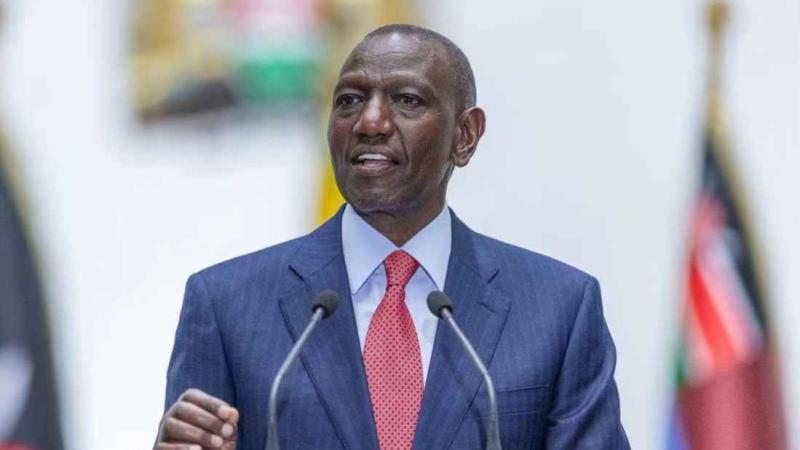
President William Ruto has held talks with representatives of traders and stakeholders in the consolidated cargo sector following concerns over taxation, clearance and handling of consolidated imports.
President William Ruto has held talks with representatives of traders and stakeholders in the consolidated cargo sector following concerns over taxation, clearance and handling of consolidated imports.
In a statement on Wednesday, September 2, the Ministry of Investments, Trade and Industry said Ruto's intervention followed disagreements between traders and the Kenya Revenue Authority (KRA) over the applicable benchmark for consolidated cargo.
Following the consultations, the government and traders reached an agreement to resolve the outstanding issues while strengthening compliance, transparency and accountability in the consolidated cargo sector.
Accordingly, KRA will reduce the applicable benchmark for general consolidated cargo from Ksh2.5 million to Ksh2 million.
"The existing rates for ready-made garments, footwear and fabrics will remain unchanged, while the newly negotiated rates for air cargo will remain in effect," the statement read.
Read More
According to the ministry, the Government will also remove the Advance Cargo Declaration requirement to streamline cargo clearance and facilitate legitimate trade.
Under the agreement, KRA will develop and publish an exclusion list of goods that will not qualify for clearance under the general consolidated cargo framework.
The exclusion list will be informed by the value and nature of the goods, applicable specific tax rates, excisable goods and other relevant customs and revenue considerations.
"This will provide traders and consolidators with certainty on which goods qualify for consolidation and ensure that the new framework is applied consistently and transparently," the statement added.

The ministry said all cargo consolidators will be vetted and registered afresh by KRA and will be required to submit a comprehensive list of the individual traders and importers whose goods they consolidate.
"The deadline for the completion of registration and vetting, and submission of the required trader disclosures, shall be 15 October 2026," the statement further read.
The ministry said the government will also facilitate the establishment and operation of designated de-consolidation centres in Nairobi and Mombasa.
"The centres will enable consolidated cargo to be separated efficiently and transparently for individual traders, improve cargo handling and clearance, and reduce unnecessary logistical and administrative costs," the statement concluded.
This development comes days after KRA clarified how customs taxes are assessed on consolidated cargo, particularly shipments brought in by small-scale traders who pool their goods to reduce logistics and clearance costs.
In a statement on Thursday, August 27, the tax authority said the consolidation arrangement is intended to simplify customs processes for small traders while ensuring compliance with the law, protection of government revenue and a fair business environment.
"The valuation of imported goods for Customs purposes is governed by law. Under Section 122 and the Fourth Schedule of the East African Community Customs Management Act, Customs duty is assessed based on the transaction value of the goods.
"This is the basis applied by Kenya since adopting the World Trade Organization (WTO) Customs Valuation Agreement," the statement read.
KRA explained that customs valuation is based on the transaction value of imported goods where the importer provides the required commercial documentation and meets applicable legal and risk-management requirements.
The authority said cargo consolidation has become particularly important for small-scale traders, who combine shipments to make transportation and customs clearance easier while reducing the administrative burden associated with handling multiple small consignments.
To support this system, KRA said Customs applies a minimum yield test to containers carrying commonly imported general goods.
The measure provides a simplified clearance option instead of requiring individual transaction documents from every small-scale trader whose goods are consolidated in the same container.
KRA said the review was carried out in consultation with industry stakeholders.
It added that traders were given additional time to prepare for the new requirement after stakeholders requested a grace period.
"The review was undertaken in consultation with industry stakeholders. Following a request from the stakeholders for additional time to prepare for implementation, KRA granted a one-month grace period. The revised minimum yield of Ksh3.2M therefore took effect on 21 August 2026," the statement added.










 (1)-1792314340-sm.jpg)