
Editor's Review
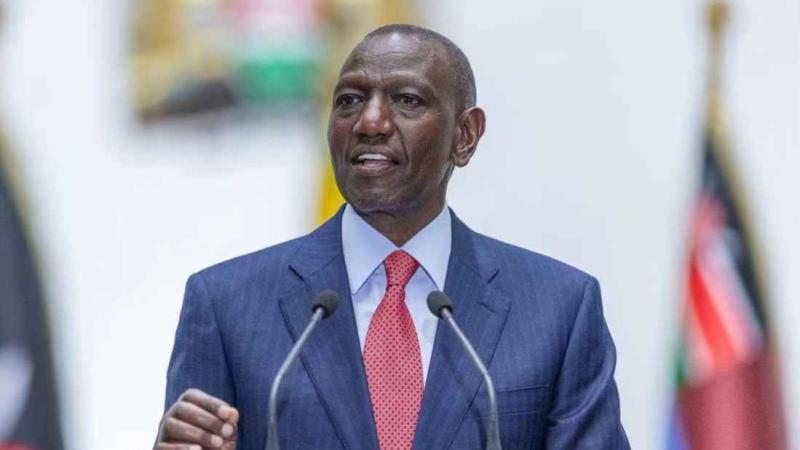
President William Ruto has directed the government to undertake a 90-day regularisation exercise for foreign nationals conducting business in Kenya.
President William Ruto has directed the government to undertake a 90-day regularisation exercise for foreign nationals conducting business in Kenya.
In a statement on Tuesday, September 8, State House Spokesperson Hussein Mohamed the directive follows an engagement between the President and Kenyan traders, during which traders raised concerns about the impact of foreign participation in informal businesses on Kenyans.
Mohamed said the President had reaffirmed the Government’s commitment to protecting economic opportunities for Kenyans while also safeguarding the rights of foreign nationals who are lawfully residing and conducting business in the country.
"The President reaffirmed the Government’s responsibility to protect and expand economic opportunities for Kenyan citizens, particularly within the micro and small-enterprise sector that sustains millions of households.
"He equally affirmed the Government’s duty to safeguard the rights and legitimate interests of foreign nationals who are lawfully resident, employed, investing or conducting business in Kenya," the statement read.
Read More
Mohamed said Ruto had also directed that the Local Content Bill, 2025, currently before Parliament, be expanded to create a framework governing participation in small-scale trade and enterprise.
"Accordingly, the President directed that the Local Content Bill, 2025 (National Assembly Bill No. 45 of 2025), currently before Parliament, be expanded to establish a clear, fair and predictable framework governing participation in small-scale trade and enterprise.
"This framework will identify categories of economic activity that may be reserved for Kenyan citizens, while providing legal certainty and appropriate protection for foreign nationals lawfully entitled to work, invest and conduct business in Kenya," the statement added.
Mohamed said the policy would seek to protect opportunities for Kenyan citizens while maintaining Kenya’s openness to lawful foreign investment, enterprise and employment.
"Kenya will protect economic opportunities for its citizens, especially within the micro and small-enterprise sector, while remaining open to lawful foreign investment, enterprise and employment. These objectives are complementary and will be pursued consistently with the Constitution, the law and Kenya’s international obligations," the statement further read.
Mohamed further said the government would continue supporting regional integration within the East African Community and broader African integration, including through the African Continental Free Trade Area.
"Kenya’s commitment to the East African Community, regional integration and the greater unity of the African continent remains firm. We will continue to facilitate the movement of people, labour, services and capital in accordance with applicable legal and regulatory frameworks, while advancing continental integration through the African Continental Free Trade Area and other instruments of African cooperation," the statement noted.

In the interim, all foreign nationals conducting business in Kenya will be required to ensure that they comply with immigration, work-permit, registration and licensing requirements.
The government will use the 90-day period to facilitate those who need to regularise their status and business operations.
"In the meantime, every person conducting business in Kenya is required to comply with applicable immigration, work-permit, registration and licensing requirements. Over the next 90 days, the Government will conduct an orderly regularisation exercise to facilitate compliance.
"The process will be coordinated by the relevant Government agencies, in consultation with the embassies concerned, to provide affected persons with a clear and structured opportunity to regularise their immigration status and business operations in accordance with the law," the statement read.
Mohamed said the relevant agencies would provide guidance and ensure that the regularisation process is implemented fairly and without discrimination before enforcement measures are tightened after the 90-day period.
"During this period, the responsible Government agencies will provide the necessary guidance and administer the applicable requirements fairly, consistently and without discrimination. At the conclusion of the 90-day regularisation period, immigration, work-permit, registration and licensing requirements will be enforced firmly and strictly in accordance with the law and due process," the statement added.
The government also warned against individuals or groups taking the law into their own hands by harassing or threatening foreign nationals and their businesses.
Mohamed said concerns over economic opportunities would not be used to justify discrimination, lawlessness or violence, stressing that Kenya would continue to protect citizens’ economic interests while upholding the rights of people lawfully within the country.
"Kenya will remain an open, secure and welcoming country, protecting opportunities for its citizens, safeguarding the rights of all persons lawfully within its borders, welcoming legitimate investment and enterprise, and faithfully honouring its regional, continental and international obligations," the statement concluded.
Meanwhile, the Kenya National Commission on Human Rights (KNCHR) has cautioned the government against a crackdown targeting foreign small-scale traders without following due process.
In a statement, KNCHR Chairperson Claris Ogangah raised concern over potential human rights implications after President William Ruto ordered the immediate closure of small businesses operated by foreign nationals.
Ogangah said the commission had received petitions from refugee communities and other migrant populations alleging threats, intimidation and discriminatory treatment.
"The Commission has received petitions from refugee communities and other migrant populations in various counties alleging human rights violations, including threats, intimidation, discriminatory treatment and online attacks.
"Reports from Miritini, Mombasa County, illustrate the potential for violations, but the Commission emphasizes that this is a broader national concern and should not be viewed as confined to any particular locality," the statement read.
Oganga called on the government to ensure lawful, rights-based and non-discriminatory enforcement, safeguard vulnerable persons and to establish accessible compliance mechanisms, and to prevent abuse and strengthen oversight, accountability and protection.
XThe KNCHR will continue to monitor the situation nationally, engage relevant duty bearers and migrant and refugee communities, and document human rights violations for appropriate action, including referral for investigation and, where necessary, litigation," the statement added.







 (1)-1792314340-sm.jpg)