
Editor's Review
The Kenya Tea Development Agency (KTDA) has issued an update to tea farmers in Nyamira County regarding green leaf payments.
The Kenya Tea Development Agency (KTDA) has issued an update to tea farmers in Nyamira County regarding green leaf payments.
In a notice on Thursday, February 5, KTDA confirmed that current rates will remain unchanged following a review of the factories' financial performance.
"Tea factories in Zone 10, Nyamira County, will maintain the current monthly green leaf payment rate of Ksh24 per kilogram after reviewing their current financial status," the notice read.
KTDA explained that the decision was influenced by difficult market conditions that negatively affected factory revenues over the past financial year.
"The factories in the county realised low tea absorption and prices in the 2024/2025 financial year which negatively affected their cash flows," the notice added.
Read More
KTDA noted that factory boards had also observed a decline in the volume of green leaf delivered by farmers and urged continued supply in anticipation of better returns.
While confirming the status quo on payments, factory leadership indicated that the rate is not fixed permanently and could change once conditions improve.
"The boards of the five factories, Nyansiongo, Nyankoba,Sanganyi, Kiberigo and Gianchore also noted a reduction in green leaf deliveries and encouraged farmers to continue supplying tea to benefit from improved returns expected in the coming months.
"While the current payment rate will remain in place for now, factory leadership indicated that the rate will be reviewed once the financial position improves," the notice further read.

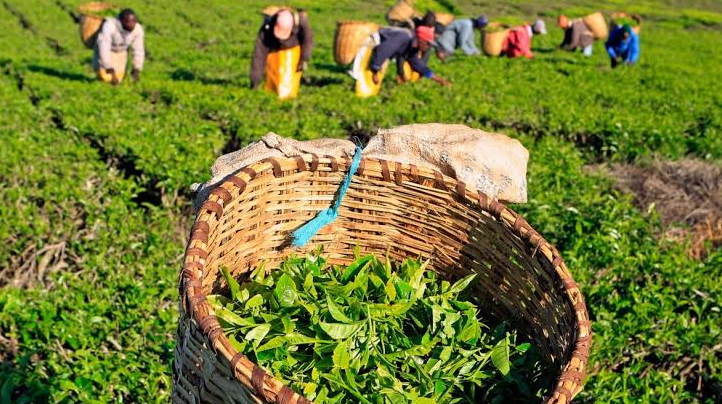
KTDA further highlighted the role of quality in boosting earnings, calling on farmers to adhere to best harvesting standards to support stronger auction outcomes.
"Factory leaders further called on farmers to uphold good plucking practices to enhance tea quality and improve auction prices as efforts continue to improve overall factory performance," the notice concluded.
Elsewhere, this comes months after KTDA attributed the drop in bonuses for tea farmers to international market conditions and the currency exchange rate.
In a statement on Tuesday, September 30, KTDA explained that the average exchange rate declined from KSh144 against the US dollar in 2024 to KSh129 in 2025.
According to the agency, the stronger Kenyan currency reduced the earnings of tea farmers despite stable global prices.
"The drop in earnings is mainly attributed to international market conditions and currency exchange movements that were less favourable compared to last year.
"In 2024, the Kenyan shilling traded at an average of Ksh144 to the US dollar, while in 2025 the average was Ksh129. This weaker exchange rate meant that even where international prices were stable, the amount realized in Kenyan shillings was significantly lower," read part of the statement.
KTDA noted that average tea prices across the country have all experienced a drop in tea bonuses this year.
"In the East of Rift, Kiambu fetched Ksh371 per kilo, a drop of 46 shillings from last year; Murang’a earned Ksh376, down by 42 shillings; Nyeri earned Ksh388, down by 42; Kirinyaga earned Ksh 400, down by 38; Embu earned Ksh404, down by 34; and Meru earned Ksh381, down by 46," said the agency.
In the West of Rift, which includes Kericho, Bomet, Nandi, Nyamira, and Kisii counties, the tea prices fell steeply, with a difference of between Ksh66 and Ksh246.
KTDA explained that differences between the East and West Rift were due to quality variations, market dynamics, and cost structures.
"Differences in second payment between East and West of the Rift are due to quality factors, market dynamics, and cost structures. Teas from certain high-altitude zones naturally fetch better prices because of quality attributes favored in global markets," the agency stated.
Further, KTDA mentioned that some tea factories were harder hit by suppressed global demand, and operational costs further reduced net earnings.
To stabilize the prices, the agency said it is expanding production of orthodox teas, which fetch higher prices in niche markets, to reduce reliance on CTC teas.