
Editor's Review
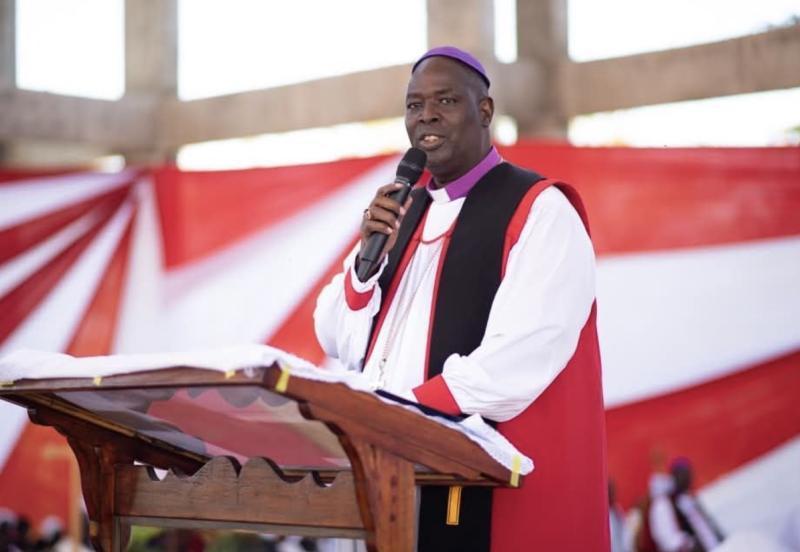
Ole Sapit urged the government to consider the plight of the ordinary Kenyan.
Archbishop of the Anglican Church of Kenya, Rev. Dr Jackson Ole Sapit, has asked the government to reduce the cost of fuel in the country.
Speaking on Thursday, May 21, Ole Sapit explained that the high fuel costs in the country have made the lives of Kenyans difficult, as it has a ripple effect on the cost of basic commodities.
He added that the high cost of fuel would also limit access to services, which are essential to the ordinary Kenyan.
"The government must do something to reduce the cost of fuel because fuel will increase the prices of every other commodity in the supermarket and services across the country," he stated/
The Archbishop explained that the food production sector in the country would feel the pinch due to the increase in the cost of diesel by Ksh36 per litre.
Read More

"The fuel price increase will also limit production for the farming communities because when the cost of diesel was increased, the opportunity to produce enough food for Kenya was hampered," he added.
Consequently, he urged President William Ruto's government to take all necessary measures to stabilise fuel prices in the country.
He made the statement while attending the Disabilities, Bible and the Church Conference 2026 at CITAM Valley Road.
Kenyans have already started grappling with the harsh reality of the spike in fuel costs. A section of public transport owners has already reviewed the cost of bus fares upward.
A two-day strike by matatu owners, tourist vehicle operators and other players in the public sector industry in protest against fuel prices paralysed transport in most parts of the country.
In response to the strike, the government lowered the price of diesel by Ksh10 per litre, but increased the Kerosene costs by Ksh36 per litre.
The move by the Energy and Petroleum Regulatory Authority (EPRA) meant that families who relied on Kerosene for cooking and lighting would have to dig deeper into their pockets.
Treasury Cabinet Secretary John Mbadi maintained that the government was already doing its best to cushion Kenyans from the high fuel costs.
Mbadi claimed that the state had so far spent Ksh17 billion in subsidies over the last two months. He insisted that the high prices were a global phenomenon that Kenya had no control over.
 (1)-1791708588-md.jpg)
 (1)-1791175033-md.jpg)
-1791699761-md.jpg)
-1791696120-md.jpg)


 (1)-1791708588-sm.jpg)
 (1)-1791175033-sm.jpg)

-1791699761-sm.jpg)