Editor's Review
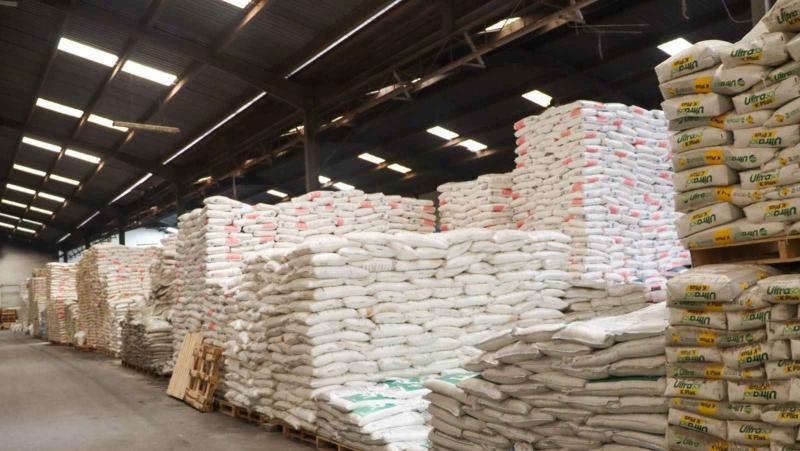
The Ministry of Agriculture has moved to address a shortage of topdressing fertilizer that has affected farmers across the North Rift region.
The Ministry of Agriculture has moved to address a shortage of topdressing fertilizer that has affected farmers across the North Rift region.
In a statement on Wednesday, June 3, Soy MP David Kiplagat said the shortage had been observed in National Cereals and Produce Board (NCPB) stores, raising concerns among farmers.
Explaining the situation, the lawmakers said the shortage was linked to international supply challenges affecting fertilizer imports into the country.
"We have noted with concern the shortage of topdressing fertilizer in our NCPB stores, which has affected many of our farmers during this critical planting season.
"The shortage has largely been occasioned by disruptions in the global supply chain arising from the ongoing instability in the Middle East, which has impacted the steady supply of fertilizer to the country," he said.
Read More
Kiplagat, however, assured farmers that the government had already taken steps to resolve the problem through the Ministry of Agriculture.
According to the MP, thousands of bags of fertilizer are already being transported to the region and will soon be available at NCPB outlets.
"However, the Government, through the Ministry of Agriculture and Livestock Development, has taken the necessary corrective measures to address the situation.
"We have been informed that over 200,000 bags of CAN fertilizer are currently in transit and are being distributed to NCPB stores across the North Rift region to ease the shortage and ensure farmers access the subsidized fertilizer they require," he added.

Kiplagat expressed optimism that the incoming supplies would restore normal distribution and help farmers continue with production activities without disruptions.
"With these supplies expected to arrive in the coming days, we are optimistic that normal distribution will resume and our farmers will be able to obtain the fertilizer needed to support production and safeguard food security," he concluded.
This comes weeks after the Anti-Counterfeit Authority (ACA) warned farmers after a multi-agency enforcement team seized 250 bags of suspected counterfeit fertilizer in Kakamega County.
In a statement on Monday, April 20, authorities said the crackdown also involved the Directorate of Criminal Investigations (DCI), Kenya Bureau of Standards (KEBS) and the Government Chemist.
"Beyond the bulk fertilizer, investigators recovered various packaging materials and a consignment of government subsidy stock marked ‘Not for Sale,’ suggesting a sophisticated scheme to divert and repackage state-funded resources for illegal trade," the statement read in part.
ACA also raised concern over when the seizure happened, noting that many farmers are currently buying farm inputs as rains continue across several regions.
"The timing of this seizure is particularly alarming as it coincides with the ongoing rains and peak planting season," the statement added.
Kisumu ACA Regional Manager Tom Muteti said the presence of substandard fertilizer in the market poses a direct threat to crop yields and national food security.
He said farmers depend on genuine products to secure expected harvests, warning that any compromise at planting stage can have serious effects on livelihoods and the wider economy.
"The risks associated with counterfeit fertilizer extend beyond immediate financial loss, as substandard products can lead to long-term soil degradation and poor crop development. Such inputs often lack the essential nutrient balance required for healthy growth, resulting in stunted harvests that weaken the country’s overall food production capacity," the statement further read.
Following the discovery, officials urged the public to remain vigilant and only buy products from trusted sellers.
ACA also encouraged farmers to verify products before purchase and report suspicious activity.
"Moving forward, officials are urging farmers and the general public to exercise extreme caution by purchasing fertilizers exclusively from authorized and reputable dealers.
"Farmers are encouraged to verify the authenticity of all products and to report any suspicious packaging or activities to the relevant authorities," the statement concluded.