Editor's Review
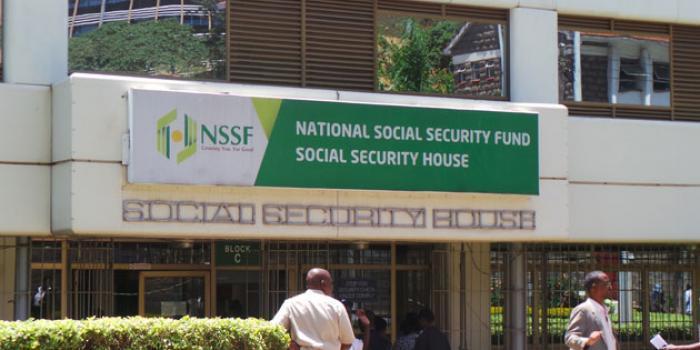
The National Social Security Fund (NSSF) has directed employers and workers to continue deducting and remitting contributions at the current rates.
The National Social Security Fund (NSSF) has announced that the NSSF Act is still in force despite the Court of Appeal declining to suspend a judgment declaring it unconstitutional.
In a notice on Friday, June 5, NSSF clarified that the ongoing court proceedings on the NSSF Act do not affect the current contribution rates paid by employers and employees.
The fund explained that the Court of Appeal judgment delivered on February 3, 2023, did not invalidate the Act.
“This is to clarify to our members and stakeholders that the NSSF Act is still in force on account of the Judgement of the Court of Appeal rendered on 3rd February 2023.
“The issues pending determination by the Court do not in any way affect contribution rate by employers and employees, which remains that of the year four (4) cycle in accordance with the Third Schedule of the NSSF Act,” read the notice in part.
Read More

NSSF directed all employers and workers to continue complying with the contribution requirements to avoid penalties and ensure employees receive their full social security benefits.
The fund dismissed claims that contributions will revert to Ksh 200, insisting that the enhanced contribution rates introduced under the NSSF Act, 2013, remain legally in force.
“We advise all employers, employees, and stakeholders to disregard the misleading opinions alluding to reverting contributions to Ksh.200 and to remain steadfast as we allow the Court of Appeal to give directions on the issues that are still pending determination and which do not affect the enhanced contribution rates,” NSSF stated.
This comes just days after the Court of Appeal dismissed NSSF’s application to suspend the Employment and Labour Relations Court (ELRC) judgment that declared the NSSF Act 2013 unconstitutional.
In a ruling on May 29, 2026, the appellate court ruled that NSSF failed to prove that the case would be rendered nugatory if a stay was not granted.
“Apart from frequently repeating the assertion of likely destabilization and the inability of the applicant to perform its functions due to the legal lacuna, the applicant provided no evidence or submissions as to how and to what extent the applicant would be destabilized.
“No accounts were produced by the applicant to support the destabilization theory. We are, therefore, not satisfied that the applicant has shown that a successful appeal on judgment and decree will be rendered nugatory if no stay is granted,” the Court of Appeal ruled.