President William Ruto's major agricultural project in Luo Nyanza is taking shape.
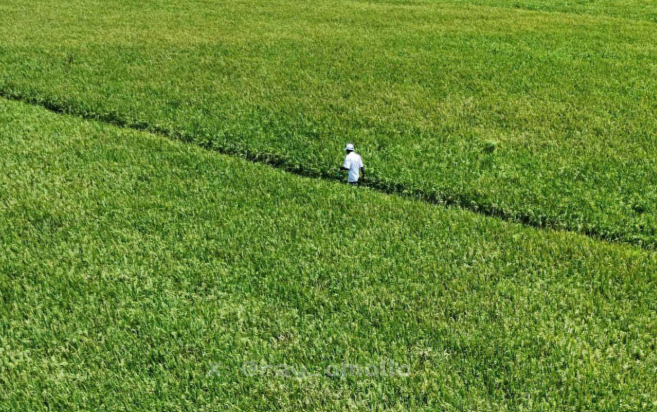
In an update issued on Saturday, June 27, Interior Principal Secretary Raymond Omollo revealed that the Kimira-Oluch Smallholder Farm Improvement Project (KOSFIP) had the potential of placing 9,000 acres of land under rice production.
Omollo confirmed that so far, 809 hectares of rice have been cultivated and are ready for harvesting.
"The scheme has an estimated production potential of approximately 9,000 hectares. Currently, 809 hectares are under production and ready for harvest, underscoring the significant opportunities that remain for future expansion," he intimated.
The Interior PS explained that KOSFIP comprises two interconnected irrigation schemes: Kimira, which draws water from River Kibuon and covers 808 hectares of net irrigable land across 44 blocks, and Oluch, which relies on River Awach Tende and spans 666 hectares across 53 blocks.
Read More

"Through extensive canal rehabilitation, the project has reclaimed more than 2,000 acres of previously waterlogged swampland, transforming it into productive agricultural land," he noted.
The State Department of Internal Security Boss revealed that, other than the Oriang rice, the year-round water supply supports the cultivation of maize, tomatoes, kales, watermelons, soybeans and sunflowers, allowing farmers to take advantage of peak market opportunities throughout the year.
He added that the project has not only strengthened food security but also created jobs and empowered rural communities.
"The project directly benefits more than 3,000 farming households and contributes to food security and economic activity for over 400,000 residents across the larger Nyanza region," Omollo reiterated.
The PS stated that despite scepticism on Ruto's decision to prioritise investment in production agriculture, the results of his plan were increasingly evident.
KOSFIP operates under a clear management framework where the National Government retains ownership of the scheme, oversees the core infrastructure, maintains the main gravity-fed canals and finances major rehabilitation works to ensure sustainable agricultural production.
Omollo vowed that his State Department will continue working closely with local leaders, administrators and communities to protect public investments, strengthen coordination among stakeholders, promote peaceful coexistence and create a secure environment that allows farmers and agribusinesses to realise the project's transformative potential.
When he assumed office, President Ruto promised to improve food security in the country by focusing on production.
Consequently, he embarked on several initiatives to lower the cost of production, including the distribution of subsidised fertilisers to farmers.
 (1)-1782456389.jpg)