
Editor's Review
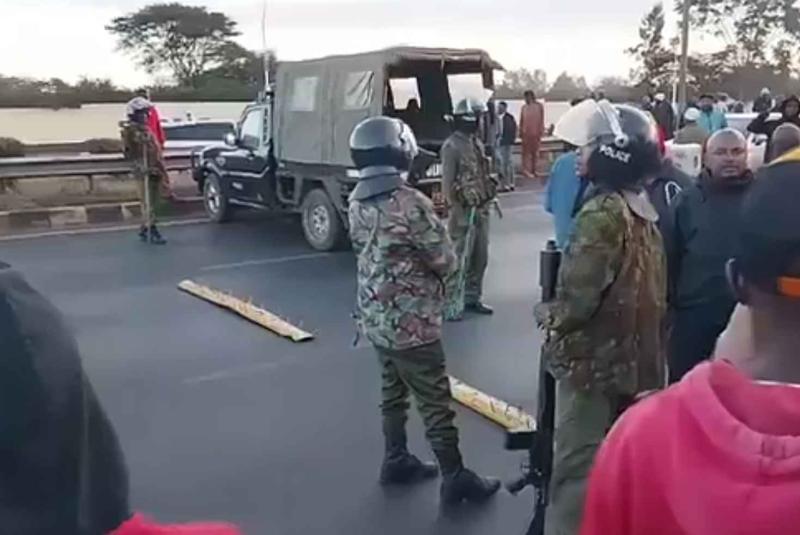
Police officers have mounted roadblocks along several key roads leading to Nairobi Central Business District (CBD) ahead of the planned Saba Saba protests.
Police officers have mounted roadblocks along several key roads leading to Nairobi Central Business District (CBD) ahead of the planned Saba Saba protests.
The affected roads include Thika Road, Kiambu Road, Waiyaki Way, Jogoo Road, Mombasa Road, Langata Road and Outering Road.

The police checkpoints resulted in huge traffic snarl-ups as they affected the normal flow of traffic.
Read More
Hundreds of commuters were forced to walk to work as the police blocked matatus from accessing Nairobi CBD.
Several anti-riot police officers have been deployed in Nairobi CBD ahead of the anticipated demonstration.
 (1).jpg)
The police have also barricaded Parliament Road with razor-sharp barbed wire and a police barricade truck.
The situation in Nairobi CBD is relatively calm, with a few businesses open while others are closed over the Saba Saba protests.

In the Githurai area, police officers have also been deployed to tighten security ahead of the protests.
On Monday, the National Police Service (NPS) announced that it will deploy enhanced police checkpoints across various roads in Nairobi as part of security measures during the Saba Saba commemoration.
The police said the move is intended to maintain peace and order and prevent disruptions that have been witnessed during previous commemorations.
.jpg)
The NPS noted that past Saba Saba events have occasionally been marked by incidents that disrupted normal activities.
"The National Police Service wishes to inform all members of the public that, in light of past experience during the Sabasaba commemoration, which is usually observed on 7 July, some members of the public have caused breaches of the peace, thereby interfering with the normal conduct of business for those not participating in the demonstrations," the notice read.
NPS said enhanced checkpoints will be established across Nairobi to monitor and regulate movement within the city.
Saba Saba is observed annually on July 7 to commemorate the struggle for multi-party democracy.
Over the decades, the Saba Saba Day protests have evolved into a powerful tradition of advocating for human rights, good governance, and economic justice.

 (1)-1792314340-md.jpg)
 (1)-1792314340-sm.jpg)