Editor's Review
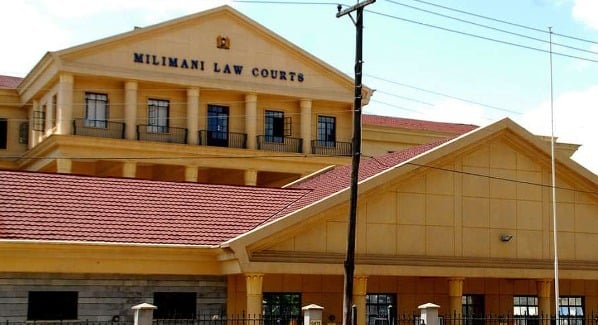
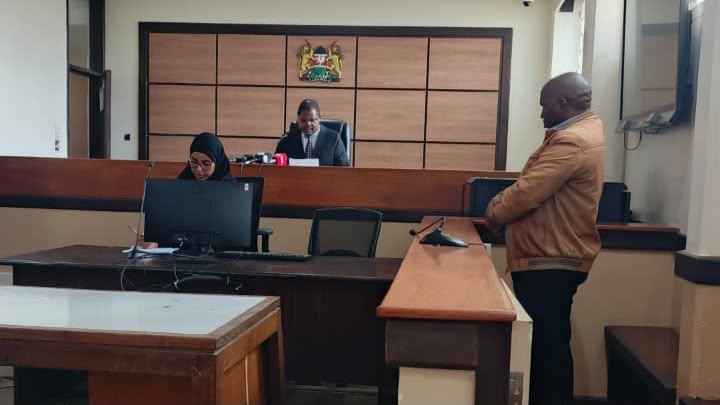
A Principal Probation Officer has been released on bail after being arraigned before the Milimani Anti-Corruption Court over allegations of soliciting a bribe.
A Principal Probation Officer has been released on bail after being arraigned before the Milimani Anti-Corruption Court over allegations of soliciting a bribe in exchange for influencing the outcome of a criminal case.
In a statement on Tuesday, July 28, the Office of the Director of Public Prosecutions (ODPP) said the probation officer, Julius Njogu, was charged with an offence under the Anti-Bribery Act in relation to allegedly seeking a financial benefit connected to the execution of his official duties.
"The Director of Public Prosecutions (DPP) has today arraigned Principal Probation Officer Julius Irungu Njogu before the Milimani Anti-Corruption Court on bribery charges.
"Njogu was charged with requesting a financial advantage contrary to Section 6(1)(a), as read together with Sections 18(1) and 18(2) of the Anti-Bribery Act," the statement read.
According to the ODPP, the court heard that the alleged offence took place on July 16, 2026, at the Kangema Law Courts in Murang'a County.
Read More
Prosecutors told the court that Njogu, while serving as the Principal Probation Officer, allegedly requested Ksh170,000 from Peter Njihia Njuguna on behalf of Martin Kinyua Mutegi, a Senior Principal Magistrate.
"Prosecution told the court the money was solicited in exchange for securing a favourable sentence in a criminal matter before the Kangema Chief Magistrate's Court," the statement added.
Njogu denied the charge and pleaded not guilty before the court.
He was subsequently released on a cash bail of Ksh400,000 or, alternatively, a bond of Ksh800,000 pending the hearing of the case.
Njogu's co-accused, Martin Kinyua Mutegi, did not appear in court after his advocate informed the court that he was unwell.
The court directed that Mutegi appear before the Milimani Anti-Corruption Court on July 30, 2026, for plea taking.

In a statement following the arrest of the two officers, Chief Justice Martha Koome said the Judiciary maintains a strict position against corruption and unethical conduct.
She stressed that judicial authority must be exercised in accordance with constitutional values.
"The Judiciary has consistently maintained a policy of zero tolerance to corruption and all forms of unethical conduct. Judicial authority is exercised on behalf of the people of Kenya and must always be guided by the constitutional values of integrity, impartiality, accountability, transparency, and the rule of law.
"Any conduct that undermines public confidence in the administration of justice strikes at the very foundation of the Judiciary," the statement read.
Koome reiterated that judicial officers and Judiciary staff have a heightened responsibility to obey the law and uphold the same standards of integrity expected from those who appear before the courts.
"I have consistently stated that Judges, Judicial Officers and members of staff cannot discharge justice with one hand and commit a crime with the other.
"Those entrusted with the administration of justice bear an even greater responsibility to uphold the law and exemplify the integrity they require of others," the statement added.
Koome said the Judiciary would respect the right to due process while making clear that allegations of criminal or unethical conduct would not be shielded if established.
"While every person against whom allegations are made remains entitled to due process, the Judiciary will not shield or condone criminal or unethical conduct by any person serving within its ranks," the statement noted.
Koome added that administrative and disciplinary processes had already been initiated against the judicial officer in accordance with the law and applicable human resource policies.
"Consequently, the Judiciary and Judicial Service Commission have commenced the appropriate administrative and disciplinary processes under the Judicial Service Act and the applicable Human Resource policies.
"Pending the conclusion of those processes, the judicial officer will be relieved of judicial duties in accordance with the law and established procedures, without prejudice to the ongoing criminal investigations by the relevant constitutional agencies," the statement explained.