
Editor's Review
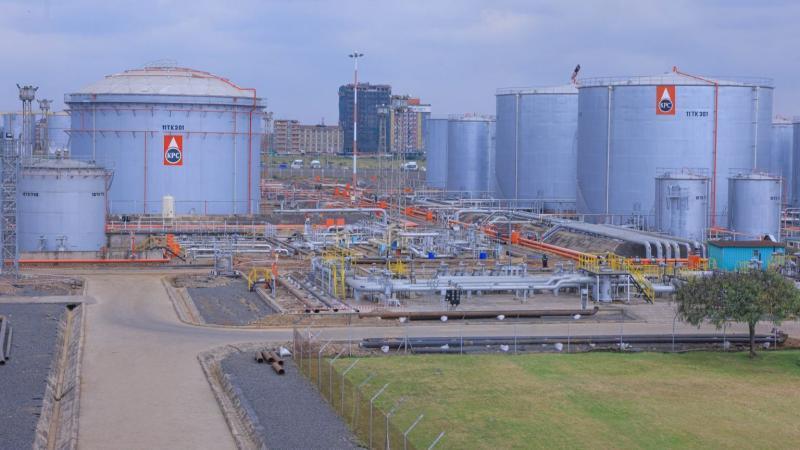
Kenya Petroleum Refineries Limited (KPRL), a subsidiary of Kenya Pipeline Company (KPC), has entered into a long-term crude oil storage and handling contract with Gulf Energy.
Kenya Petroleum Refineries Limited (KPRL), a subsidiary of Kenya Pipeline Company (KPC), has entered into a long-term crude oil storage and handling contract with Gulf Energy E&P B.V. (GEBV).
In a statement on Thursday, August 27, KPC said internal projections estimate that the 25-year contract could generate gross revenue of approximately Ksh93.68 billion.
"Under the Contract, KPRL will provide facilities and services for the receipt, storage, handling and delivery of crude oil for export through Kipevu Oil Terminal II," the statement read.
KPC said the agreement will facilitate the utilization of KPRL’s infrastructure while expanding its participation in petroleum logistics and strengthening its long-term revenue outlook.
"The Contract supports the commercial utilization of KPRL’s existing and upgraded infrastructure and broadens KPC’s participation in petroleum logistics. This Contract is expected to contribute positively to KPC’s long-term revenue outlook through fixed service fees and the recovery of qualifying variable costs," the statement added.
Read More
KPC clarified that the projected Ksh93.68 billion revenue is based on anticipated crude oil throughput and applicable tariff assumptions and should not be interpreted as a guaranteed amount.
"Current internal projections estimate gross revenue of approximately Ksh93.68 billion over the 25-year contract period. This estimate is, however, based on projected throughput and tariff assumptions and does not constitute a guaranteed revenue commitment," the statement further read.
Separately, KPC and the Kenya Ports Authority (KPA) have revised their Service Level Agreement governing the operation and maintenance of Kipevu Oil Terminal II.
According to KPC, the agreement sets out the respective roles, responsibilities, service standards and coordination arrangements between the two entities.
"The revised Service Level Agreement replaces the earlier arrangement and strengthens clarity, accountability, performance monitoring, maintenance coordination and business continuity at the terminal," the statement noted.

KPC said the revised agreement is critical to maintaining reliable petroleum transportation despite not having significant direct monetary value.
"Although the agreement is not expected, by itself, to have a significant direct monetary value, it is operationally critical to KPC and to the reliable receipt and onward transportation of petroleum products serving Kenya and regional markets," the statement added.
KPC said the two agreements will strengthen its position in Kenya’s petroleum supply chain, support the optimization of KPRL’s assets and create opportunities for sustainable revenue generation.
"Together, the agreements reinforce KPC’s strategic role in the petroleum supply chain serving Kenya and regional markets, support the optimization of KPRL assets, and provide a platform for diversified and sustainable revenue generation," the statement explained.
KPC said it will continue monitoring the implementation of the agreements and provide additional disclosures where required by law and the Nairobi Securities Exchange (NSE) Listing Rules.
"KPC will monitor implementation of these agreements and will make further disclosures where required under applicable law and the NSE Listing Rules," the statement concluded.
This comes weeks after Kenya and Rwanda signed three key agreements that will allow Rwanda to import bulk refined petroleum products through the Port of Mombasa under a Government-to-Government (G2G) arrangement.
The agreements, signed on Monday, June 29, at KASNEB Tower in Nairobi, include a Memorandum of Understanding (MoU), a Tripartite Agreement (TPA), and a Transport and Storage Agreement (TSA).
Together, they fully open the Northern Corridor for Rwanda's bulk petroleum imports and are expected to significantly increase fuel volumes transported through Kenya.
The agreements conclude negotiations that began during a bilateral meeting in Kigali in November 2024; Kenya's Cabinet later approved the framework on June 16, 2026, paving the way for its implementation.
The framework is projected to increase Rwanda's annual petroleum imports through the Northern Corridor from approximately 42,000 cubic metres recorded in 2025 to more than 500,000 cubic metres.
Speaking during the signing ceremony, Energy Cabinet Secretary Opiyo Wandayi described the agreements as a long-term commitment between the two countries.
"What we are signing today is not just a legal framework but a commitment by the Ministry and all agencies related to the petroleum sub-sector: Kenya will provide a transit environment to guarantee security of supply of bulk refined petroleum products to Rwanda for the long haul.
"The volumes are set to grow more than tenfold. But the numbers are not the endgame; what this represents for our two great nations is deeper economic integration that will serve the East African Community and the Great Lakes Region for several decades to come," he said.





-1783602407-md.jpg)
-1791444589-sm.jpg)


 (1)-1791440546-sm.jpg)