Editor's Review
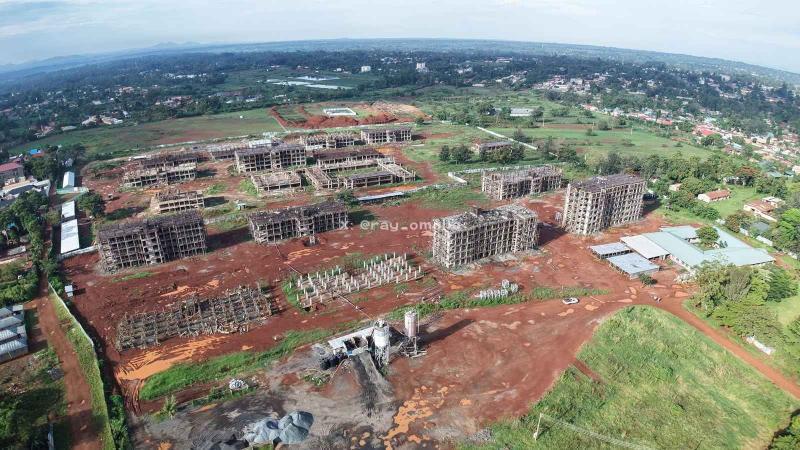
The Busia ATC Estate affordable housing project is taking shape as the Government advances the construction of more than 2,000 housing units.
The Busia ATC Estate affordable housing project is taking shape as the Government advances the construction of more than 2,000 housing units under the Boma Yangu Affordable Housing Programme.
In a statement on Sunday, September 27, Interior Principal Secretary Raymond Omollo said the project is being implemented in two phases on a 10.5-acre site and will provide homes for social, affordable and market-rate homebuyers, while also supporting economic activity in Busia Town.
"The Affordable Housing Program (AHP) remains one of the Government's strategic interventions for creating sustainable jobs and expanding economic opportunities for thousands of Kenyans, particularly the youth," he said.

Omollo said the ongoing development demonstrates the Government's focus on linking affordable housing with broader economic opportunities for communities hosting the projects.
Read More
"This commitment is evident in the ongoing Busia ATC Estate development under the Boma Yangu Affordable Housing Programme, a transformative project that is reshaping the urban appearance of Busia Town while stimulating economic activity across the region," he added.

Phase I of the project is currently 25 percent complete and consists of 11 residential blocks containing 1,025 housing units.
Phase II has reached 18 percent completion and will provide an additional 1,026 units once completed, bringing the total number of units across the two phases to more than 2,000.
The development is expected to widen access to decent housing for residents while supporting the construction industry and associated businesses within the region.
Omollo noted that the economic impact of the project extends beyond the construction site, with local workers, artisans and businesses participating in the supply and delivery of various components.
"The project is creating jobs and business opportunities throughout the construction value chain. Local youth and women have secured employment on-site, while Jua Kali artisans are supplying key components, ensuring that the economic benefits of the project are felt across the community," he concluded.

Elsewhere, more than 5,000 traders who were displaced to allow for the construction of the modern Gikomba Market are expected to return to modern trading spaces as the first phase of the project nears completion.
The first phase of the project, which began in April, is targeted for completion by October 15, 2026.
The Gikomba market has for years been affected by congestion, flooding, fires and inadequate working spaces.
The redeveloped market will include lifts, parking facilities, a police station and a new fire-fighting system, addressing some of the challenges traders have faced for years.
It is also expected to provide a more organized and secure working environment for traders.
Gikomba traders have welcomed the construction of the new market, saying it is a significant improvement from the muddy and overcrowded conditions they previously operated in.
"When it rained, it was very muddy, making it difficult for traders to access this area. But as you can see, the new market looks very good. It has been built with blocks, and we are expecting the best," said Virginia Wachira.
The traders also highlighted the high cost of operating in temporary spaces, where small trading areas have attracted charges of between Ksh2,500 and Ksh3,000.
XWhere we were operating before, the cost was very high. You would find that a three-by-six-foot space was being charged at Ksh2,500," said Yoga Ibrahim.
The traders further said the completion of the new market will ease the burden of frequent fires and provide better facilities for their businesses.
"I lost approximately Ksh2.5 million worth of bales that I had purchased and stored. I am very optimistic that this project will help us address the challenge of fires," Swaleh Pashua stated.