Editor's Review
As Kenya continues to develop its digital infrastructure, lessons from Chinese cities show how technology, digital platforms and field teams can work together as one connected system to improve urban management.
Every day, millions of events unfold across a city, many of them unnoticed until they become a problem. Technology is changing how some cities detect, understand, and respond to what happens in their streets and public spaces.
China has been at the forefront of this shift, connecting cameras, sensors and artificial intelligence to turn events across a city into useful information. The data is fed into central systems where authorities can monitor situations, understand what is happening and coordinate responses.
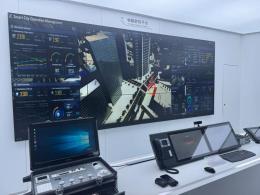
An exclusive visit by Nairobileo.co.ke to Dahua Technology in Beijing showed how this works in practice. On a display table sat a solid handheld device about the size of a large smartphone.
This was the DH-MPT350, a 5G mobile terminal designed for officers working on the ground. It has a 6.3-inch screen, dual rear cameras, a strong battery, and 5G connectivity.

An officer can record video, take photographs, capture their location and send the information to a central platform. What the officer sees at the scene becomes part of the same picture available to those coordinating the response.
The device keeps field staff connected to the wider system instead of working alone. But the terminal is only one part of a much bigger design.
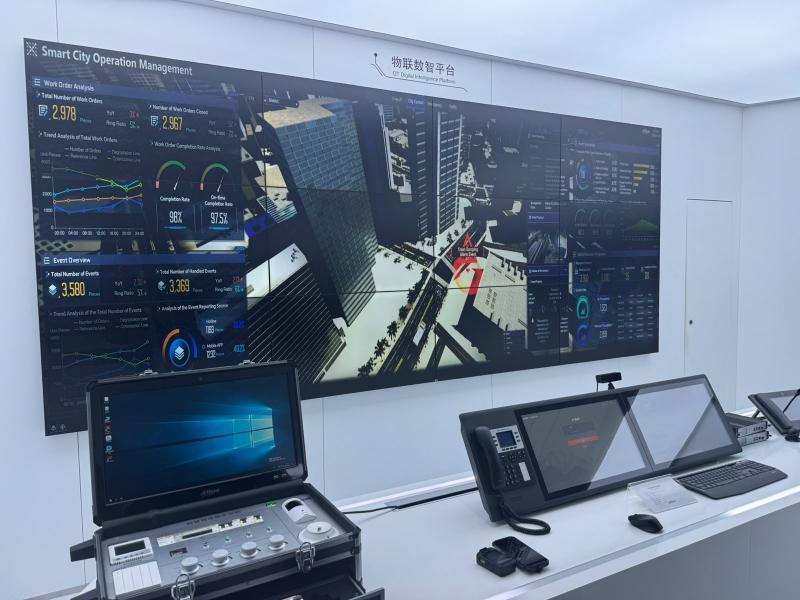
Large screens in the showroom showed how cameras, sensors and artificial intelligence feed into the same command centres. Information no longer stays in separate places. It moves from the streets to a central platform where operators can monitor events, assess situations and coordinate different teams.

The model extends beyond traffic management. Dahua says it has supplied smart-city solutions to more than 900 projects in 70 countries and regions across Latin America, Asia-Pacific, the Middle East, Europe and beyond.
In Lincoln in the United Kingdom, the city replaced an analogue CCTV system that had been running for more than 20 years with more than 300 modern cameras and related equipment as part of its Vision 2020 plan.
The network added panoramic views, number-plate recognition, heat maps and pedestrian counting. Police found they could review a much larger share of incidents, with the proportion rising from 5 per cent to 60 per cent. The system now supports the handling of tens of thousands of cases each year.
Other projects showed the technology being used beyond traffic and conventional CCTV. In Colombia, Dahua says its systems brought face and vehicle intelligence together while allowing third-party cameras to be integrated into a single platform.
The technology has also been used around major international events. Dahua supplied more than 1,800 cameras for the Rio 2016 Olympic Games and later provided monitoring systems for venues at the Beijing 2022 Winter Olympics.

The common thread across these examples is not a particular camera or device, but the connection between different sources of information. A field officer, camera, or sensor can feed information into a wider system where it can be viewed alongside other data.
That approach has relevance for Kenya, which is already investing in digital systems for managing public services and transport.
In December 2025, Kenya signed a US$185 million concessional loan agreement with China EximBank to finance an Intelligent Transport System for Nairobi.
The National Treasury says the project will improve traffic coordination, reduce congestion and make roads safer through real-time surveillance. It is also meant to support data-driven enforcement and strengthen digital systems for transport and urban services.
Phase III of the Nairobi system will cover 125 intersections. It includes a Traffic Management Centre, signal control, video surveillance, violation detection, traffic-flow collection and a communications network. Budget documents for 2026 set aside KSh1.18 billion for the phase in the 2026/27 financial year.
Kenya already uses connected roadside technology in other areas. The Kenya National Highways Authority runs virtual weighbridges that use sensors, cameras and number-plate recognition to send vehicle data to a control centre for analysis.
The wider Intelligent Transport System provides an opportunity to connect more of these capabilities and give authorities a broader picture of what is happening across the road network.
But the lesson from China is not that Nairobi should copy a particular system. The two countries have different infrastructure, resources, institutions and daily challenges, meaning technology and operating methods would need to be adapted to Kenya’s conditions.
The more useful lesson is how the different parts connect. Information moves from devices in the field to central systems and then to the people responsible for making decisions and responding.
As Kenya continues to develop its digital infrastructure, the experience of Chinese cities and other places where similar systems have been deployed offers a glimpse of what is possible when cameras, sensors, platforms, and field personnel work as one connected network rather than as separate tools.
-1789385357-md.jpeg)