
Editor's Review
Fifteen years after its establishment, Katiba Institute (KI) has grown into one of Kenya’s prominent constitutional advocacy organisations.
Fifteen years after its establishment, Katiba Institute (KI) has grown into one of Kenya’s prominent constitutional advocacy organisations.
It is prominently known for challenging government excesses, defending fundamental rights, and pushing for accountability in public institutions.
But its origins lie in a much longer struggle against political interference in constitutional reform.
Why Katiba Institute was Established
The story of Katiba Institute began long before the organisation was formally established in 2011.
Read More
Its origins can be traced to Kenya’s struggle for constitutional reform, the political battles surrounding the drafting of a new Constitution, and the growing realisation that adopting a progressive legal framework would not, by itself, guarantee its implementation.
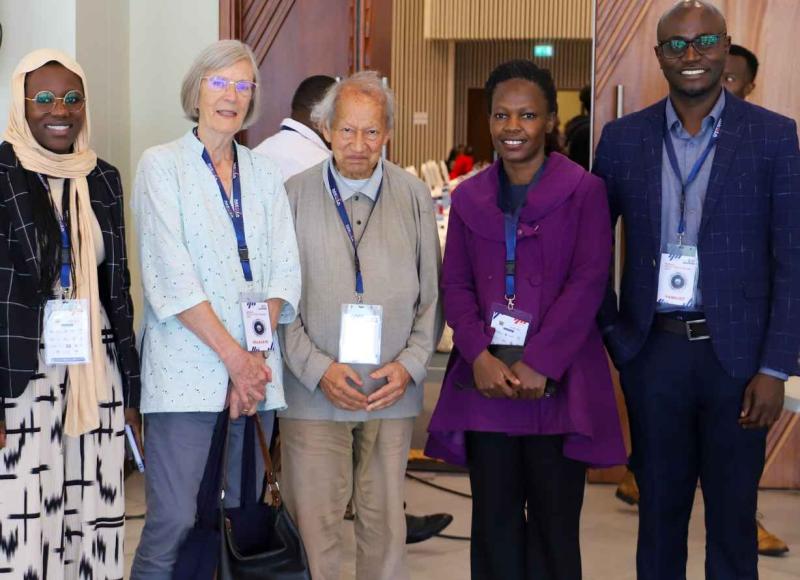
At the centre of this journey were Professor Yash Pal Ghai, a constitutional scholar who had spent decades in exile from Kenya, and his wife, Jill Cottrell Ghai, a legal scholar and fellow constitutional reform advocate, and Waikwa Wanyoike, the institution’s first Executive Director.
Their experience in Kenya’s constitutional review process convinced them that the country needed an independent institution dedicated to defending the Constitution, holding public institutions accountable and helping ordinary citizens understand and exercise their rights.
“I realised that it was not enough to rely on a majority popular vote to ensure not only the adoption of the draft constitution but also its implementation,” Ghai said.
Wanyoike said there was an apparent recognition at the time that the adoption of a new Constitution would need to be accompanied by strong civil society organisations capable of defending it, educating the public and helping those responsible for its implementation understand its provisions.
“There was an apparent feeling at the time that when a new constitution came into place, there would be a need for very robust civil society organisations that could defend the Constitution, help people understand what it was about, and help those charged with its implementation understand its different aspects,” he stated.
The Constitutional Context at the Time
Kenya’s constitutional reform process was marked by disagreements over the distribution of executive power, the structure of government and the extent to which the new constitutional order would limit presidential authority.
After returning to Kenya in late 2000, following approximately 30 years in exile, Ghai led the Constitution of Kenya Review Commission (CKRC), which was responsible for developing proposals for a new Constitution.
However, the process exposed the difficulties of achieving constitutional reform in a political environment where leaders could seek to protect their own interests.
One of the most significant milestones was the Bomas draft, adopted by the National Constitutional Conference in 2004 after an extensive public and consultative process.
The draft proposed substantial changes to Kenya’s system of government, but disagreements between political leaders and other participants resulted in significant alterations to the document.
The revised document became known as the Wako draft, after then Attorney-General Amos Wako, and was rejected by Kenyans in the November 2005 constitutional referendum.
The experience reinforced Ghai and Jill’s concern that political elites could undermine reforms when proposed changes threatened their interests.
“Even before this, the idea had been mooted of setting up a civil society institution to support the Constitution once adopted, for it was clear that the political elite at least would fight, or scheme, to resist or undermine any aspects of a constitution they did not like.
“And it was with this in mind that I returned to Hong Kong in 2004 - shortly thereafter to resign from the CKRC because I believed it had finished its assigned task,” Ghai stated.
The constitutional reform process continued amid political disagreements, and the violence that followed Kenya’s disputed 2007 presidential election further exposed the consequences of weak institutions, political mistrust and the failure to establish a constitutional order capable of adequately managing political competition and protecting citizens.
Ghai and Jill returned to Kenya in late 2008 and became involved, from within civil society, in the work of the Committee of Experts, which was tasked with preparing the proposed Constitution.
Despite concerns about political influence during the final stages of the process, the two scholars came to support the proposed Constitution ahead of the August 2010 referendum.
The Constitution was approved on August 4, 2010, and promulgated on August 27, 2010.
It established an extensive framework for protecting fundamental rights, promoting democratic governance, strengthening independent institutions, and distributing power between the national and county governments.
For Ghai and Jill, however, the referendum was not the end of the struggle; it marked the beginning of a new phase in which the Constitution’s promises would have to be translated into practice.
“We worried that, unless there was some consistent and effective institution to protect the Constitution, it might be constantly flouted,” Ghai recalled.

The Vision Behind the Institution
Katiba Institute’s founding vision was captured in the commitment to “Protect and promote the Constitution”.
The founders understood that this objective required more than issuing statements in support of constitutional values.
It demanded practical action to ensure that constitutional rights were respected, government obligations were enforced, and public institutions were held accountable.
A central concern was the state of Kenya’s judiciary before the 2010 Constitution. The founders recalled a system affected by corruption, inefficiency, and subservience to the government.
Although reforms such as the vetting of sitting judges offered the prospect of a stronger judiciary, they recognised that judges and lawyers would also need to develop the knowledge and skills required to apply the new constitutional framework.
The vision extended beyond the courtroom. The founders wanted Katiba Institute to train judges and lawyers, conduct research, help universities incorporate constitutional studies into their teaching and improve public understanding of constitutional rights.
They also wanted Kenyans to understand how to use the courts, independent commissions, petitions, access-to-information mechanisms and public demonstrations to demand accountability.
The founders also saw an important role for the media, believing that journalists needed to understand constitutional questions well enough to report accurately on governance, public accountability and the exercise of power.
Early Priorities and Challenges
Katiba Institute began operating in March 2011, with initial funding from the Ford Foundation supplemented by savings contributed by Ghai.
The organisation was initially incubated by Akiba Uhaki Foundation (AUF), which provided administrative and financial mentorship while allowing the new institution to take responsibility for its programme activities.
For three years, until December 2013, Katiba Institute operated as a project of AUF.
During that period, it had a staff of three people and worked to establish the structures required for independent operations.
The early period required the organisation to develop administrative systems, build a team, identify its priorities and establish relationships with other civil society actors.
Katiba Institute was formally registered in June 2012 as a company limited by guarantee, marking an important step towards institutional independence.
Its immediate priorities followed directly from the founders’ vision. These included preparing and pursuing public interest cases, conducting constitutional research, improving public understanding of rights, and engaging public institutions on their constitutional obligations.
Public interest litigation also presented significant difficulties. Cases could remain in court for years, requiring sustained financial and legal resources.
Public interest litigators could face intimidation, while communities involved in disputes with government authorities could experience serious consequences.
There was also a risk that courts could impose legal costs on communities involved in litigation.

How the Founding Vision has Evolved Over the Years
From its beginnings in 2011, Katiba Institute developed from a small organisation built around the concerns of its founders into a multidisciplinary institution.
Legal action remained central, but it had to be complemented by public education, community engagement, research, policy advocacy and the development of institutions capable of implementing constitutional requirements.
The organisation’s early emphasis on defending the 2010 Constitution therefore broadened into a more comprehensive effort to promote a culture of constitutionalism.
That approach involved helping citizens understand their rights, supporting public officials in complying with constitutional duties, encouraging meaningful participation in government decisions and challenging the misuse of public authority.
The founders’ original concern, that a Constitution could be undermined even after receiving popular approval, remained relevant to this expanded mission.
Fifteen years after its establishment, Katiba Institute has evolved into an established constitutional institution with a growing multidisciplinary team, formal governance structures and specialised functions supporting its work.
Guided by its 2025-2029 Strategic Plan, the Institute is now focused on consolidating its programmes, strengthening its internal capacity and responding to emerging constitutional and human rights challenges, including those arising from technology, while expanding its regional and international engagement.
-1789385357-md.jpeg)




-1780684637-sm.jpg)
 (1)-1792999571-sm.jpg)