
Editor's Review
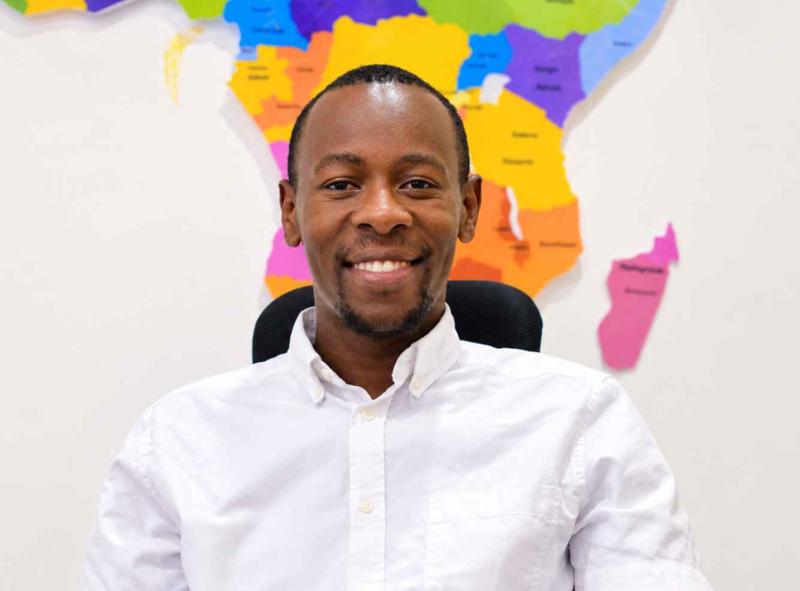
When Victor Muriithi joined the Emerging Leaders Foundation-Africa (ELF-Africa) VirtueLEAD Fellowship, leadership was not a subject that particularly excited him.
When Victor Muriithi joined the Emerging Leaders Foundation-Africa (ELF-Africa) VirtueLEAD Fellowship, leadership was not a subject that particularly excited him. With an academic background in aeronautical engineering, he initially believed that technological advancement could solve many of society’s challenges.
However, nine months of research, mentorship, coaching and community engagement changed his perspective, teaching him that technology could only deliver meaningful results when supported by effective leadership.
His experience reflects the mission of the VirtueLEAD Fellowship, an initiative designed to develop a new generation of leaders by placing character, values and inner strength at the centre of leadership development.
The nine-month programme targeted professionals aged between 25 and 35 from government, business, non-profit and corporate sectors.
Inside the VirtueLEAD Fellowship
Read More
According to Vicky Mulema, a programme officer at VirtueLEAD, the fellowship sought to establish whether young people from diverse backgrounds could strengthen their leadership values through sustained personal development.
“We did this because we wanted to test whether values can be built among a group of young people who are diverse in their geography and backgrounds, by putting them in an environment for 9 months where they are challenged to work on their character and inner strength,” Vicky tells Nairobileo.co.ke.
The programme combined learning sessions, coaching, counselling and practical research, allowing participants to examine challenges affecting their workplaces and communities.
Mulema noted that some participants initially struggled with confidence but gradually developed the courage to express themselves and take on leadership responsibilities.
“We have seen first-hand that it is possible. There are individuals who come in with a limiting mindset; they didn’t believe they had the capabilities to even make presentations. However, because of the sessions we have, the coaching and counselling, an inner strength grows in them, and they take steps towards working on themselves,” she added.

Mulema further revealed that 30 percent of the fellows identified active listening as a key value they had developed. Other values highlighted included courage, humility, hope, love and Ubuntu.
Victor Muriithi’s Leadership Journey
Muriithi learned about the fellowship while on a work trip in Asia after his academic programme leader recommended him for the opportunity.
Although initially sceptical about discussions on leadership because of his engineering background, he gradually recognised the influence of leadership on Africa’s development.
“My first degree was aeronautical engineering; this conversation about leadership did not excite me because of my background. However, I realised that Africa’s problems are rooted in leadership,” he said.
One of his biggest lessons concerned the relationship between technology and leadership.
“Technology is only as effective as good leadership. When good leadership is present, technology thrives. When bad leadership is present, it doesn't matter how amazing the technology is,” he added.
Researching Workplace Challenges
Through a group project under the Stewards of Change initiative, Muriithi and other fellows investigated graduate unemployment, examining the disconnect between university training and industry requirements.
The group engaged educational institutions and industry stakeholders to understand why graduates struggled to secure jobs despite the availability of employment opportunities.
“What surprised us was that many fourth-year students couldn’t qualify for entry-level jobs because what the schools were teaching them was not what the industry needed,” he said.
His individual research also examined artificial intelligence and algorithmic management in Nairobi’s call centres.
Titled The Influence of Algorithmic Management on the Formation of Virtuous Leadership in Nairobi Call Centers, the study investigated how automated systems monitored employees’ performance, breaks, leave days and other workplace activities.
Muriithi interviewed 231 people online and another 20 face-to-face. The findings revealed that 96 per cent of the respondents were actively monitored at work.
“They also confirmed that there was pressure from the system. For example, if you’re late by one minute, you’re late. It doesn’t matter if you got into an accident. If you return late from your break, you get punished immediately,” he explained.

According to Muriithi, respondents recommended balancing technology with human supervision and training managers to prioritise employees’ welfare.
“They said that if the human leaders in the workplace were trained to understand that they are there to support the human, not the machine, then people would have a better experience,” he added.
Kathy Njuguna’s Leadership Experience
Another fellow, Kathy Njuguna, joined the programme because of its emphasis on virtues and the opportunity to develop a deeper understanding of values.
“The fellowship was unique in that it sought to uphold virtues, and this is what spoke to me. I wanted to belong to a community where virtues are upheld, honoured and respected,” she said.
One of her biggest lessons was that leadership was not limited to people holding formal positions of authority.
“I used to think that a leader was someone who held a position of power. However, throughout the fellowship, I was consistently referred to as a leader, even though I held no formal position of power,” she added.
Njuguna noted that the experience helped her recognise her influence as a mother and within her family, demonstrating that leadership could also be exercised through everyday responsibilities.
Improving Patient Care Through Values
Njuguna’s research focused on dignity, respect and communication at Kibwezi Sub-County Hospital.
The findings showed that 82.5 per cent of participants reported positive experiences, including kindness and clear explanations.
However, 53.3 per cent also reported mixed experiences involving communication, waiting times, medicine management, payments and access to services.
“The challenge is not simply that disrespect exists; it is about consistency. A patient may be treated kindly at one service point but feel dismissed at another,” she stated.
The findings challenged her initial expectations, particularly because she had previously experienced a difficult encounter while seeking treatment for her child.
She recommended introducing a standard respectful care protocol requiring healthcare workers to greet patients, communicate clearly, and explain the next steps in treatment.
Njuguna also called for accessible feedback mechanisms to help healthcare facilities address patients’ concerns and improve accountability.
“Respectful care is not just about being polite; it is about protecting patients’ dignity and right to be informed throughout their care journey,” she mentioned.
Expanding Values-based Leadership
The fellows' experiences demonstrated how personal character development could translate into practical solutions to challenges affecting workplaces, healthcare facilities and communities.

Mulema said the fellowship began as a pilot project intended to establish whether sustained values-based learning could produce measurable changes in participants' leadership approaches.
“This project was a pilot; we were testing to see whether it was possible for us to observe any kind of change within this small sample of people,” she added.
The organisation hopes other institutions, including government agencies, will incorporate similar initiatives into their leadership and management programmes.
“Ultimately, one of the things we are hoping for is that other organisations and even the government can think about inculcating value-based leadership opportunities within their organisations,” Mulema further said.
Through the fellowship, participants were challenged to move beyond leadership defined by titles, authority and technical competence, embracing values such as courage, humility, active listening, hope, love and Ubuntu.
Mulema also outlined how interested individuals could access ELF-Africa's programmes, encouraging prospective participants to visit the organisation's website to explore the opportunities available across its different areas of work.
She explained that ELF-Africa managed different cohorts under its programmes, including leadership development, governance and civic engagement, as well as social and economic inclusion.
For leadership development, the organisation offered the iLEAD Fellowship, while another VirtueLEAD cohort could be launched next year.
"For governance and civic engagement, you can contact us, and we will connect you with our county teams," Mulema noted.
She added that individuals interested in social and economic inclusion programmes could also reach out to the organisation to be connected with the relevant teams working on the ground.
Prospective applicants interested in leadership development opportunities were encouraged to follow EFL Africa's social media platforms, where announcements inviting applications into its various programmes were periodically published.



-1789385357-md.jpeg)