
Editor's Review
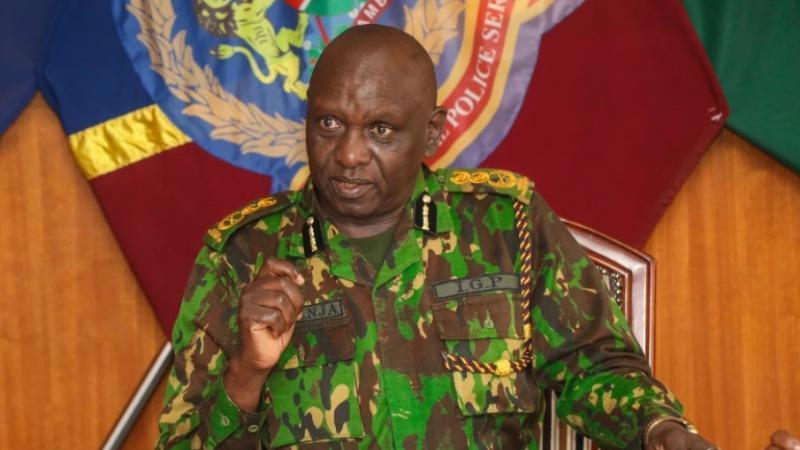
The High Court has ordered the Inspector General of Police, Douglas Kanja, and DCI boss Mohamed Amin, to produce the missing businessman, Ibrahim Mohamed, dead or alive.
The High Court has issued an order of habeas corpus compelling the Inspector General of Police, Douglas Kanja, and the Director of the Directorate of Criminal Investigations (DCI), Mohamed Amin, to produce the missing businessman, Ibrahim Mohamed, dead or alive.
Justice William Musyoka issued the order on Thursday, February 5, following a petition filed by Busia Senator Okiya Omtatah.
“That an order of Habeas Corpus be and is hereby issued compelling the Respondents jointly and severally produce before this honourable court the body of Ahmed Ibrahim Mohamed, whether alive or dead, and to show lawful cause for his arrest, detention or continued confinement,” read the order in part.
In the event that IG Kanja and Amin fail to produce Mohamed, the court directed them to file sworn affidavits within 24 hours.
Justice Musyoka said the affidavits must fully, truthfully, and individually account for the circumstances of Ahmed’s arrest.
Read More
.png)
“That in default of production, Respondents are compelled to file a sworn affidavits within 24 hours, fully, truthfully and individually accounting for the arrest of Ahmed Ibrahim Mohamed, the officers involved and their command structure, the place(s) of detention or transfer, his current whereabouts, condition or fate,” Justice Musyoka directed.
Mohamed went missing two weeks ago after he was allegedly removed from a Nairobi-bound bus at a roadblock.
The Busia-based businessman was carrying Ksh17 million in cash when he went missing.
Mohamed’s disappearance on Wednesday, February 4, sparked protests in Busia town, with residents and his family members demanding answers about his whereabouts.
The protestors were dispersed after police officers lobbed tear gas canisters into the crowd.
Several other demonstrators were arrested during the protests and taken into police custody.
Meanwhile, Senator Omtatah has called on IG Kanja and Amin to comply with the court order and produce Mohamed.
“We demand that the National Police Service (NPS) and DCI comply with this order without delay. Compliance is a constitutional obligation, not an option. To the public and civil society: stay engaged. Public scrutiny is often the only thing that protects the vulnerable,” said Omtatah

 (1)-1791708588-md.jpg)
 (1)-1791175033-md.jpg)
-1791699761-md.jpg)
-1791696120-md.jpg)


 (1)-1791708588-sm.jpg)
 (1)-1791175033-sm.jpg)

-1791699761-sm.jpg)