-1770784420.png)
Nairobi Governor Johnson Sakaja has revealed that Nairobi would now be ruled using a two-tier governance structure.
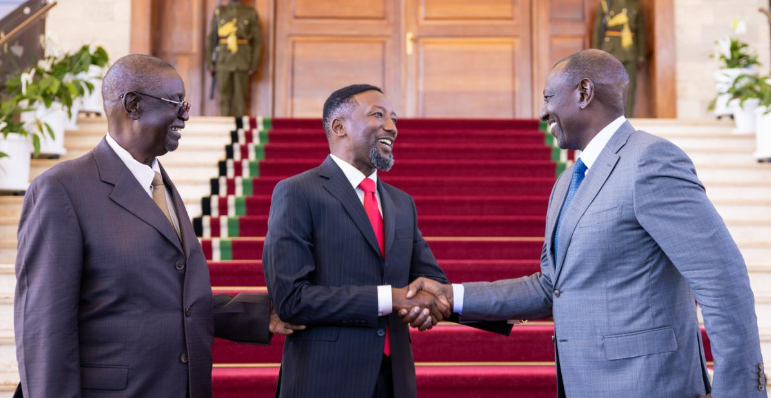
Speaking on Tuesday, February 17, after signing a cooperation deal with the national government, Sakaja explained that Nairobi will be led by two committees; Steering Committee and the Implementation Committee.
The Governor will chair the Implementation Committee, while the Steering Committee will be chaired by Prime Cabinet Secretary, Musalia Mudavadi.
Mudavadi will be deputised by Sakaja and will work alongside other cabinet secretaries.
"The Steering Committee, headed by the Prime CS and deputised by me, will comprise CSs and county secretaries. It will set the overall policy goals and direction of the County," he stated.
Read More

Sakaja's Implementation Committee will implore the series of Principal Secretaries.
"The day to day ekseution of programmes and projects will be overseen by the Implementation Committee, which will be chaired by the governor of Nairobi.
"It will be comprised of PSs and County Executive Committee members responsible for the corresponding functions," he revealed.
The agreement between Nairobi County and the government will see the State step in to reinforce security within the city.
"This agreement solidifies these arrangements by providing additional support inluding partnerships in security and order, because we promised a city of order and dignity," Sakaja stated.
Other areas the two goernments hae collaborated in include the Nairobi Rivers Commission, water provision, the school feeding programme, roads and mobility, markets and housing.
Mudavadi lauded Sakaja for taking the necessary steps for the benefit of the county. He advised him to ignore nay-sayers.
"There will be mudslingers, but at the end of the day, without these initiatives, we are in trouble," the Prime CS stated.
Sakaja maintained that the new cooperation agreement was just a collaboration and not the transfer of county functions.
On his part, President William Ruto defended the deal, stating that it was guided by the law.
"Article 189(2) of the Constitution requires the two levels of government to cooperate, assist and consult each other. The Intergovernmental Act provides a mechanism for formal coordination," the Head of State said.