
Editor's Review
The figure represents an increase of 261 deaths compared to 2024.
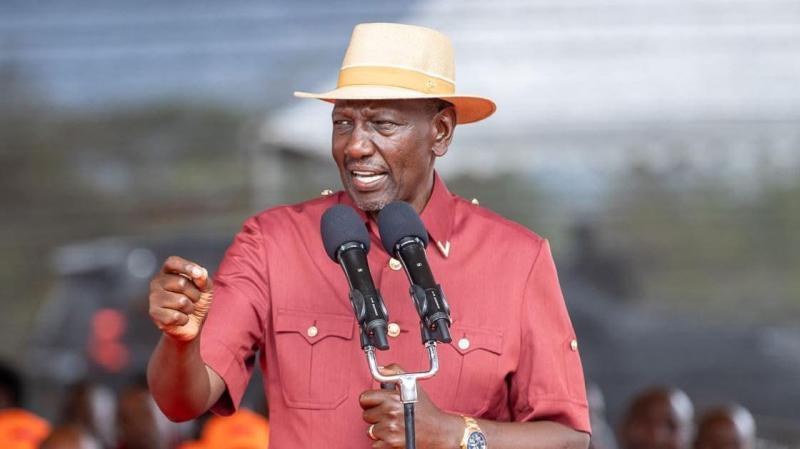
President William Ruto has revealed that 5,009 Kenyans lost their lives in road accidents last year.
Speaking during the Presentation of a Report by the National Council on the Administration of Justice on Traffic Accidents and Deaths on Monday, March 2, he said the figure represents an increase of 261 deaths compared to 2024.
"Kenya records more than 4,000 road fatalities annually. Last year alone, 5,009 deaths were reported on our roads, an increase of 261 compared to 2024," he said.
Ruto noted that beyond the human toll, road crashes are inflicting significant economic losses on the country.
"These accidents and their ensuing fatalities and injuries cost our economy the equivalent of 5% of our GDP, translating to an estimated loss of Ksh450 billion annually," he added.
Read More
Ruto also singled out the 2025 festive season as particularly tragic, even as he acknowledged ongoing efforts to address the challenge.
"During the 2025 festive season alone, 415 deaths were recorded, a 23% increase from the previous year. I am, however, encouraged that deliberate steps are already being taken to confront this challenge," he continued.
Ruto said enforcement measures rolled out during the festive season had started to bear fruit.
He noted that the crackdown had led to a notable drop in fatalities involving Public Service Vehicles (PSVs).
"I am pleased to note that the interventions during the festive season yielded measurable gains. The deployment of 36 prosecutors, 40 officers from the Ethics and Anti-Corruption Commission, and 121 officers from the National Transport and Safety Authority significantly strengthened enforcement.
"As a result, fatalities involving Public Service Vehicles declined by 10%, largely due to intensified oversight. This initiative has, therefore, established a viable and replicable national model for managing traffic offences," he further said.

Addressing the causes of road carnage, Ruto outlined a range of contributing factors affecting motorists, operators and pedestrians alike.
"Major contributors include reckless driving, speeding and drunk driving, poor driver training, widespread unlicensed riding, unroadworthy vehicles, counterfeit spare parts, unsafe road design, and the high vulnerability of pedestrians and motorcyclists. Economic pressures on PSV operators are also contributing to risky behaviour," he explained.
Ruto further pointed to systemic gaps within the justice system that undermine efforts to curb traffic offences.
"The pilot further exposed critical weaknesses within the justice chain. These include persistent corruption and roadside bribery, delays in investigations and prosecutions, weak evidence management systems, digital gaps, inconsistent fines, absence of traffic-specific sentencing guidelines, limited capacity of the workforce, funding constraints, and weak enforcement of Notices to Attend Court," he stated.
Elsewhere, Ruto has directed the Ministry of Transport and the National Transport and Safety Authority (NTSA) to install speed cameras across major towns.
He said the speed cameras should be installed within a month, adding that they should be integrated with instant fines.
"When you leave here, go do what you have to do with the support of the Ministry of Transport. Rolling out the cameras is not rocket science since we have had cameras before on the roads, so let us roll out the cameras in six major towns in Kenya in the next one month.
"And those cameras should be connected to the whole framework of instant fines," he ordered.
Ruto noted that the rollout of the speed cameras and instant fines will make it easy for the government to deal with traffic offenders.
"This will make it easy for us to do several things. We will not be arguing with offenders; the cameras will provide full proof that they are in breach," he stated.
Ruto also noted that the move would prevent some cases from proceeding to court since the fines are predetermined, and added that the state would be able to generate revenue directly from the penalties.
"We do not have to go and bother the chief justice in court; the fines will be predetermined. When you commit an offence, you will receive a fine on your phone instantly. The issue of us not having money will also end because we will be collecting money instantly," he added.


-1792071927-md.jpg)




-1792071927-sm.jpg)