Editor's Review
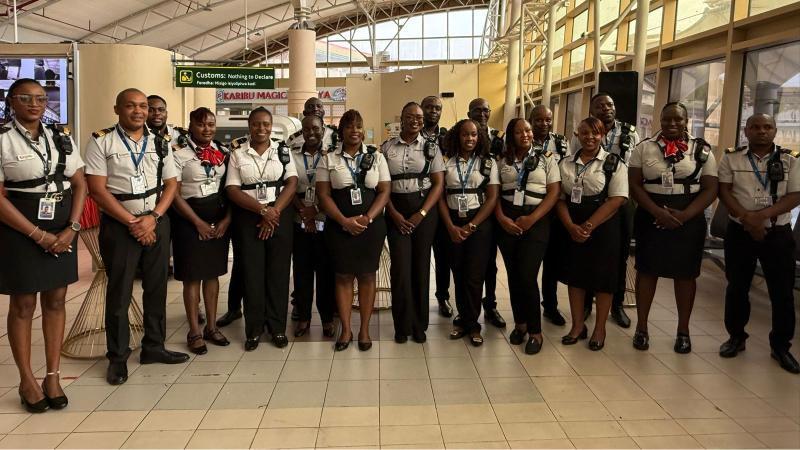
The Kenya Revenue Authority (KRA) has addressed concerns over privacy following the rollout of body-worn cameras for its officers.
The Kenya Revenue Authority (KRA) has addressed concerns over privacy following the rollout of body-worn cameras for its officers.
In a brief statement on Tuesday, March 10, the agency explained that the recordings captured by the devices are handled in compliance with the data protection laws.
"The recordings are processed in accordance with the principles of lawful processing under the Data Protection Act, 2019 (Kenya)," the statement read.
KRA said the cameras helps create verifiable records of interactions, which can be used in case of disputes, investigations, or accountability reviews.
"KRA body-worn cameras are used within this framework to support transparency, accountability, and proper documentation of official border interactions," the statement added.
Read More
Notably, in a statement on Monday, March 9, the authority described the introduction of the cameras as a commitment to ensuring that every traveler receives a fair and consistent experience when interacting with customs officials.
KRA noted that customs operations involve some of the most frequent interactions between government officers and the public, including travelers, importers, and traders.
"For too long, ‘it’s your word against mine’ has been an uncomfortable reality at border points. Disputes dragged on. Trust eroded. And the officers doing their jobs right had no way to prove it," the authority said.

According to KRA, the body-worn cameras will help eliminate such disputes by creating a verifiable record of every interaction between officers and members of the public.
The authority said the cameras will enhance transparency by providing objective documentation of engagements at customs checkpoints, reducing uncertainty and resolving disagreements based on factual evidence.
KRA added that the initiative will also act as a deterrent against corruption, noting that recorded interactions are expected to raise professional standards among officers and reinforce ethical conduct during inspections and enforcement actions.
The cameras are also expected to improve the experience for passengers and traders by promoting structured, consistent, and fair engagements.
In addition, KRA said the technology will speed up investigations into complaints; disputes that previously took weeks to examine could now be resolved within hours by reviewing recorded footage.
Furthermore, the authority noted that the recorded material will serve as a learning tool to improve operations.
By reviewing footage, KRA said it will be able to identify gaps in procedures, enhance training programs, and refine service delivery across customs operations.
"This is KRA saying to every traveler, every importer, every Kenyan stakeholder: We are committed to fairness. We are committed to integrity. And we are willing to be held accountable for it," the authority added.