
Editor's Review
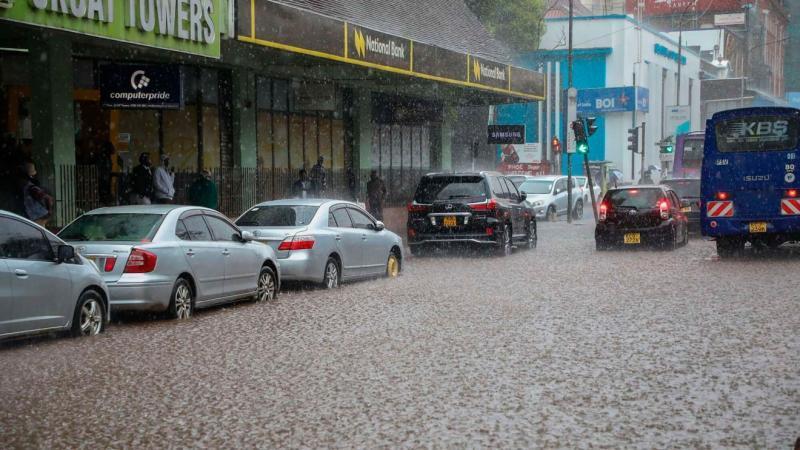
The Ministry of Environment has issued a nationwide alert warning of intensified rainfall expected across 46 counties.
The Ministry of Environment has issued a nationwide alert warning of intensified rainfall expected across 46 counties.
In a statement on Wednesday, March 18, the ministry cautioned that the ongoing rains will increase in intensity over the coming days.
Explaining the peak period of the rains, it noted that the most intense phase will occur mid-period before easing slightly toward the end of the forecast window.
"The rainfall being experienced over several parts of the country is expected to intensify to more than 20mm in 24 hours from March 19th to 24th March 2026. The intensity is expected to peak between 20th and 23rd March 2026, before decreasing in intensity on 24th March 2026," the statement read.
Clarifying that rainfall will persist even after the peak period, the ministry highlighted several regions that will continue to receive significant precipitation.
Read More
"Although the intensity may reduce toward the end of this period, rainfall is still expected to continue over several parts of the country: in the Lake Victoria Basin, Highlands West of the Rift Valley, the Rift Valley, Highlands East of the Rift Valley (including Nairobi)," the statement added.
The ministry highlighted the potential dangers associated with the heavy rains, warning residents to remain vigilant for flooding and other hazards.
"Residents in all the mentioned areas are advised to be on the lookout for potential floods, flash floods, and poor visibility. Flood waters may appear in places where it has not rained heavily, especially downstream," the statement continued.

The ministry also urged the public to avoid risky situations during the rainy period and to remain cautious in vulnerable areas.
"People are advised to avoid driving through or walking in moving water or open fields and not to shelter under trees and near grilled windows to minimize exposure to lightning strikes. People in landslide-prone areas, especially over the slopes of the Aberdare ranges, Mt. Kenya, and other hilly areas, should be vigilant," the statement concluded.
The areas of concern include Turkana, Samburu, Migori, Nyamira, Bungoma, Busia, Kakamega, Vihiga, West Pokot, Baringo, Elgeyo Marakwet, Trans Nzoia, Nandi, Uasin Gishu, Nakuru, Siaya, Kisumu, Homa Bay, Kisii, Kericho, Bomet, Kiambu, Embu, and Murang’a.
Others are Kirinyaga, Nyandarua, Nyeri, Laikipia, Tharaka-Nithi, Meru, Nairobi, Narok, Kajiado, Makueni, Machakos, Taita-Taveta, Kitui, Kwale, Mombasa, Kilifi, Garissa, and parts of Marsabit, Isiolo, Wajir, Mandera, and Tana River.
This comes days after the Kenya Meteorological Department (KMD) warned of heavy rainfall across six regions this week.
In a weather forecast for March 17, 2026, to March 23, 2026, the department said that rainfall intensity is expected to increase from Thursday, March 19, 2026.
The regions set to experience heavy downpour include the Highlands East of the Rift Valley, the Highlands West of the Rift Valley, the Lake Victoria Basin, the Rift Valley, the South-eastern Lowlands, and the Coast region.
"Rainfall is expected over the Highlands East and West of the Rift Valley, the Lake Victoria Basin, the Rift Valley, the South-eastern Lowlands, and the Coast region of Kenya, with increased intensity from Thursday. Isolated heavy rainfall events are also likely to occur over parts of these same regions," the forecast read.
The weatherman also predicted dry, sunny conditions in parts of northeastern and Northwestern Kenya, although occasional rainfall may occur in isolated areas.
Daytime temperatures above 30°C are expected across the Coast, Northeastern, and Northwestern regions of Kenya.
Parts of the Highlands East of the Rift Valley, the Central Rift Valley, the North Rift, and areas near Mt. Kilimanjaro will experience nighttime temperatures below 10°C.


 (1)-1791708588-md.jpg)
 (1)-1791175033-md.jpg)
-1791699761-md.jpg)
-1791696120-md.jpg)


 (1)-1791708588-sm.jpg)
 (1)-1791175033-sm.jpg)