
Editor's Review
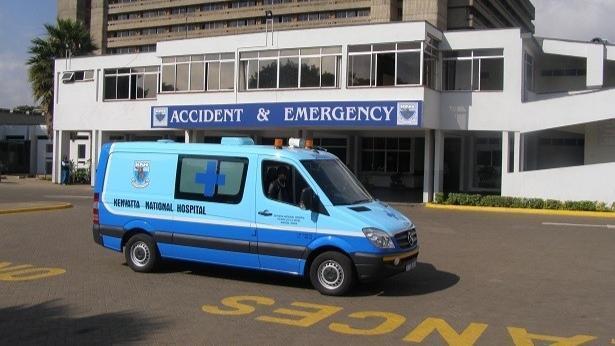
Kenyatta National Hospital (KNH) has achieved a major breakthrough after successfully carrying out the country's first Minimally Invasive Esophagectomy (MIE).
Kenyatta National Hospital (KNH) has achieved a major breakthrough after successfully carrying out the country’s first Minimally Invasive Esophagectomy (MIE).
In a statement on Wednesday, July 8, the hospital said the landmark operation was performed on June 30 on a 43-year-old patient who had been diagnosed with esophageal cancer.
According to KNH, before undergoing surgery, the patient received chemotherapy and radiotherapy as part of a treatment plan designed to shrink the tumour.
Following further medical evaluation by a multidisciplinary team, doctors determined that the patient was suitable for curative surgery using a minimally invasive technique aimed at completely removing the cancer.
Unlike traditional open surgery, which involves large incisions in the chest and abdomen, a Minimally Invasive Esophagectomy is performed through several small cuts using laparoscopic instruments and high-definition imaging.
Read More
During the operation, surgeons removed the diseased esophagus, reshaped the patient’s stomach into a tube, and repositioned it into the chest before connecting it to the throat to create a new food passage.
According to KNH, the minimally invasive approach offers several advantages over conventional surgery, including reduced blood loss, less pain after the operation, smaller scars, fewer respiratory complications and faster recovery.
The hospital said during the historic procedure, the patient experienced minimal blood loss and did not require a blood transfusion.
The hospital noted that while recovery from conventional open esophagectomy can take around two weeks due to the large surgical incisions, patients who undergo the minimally invasive procedure generally recover much faster.
After spending six days in the Critical Care Unit (CCU), the patient was transferred to the general ward and is recovering well.
Speaking after the surgery, Lead Surgeon Dr. Joseph Mutie described the achievement as a milestone for surgical care in Kenya.
"This is the first Minimally Invasive Esophagectomy performed in Kenya. It represents the global standard of care and demonstrates that Kenyan patients can now access world-class esophageal cancer surgery within our country," he said.

KNH Chief Executive Officer Dr. Richard Lesiyampe described the procedure as a significant step in the hospital’s ongoing transformation.
"KNH has demonstrated what is possible when clinical excellence, innovation, and teamwork come together. This historic first is not only a victory for KNH but for Kenya’s healthcare system.
"It reaffirms our commitment to providing world-class, patient-centered care, investing in cutting-edge technology, strengthening specialist training and ensuring that Kenyans can access the most advanced medical services," he stated.
This comes months after KNH performed Kenya’s first orbital-facial prosthesis procedure in a public hospital.
In a statement on Friday, February 13, the hospital said the procedure was completed in January 2026, making the hospital the first public facility in Kenya to deliver the highly specialised reconstruction surgery.
KNH detailed that the procedure was performed on 65-year-old John Munyiri, a farmer from Laikipia County, who had been battling a rare and aggressive sinus cancer.
"For 65-year-old Mr. John Munyiri, a farmer from Laikipia County, what began as a stubborn blockage in his left nostril slowly turned into a life-altering ordeal. Months later, his eye became swollen and watery, and daily life farming, sleeping, even speaking grew increasingly difficult.
"A biopsy confirmed the devastating diagnosis: maxillary carcinoma, a rare and aggressive cancer of the sinus. In June 2022, he was referred to Kenyatta National Hospital (KNH), where he underwent 25 sessions of radiotherapy in a determined fight to stop the disease from spreading," the statement read.
The hospital explained that although radiotherapy was administered, the disease advanced and required radical surgery to save his life.
"Despite treatment, the cancer required radical surgery in June 2023. Doctors removed his left eye, part of his nose, and sections of his upper jaw to save his life. When he woke up, he was cancer-free but physically transformed.
"The victory over cancer came with a heavy emotional cost. Looking in the mirror was painful. Walking with an eye patch drew stares. For a man deeply rooted in community life, the visible changes quietly eroded his confidence," the statement added.
Following the life-saving operation, KNH said its specialists embarked on a structured rehabilitation plan to restore the patient’s speech and feeding functions through prosthetic intervention.
"His journey did not end in the operating theatre. At the KNH Dental Unit, the Maxillofacial and Prosthodontics teams focused on restoring both his function and dignity. Once healed, he was fitted with a customized maxillary obturator to close the gap between his mouth and nasal cavity, enabling him to speak clearly and eat properly again.
"Dentures followed, and with continued speech therapy and prosthetic support, he gradually regained essential daily functions many people take for granted," the statement further read.

 (1)-1792314340-md.jpg)
 (1)-1792314340-sm.jpg)