
Editor's Review
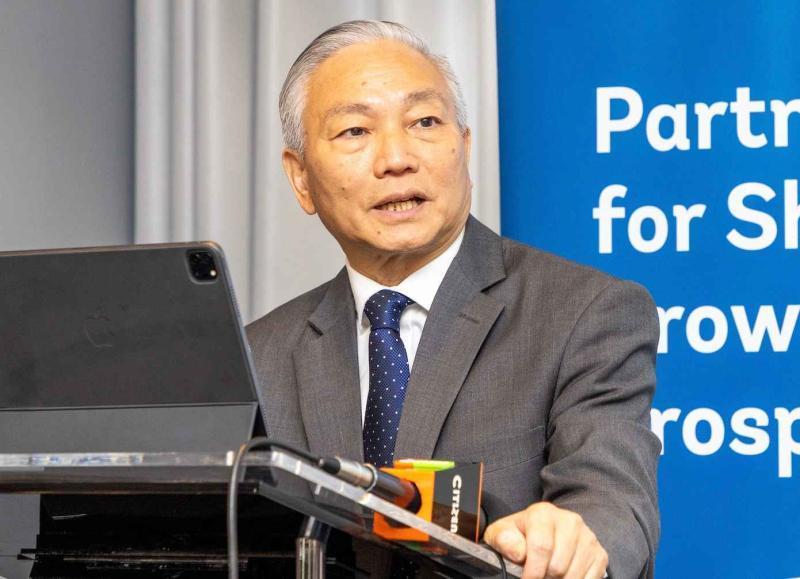
The World Bank has lowered Kenya's economic growth projections for 2026 to 4.3%, citing the effects of the conflict in the Middle East.
The World Bank has lowered Kenya's economic growth projections for 2026 to 4.3%, citing the effects of the conflict in the Middle East.
According to a report released by the global financial institution on Thursday, July 9, 2026, the latest forecast is 0.6% lower than the projections it made in late 2025 before the conflict involving the US, Israel and Iran.
The lender attributed the downgrade to rising global fuel prices, which have weighed on Kenya's economic recovery by increasing transport costs, food prices and the cost of doing business.
Higher fuel costs have translated into increased transport fares, rising food prices and higher production costs for manufacturers.
However, the lender projects that Kenya's economic growth will gradually improve to around 4.4% in 2027.
Read More
"Growth is projected at 4.3% in 2026 before gradually strengthening toward 4.4% over the medium term. This represents a downward revision of about 0.6 percentage points relative to pre-conflict projections published in late 2025, reflecting the impact of the Middle East conflict on Kenya's macroeconomic outlook," read the report in part.
"In the short term, higher global energy prices and increased uncertainty are expected to raise production costs, weaken private investment growth, and weigh on household purchasing power through higher commodity prices and moderating remittance inflows."
Nonetheless, the World Bank noted that some sectors of the economy are expected to remain resilient, including agriculture. It also cited the stability of the shilling, easing monetary policy and improved lending to the private sector as factors that will support growth.
Meanwhile, the lender warned that the external shocks could reverse Kenya's recent gains in poverty reduction.
The institution projects that the poverty rate could increase by between 2% and 4.5%, depending on the extent to which higher fuel costs continue feeding into the prices of other goods and services.

This translates to an estimated 1 million to 2.4 million additional Kenyans falling below the poverty line.
The conflict in the Middle East pushed Kenya's pump prices to record highs. In May, EPRA set the prices at Ksh214.25 per litre for Super Petrol and Ksh242.92 per litre for Diesel in Nairobi.
However, diesel prices were later reduced to Ksh232.86 following protests by matatu operators.
In response to the spike in pump prices, the government moved to cushion consumers by reducing Value Added Tax (VAT) on fuel from 16% to 8%.
Currently, a litre of Super Petrol retails at Ksh214.03, while Diesel costs Ksh222.86 in Nairobi.
The World Bank estimates that the tax cut reduced government revenue by between Ksh11 billion and Ksh22 billion during the last quarter of the 2025/26 financial year, equivalent to 0.05% to 0.1% of GDP.
"The measure highlights the difficult trade-offs facing fiscal policy amid heightened external shocks, as efforts to protect purchasing power and contain inflationary pressures may further constrain already limited fiscal space," the report states.
The report also pointed out that VAT was among the biggest underperformers in revenue collection.
"The most significant shortfalls relative to targets were observed in income tax and Value Added Tax (VAT), which fell short by 0.8 percentage points cumulatively as a share of GDP," the lender said.
"These two remain the predominant contributors to Kenya's overall revenue, accounting for 78.4% of total tax revenue and 57% of total revenue, including grants, in FY2024/25."
In response to its latest economic outlook, the World Bank urged Kenya to stay the course on fiscal consolidation while implementing reforms that support long-term growth.
The lender recommends strengthening revenue mobilisation, improving the efficiency and transparency of public spending, and maintaining prudent debt management to restore fiscal sustainability. It also called for reforms that encourage private sector investment, boost productivity, and create more quality jobs.






 (1)-1792314340-sm.jpg)