
Editor's Review
Kenya has unveiled a national mediation hub aimed at strengthening peacebuilding, alternative dispute resolution and preventive security in schools, colleges and universities across the country.
Kenya has unveiled a national mediation hub aimed at strengthening peacebuilding, alternative dispute resolution and preventive security in schools, colleges and universities across the country.
In a statement on Monday, September 21, the Ministry of Interior said the initiative was developed through the Jukwaa la Wasomi Initiative and is hosted by the Wangari Maathai Institute for Peace and Environmental Studies at the University of Nairobi.
The new platform will link more than 30,000 mediation hubs established in schools and campuses with national government administration officers and relevant government agencies.
The hubs are expected to provide institutions with mechanisms for resolving grievances, preventing student unrest and responding to mental health challenges through dialogue and mediation instead of force.
According to the ministry, the launch coincided with the graduation of Certified Professional Mediators trained through the Jukwaa la Wasomi Mediation and Preventive Security Training Program.
Read More
The event was held alongside the 2026 International Day of Peace celebrations and the second annual Jukwaa la Wasomi Summit.
The newly certified mediators are expected to serve as a network of peace ambassadors among young people, providing a foundation upon which the National Mediation Hub will expand its activities nationwide.
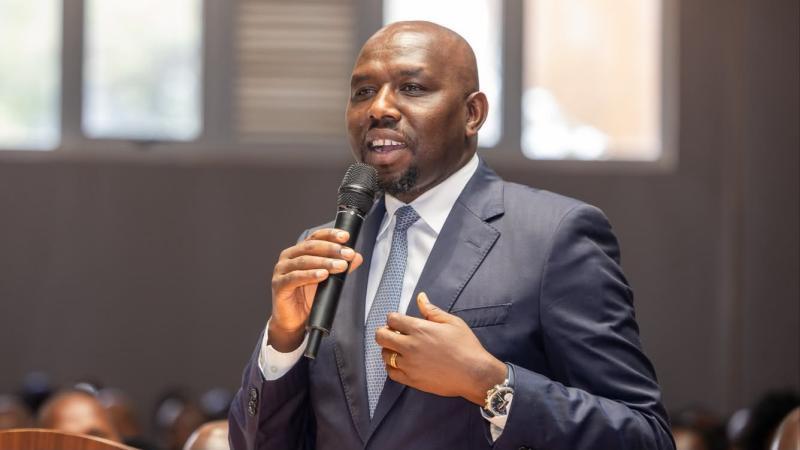
Interior Cabinet Secretary Kipchumba Murkomen said the programme would be particularly important as Kenya approaches the next general election, when political activity is expected to intensify in learning institutions.
Murkomen noted that the launch came at a significant stage in the country's five-year electoral cycle, with the 2027 General Election slightly more than 10 months away.
"Emotions will run high, including in campuses where students will express different political views. Do not be passive observers. Be instruments of peace. Where there are hostile debates, sow civility. And where there is anger, sow calm," he said.
Murkomen further raised concerns over the involvement of students in political mobilisation, warning that some young people could be exploited by political actors and recruited into violent activities.
"Before politicians go to their rallies, they go and mobilize students, which is okay. That's definitely okay, because those are voters. Unfortunately, some of them do so with the aim of turning some of our students into goons.
"This group, these mediators who are here, you're able to identify those situations as early as possible and direct our students in the right direction, not to be taken for granted or taken advantage of by wayward political players," he added.
Murkomen also announced measures aimed at giving student representatives a direct role in discussions concerning security within learning institutions.
"We are unveiling a new framework that brings student leaders and academic administrators directly into security and intelligence committees. For the first time, the voice of students will be at the table where decisions about their safety are made," he further said.

Murkomen said the government was also working to formalize the Jukwaa la Wasomi initiative, with the institutionalisation process expected to be completed within two weeks.
He said universities had historically played an important role in shaping national leadership and political thought, but argued that student politics had increasingly shifted away from ideological debates.
"The university has for a long time been the training ground for national leaders. Here, young people argued about ideas, about the direction of this nation, about the kind of Kenya we wanted to build. Somewhere along the way, university politics drifted from its roots and became more about small tribes and alliances instead of ideologies.
"Part of what we are doing through this is to help restore nationalism to university politics, to remind students that their first loyalty must be Kenya, not a clique or a religion or a region or a shortcut to personal gain," he noted.
On her part, Higher Education and Research Principal Secretary Beatrice Inyangala said the Jukwaa la Wasomi Summit should provide an opportunity to address the challenges affecting young people rather than merely serve as a ceremonial event.
"The 2nd annual Jukwaa la Wasomi Summit gives us an opportunity to go beyond celebration and ask difficult questions: How do we build greater trust? How do we make dialogue part of our everyday culture? And how do we equip young people to handle disagreements constructively?" she said.
Inyangala also highlighted research indicating that violence remains a significant concern among students in Kenya.
"Research tells us that 90 percent of our students have experienced violence, either as perpetrators or victims. Women tend to suffer more, at 65 percent, and men at 35 percent," she added.
This comes weeks after the Ministry of Education signed a Memorandum of Understanding (MOU) with KCB Bank Kenya Limited to support the installation of solar energy systems and energy efficiency solutions in public universities.
In a statement on Thursday, September 3, Muganda said the partnership will provide a framework for financing, installing and maintaining solar systems in universities.
"I signed a Memorandum of Understanding (MOU) inbetween the State Department for Higher Education and KCB Bank Kenya Limited to support the solarization of our university institutions.
"This partnership will facilitate the financing, installation, and maintenance of solar energy systems and energy efficiency solutions, informed by comprehensive energy audits and assessments of institutional power needs," the statement read.
Muganda said universities and KCB Bank will work together to identify facilities that can benefit from the programme by examining historical electricity consumption and conducting detailed assessments of individual sites to establish the most appropriate solar solutions.
"Under this framework, Universities and KCB Bank will jointly undertake preliminary screening of university facilities, guided by historical power consumption patterns, and carry out detailed site assessments to determine the most suitable solar solutions for each institution.
"The program will be supported through Asset-Based Financing arrangements for individual facilities, enabling them to transition to clean energy in a structured and sustainable manner," the statement added.


 (1)-1791708588-md.jpg)
 (1)-1791175033-md.jpg)
-1791699761-md.jpg)


 (1)-1791708588-sm.jpg)
 (1)-1791175033-sm.jpg)