
Editor's Review
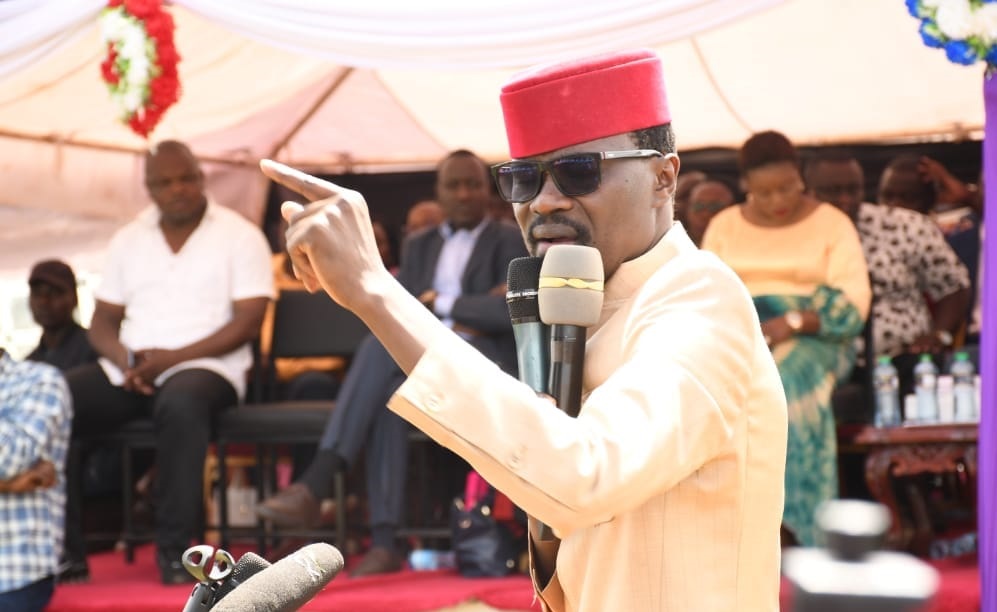
The National Cohesion and Integration Commission (NCIC) has summoned Kimilili MP Didmus Barasa over utterances he allegedly made in Sirisia, Bungoma County, on September 19, 2026.
The National Cohesion and Integration Commission (NCIC) has summoned Kimilili MP Didmus Barasa over utterances he allegedly made in Sirisia, Bungoma County, on September 19, 2026.
In a letter dated Tuesday, September 22, NCIC said Barasa spoke about leaders from the former Western Province who hold senior positions in government, including Principal Secretary, Cabinet Secretary, ambassador and parastatal chairperson positions.
The MP said such leaders should understand that their appointments represented an opportunity to use their positions to advance the interests of people from the region.
Barasa then gave an example of how he believed a person from Western Kenya could favour a candidate from the region during a job interview while disadvantaging a candidate from another part of the country.
According to the remarks cited by NCIC, the MP said that if an interview panel included a person from the former Western Province and a candidate from Nyeri named Kamau appeared before the panel wearing a good suit and speaking fluent English, the panelist could deliberately find reasons to reject the candidate.
Read More
Barasa said the panelist could write in the interview summary that the candidate did not have the required demeanour for the position and had therefore failed the interview.
He contrasted this with a candidate from Mount Elgon or another part of the Western region whose name was Kiprotich, Wanyonyi, Nekesa or Anami.
According to the MP's remarks, the panelist would recognise such a candidate as belonging to the local community and could recommend them for the position despite shortcomings in their appearance or English.
He said this could happen even if the candidate was wearing an unsuitable suit or did not speak good English, with the panel instead declaring that the candidate was the person the institution had been looking for.
Barasa said such practices were among the reasons the community was falling behind.
NCIC said it was investigating the utterances and subsequently summoned the MP to appear before the Commission for a cohesion inquiry.
"Pursuant thereto, you are hereby summoned pursuant to sections 13, 25, 27, 28, 29, 30, 56, 59, 60, 61, 62 and 63 of the National Cohesion and Integration Act, to appear before the Commission at its offices situated on the 17th Floor, Britam Tower, Upper Hill, Nairobi on 29th September, 2026 at 10:00 am for a Cohesion Inquiry into the matter under investigation," the letter read.

NCIC said the inquiry would give Barasa an opportunity to respond to the matter, provide evidence and make representations before NCIC reaches a determination.
"At the inquiry you will be afforded an opportunity to respond, adduce evidence and make any representations you wish the Commission to consider. The inquiry will constitute your opportunity to be heard before the Commission makes its determination on the material before it," the letter added.
NCIC also warned the MP that failure to attend the inquiry could lead to arrest and further proceedings.
"Penal notice: take notice that failure to appear in person at the aforementioned place, date, and time, will lead to warrants of arrest being issued for your arrest and production before the Commission and/or the institution of criminal and/or contempt proceedings against you," the letter concluded.
This comes weeks after Public Service Cabinet Secretary Geoffrey Ruku appeared before NCIC to clarify remarks that had been alleged to be inflammatory.
In a statement on Tuesday, September 1, Ruku said he honoured the summons as part of his responsibility as a public official and out of respect for the Constitution and constitutional bodies.
He explained that his appearance before the commission was intended to provide clarification regarding the remarks in question.
"In fulfilment of my patriotic duty and respect for our Constitution and constitutional bodies, today I appeared before NCIC to clarify my remarks that were alleged to be inflammatory," he said.
Ruku defended his remarks on the political and development history of Mt. Kenya East, arguing that the region had experienced marginalisation for decades despite consistently supporting leaders from Mt. Kenya West.
"It is a fact Mt. Kenya East has been marginalised for six decades while supporting Mt. Kenya West leaders. It is also a fact that Mt. Kenya East has faithfully and unconditionally supported Mt. Kenya West’s presidency bids," he added.
Ruku, however, stressed that the grievances raised by Mt. Kenya East did not amount to a rejection of the Constitution, saying the region and its leaders continued to recognise their constitutional rights to peacefully raise concerns.
"Nevertheless, Mt. Kenya East, its people and leaders respect Kenya’s constitution, and freedoms to assemble and present grievances and petitions peaceably," he further said.
Ruku further rejected any suggestion that the region's demands had threatened national peace or cohesion, maintaining that calls for development and recognition were legitimate grievances arising from what he described as decades of being denied their due.
"We have not breached peace or cohesion in the country by demanding respect and what we are owed as development for the past decades," he concluded.
-1777443173.jpg)
-1783602407.jpg)