Editor's Review
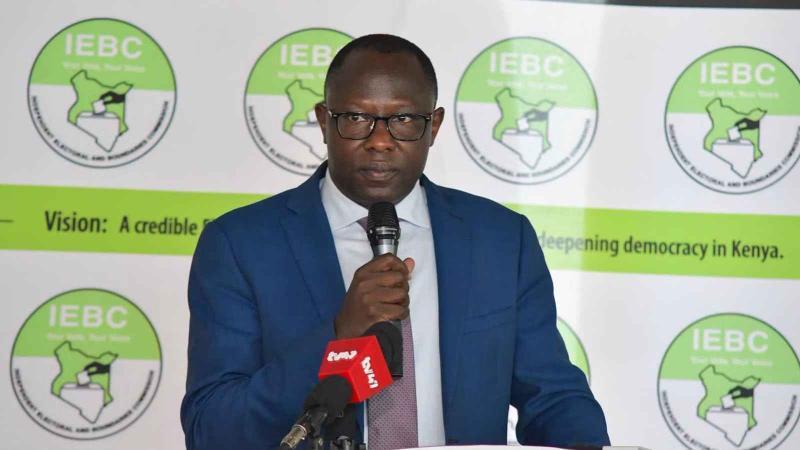
IEBC has announced plans to establish inclusion committees targeting organisations representing youth, women, Persons with Disabilities (PWDs) and ethnic minorities.
The Independent Electoral and Boundaries Commission (IEBC) has announced plans to establish inclusion committees targeting organisations representing youth, women, Persons with Disabilities (PWDs) and ethnic minorities.
In a notice on Thursday, October 1, the commission said the initiative would involve registered State and Non-state organisations serving the identified groups and seeking to partner with IEBC in reaching out to their respective constituencies.
IEBC has called on eligible organisations to register with the commission through their respective county offices before the deadline.
"This is a call to all registered State and Non-state organizations serving the Youth, Women, Persons with Disabilities (PWDs) and Ethnic Minorities and who wish to partner with IEBC in reaching out to these groups to register with respective IEBC County Offices by Friday 30th October 2026 at 5.00 PM," the notice read.
IEBC outlined the documents and information that organisations must provide during the registration process.
Read More
Organizations are required to provide a Registration Certificate, KRA PIN Certificate, the category of the organisation such as Youth, Women, PWDs, or Ethnic Minority, contact details including the name, phone number and email of the contact person, the physical address including the building and street, and the county of operation.
IEBC said the registration process would pave the way for the formation of teams representing the different categories of organisations at the county level.
The commission said the teams would be coordinated through its county election management structures, with team leaders selected after registration.
"Upon Registration, each category will appoint their team leaders under the guidance of respective IEBC County Election Manager," the notice added.

Elsewhere, this comes days after IEBC dismissed claims that foreigners are being registered as voters in Kenya.
In a statement on Sunday, September 27, the Commission said it was concerned about what it described as misleading and unverified information being circulated through mainstream and social media platforms regarding its constitutional mandate and preparations for the upcoming General Election.
"The Independent Electoral and Boundaries Commission (IEBC) notes with grave concern the continuous dissemination of misleading and unverified information by sections of the media, groups and individuals, through mainstream and social media platforms, concerning its constitutional mandate and ongoing preparations for the upcoming General Election," the statement read.
The IEBC said some reports concerning the Continuous Voter Registration (CVR) exercise had been sensationalized, warning that such reporting could undermine public confidence in the electoral process.
"In particular, the Commission has witnessed sensationalized reports and unsubstantiated stories regarding the Commission’s Continuous Voter Registration (CVR) exercise which is being conducted across all the 290 constituencies throughout the entire Republic. Such reporting risks misleading the public and undermining confidence in the electoral process," the statement added.
The IEBC specifically addressed allegations involving electoral malpractice, illegal transfers of voters and the registration of foreigners, saying no credible evidence had been submitted to support the claims.
"The Commission reiterates that the stories on electoral malpractice or illegality relating to the registration of voters, illegal transfers of voters and alleged registration of foreigners as voters in Kenya and abroad remain unsubstantiated and untrue.
"To date no entity, organization, group or individual has submitted to the Commission any credible evidence supporting any such allegations of illegality and malpractice," the statement further read.
The IEBC, however, said it would act on any credible evidence presented and outlined possible consequences where wrongdoing is established.
"Where credible evidence is presented, the Commission shall take appropriate action including disciplinary action, investigation into criminal conduct and where culpability is established, criminal prosecution and punishment shall be undertaken in accordance with the laws of Kenya," the statement noted.




-1790861251-md.png)