
Editor's Review
The Nairobi County Government has approved the implementation framework for the first phase of the Nairobi Metropolitan Mass Rapid Transit System (NMRTS).
The Nairobi County Government has approved the implementation framework for the first phase of the Nairobi Metropolitan Mass Rapid Transit System (NMRTS), paving the way for the development of an underground rail network through the CBD.
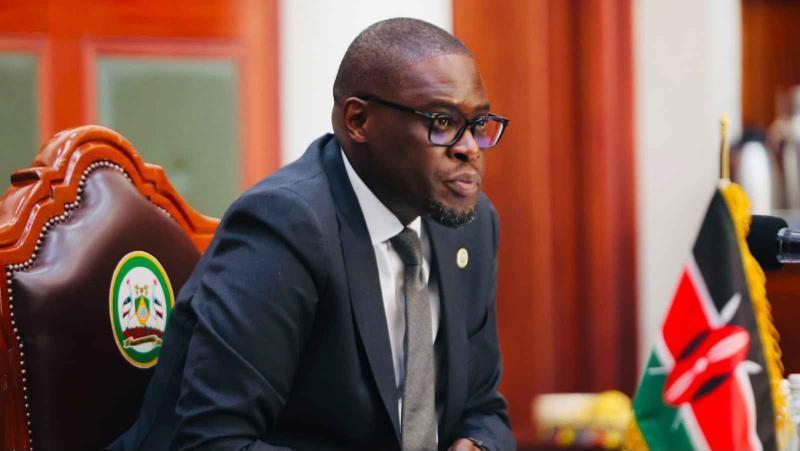
According to a dispatch from the 90th County Executive Committee meeting chaired by Governor Johnson Sakaja, the first phase will focus on two major corridors, including the underground CBD rail core and the Eastlands Line.
Sakaja said the approval marked a shift from planning to the actual implementation of a transport project aimed at addressing Nairobi's persistent traffic congestion and improving the daily commuting experience.
"For far too long, the people of Nairobi, particularly our hardworking commuters from Eastlands and across the metropolitan area, have lost precious hours in traffic jams that slow down our economic growth," he said.
Sakaja said the county had now committed itself to delivering a modern transport system capable of moving large numbers of commuters efficiently while improving the city's economic and environmental outlook.
Read More
"Today, we are moving from planning to implementation. The approval of Phase I of the NMRTS is our commitment to delivering a modern, fast, safe and dignified public transport system.
"By integrating an underground CBD core with high-capacity links to Eastlands, we will unlock Nairobi’s economic potential, lower the cost of transport and build a cleaner, greener and world-class city," he added.

Under the approved plan, the first phase will prioritise the Eastlands-CBD connection, with the project expected to cut travel times for hundreds of thousands of commuters.
The underground section will also help reduce pressure on roads by incorporating integrated transit terminals linking rail services with pedestrian and non-motorised transport facilities.
The county government further expects the project to generate thousands of employment opportunities during its construction and operational phases.
It is also projected to contribute to reduced carbon emissions and support Nairobi's wider sustainability and climate objectives.
Plans for the second phase of the mass transit system are also already in progress.
The expansion is expected to cover Westlands, Ngong Road and Lang’ata, while extending services to growing commuter populations in Ongata Rongai, Ngong and Nairobi’s western corridor.
The completed NMRTS network will be connected to Nairobi’s Bus Rapid Transit (BRT) system through strategically positioned interchange stations.
The integration is expected to create a coordinated, high-capacity public transport network serving different parts of the city.
This comes a day after Sakaja dismissed claims that parking charges in the capital have been increased.
In a notice on Monday, July 20, the administration described reports of a parking fee hike as false, stating that the current rates continue to apply.
According to the county, the existing daily parking charges remain at Ksh300 for saloon cars, Ksh500 for vans and pick-ups, and Ksh1,000 for lorries of up to five tonnes, canters and minibuses.
The county also highlighted the option of purchasing seasonal parking tickets, which it says offer savings for frequent users.
A monthly seasonal ticket costs Ksh5,000 for saloon cars, Ksh6,000 for vans and pick-ups, and Ksh12,500 for lorries, canters and minibuses.
Motorists have also been reminded that parking payments continue to be made through the county’s existing platforms, including the *USSD code 647# and the Nairobi Pay system.



 (1)-1791708588-sm.jpg)
 (1)-1791175033-sm.jpg)