
Editor's Review
Katiba Institute has been promoting access to information through journalist training, engagement with county government officials and community representatives, and advocacy for constitutional safeguards.
Katiba Institute has been promoting access to information through journalist training, engagement with county government officials and community representatives, and advocacy for constitutional safeguards.
The organisation's initiatives have focused on helping public officers understand their legal obligations to disclose information proactively while equipping journalists with knowledge of their rights under the law.
Katiba Institute's founders recognised the media's important role in promoting transparency and accountability, noting that journalists needed a sound understanding of constitutional issues to report accurately on governance, public accountability and the exercise of power.
Training on Access to Information
One such initiative took place on September 5, 2024, when Katiba Institute partnered with Midrift Hurinet to host a meeting in Nakuru County focusing on access to information, particularly the proactive disclosure of public information.
Read More
The meeting brought together county officials, journalists and representatives of civil society organisations to discuss the importance of making government information accessible to the public.
During the engagement, Midrift Hurinet Executive Director Joseph Omondi challenged county officials to familiarise themselves with the relevant laws, including the County Governments Act. He noted that knowledge of the law was critical to the implementation of their various functions.
“Midrift Hurinet Executive Director, Joseph Omondi, challenged county officials to familiarize themselves with the relevant laws, including the County Governments Act. He noted that knowledge of the laws is critical during the implementation of various functions,” the institute said in a social media update.
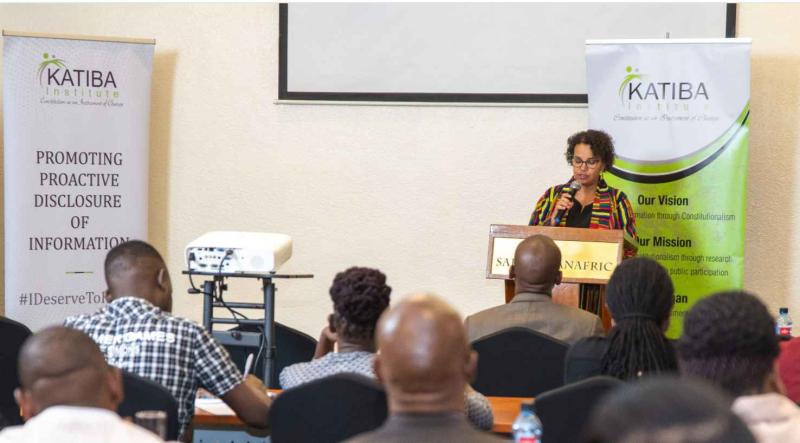
Katiba Institute continued its efforts on October 9, 2024, when it hosted a training workshop in Maralal targeting senior officials from Samburu County.
The workshop focused on proactive disclosure, encouraging public officers to provide relevant information without waiting for formal requests from journalists or members of the public.
Kevin Mabonga, who is the Head of Communications and Knowledge Management at Katiba Institute, highlighted the critical role journalists play in advancing access to information.
“Journalists are critical to advancing the right of access to information. They help bring public interest issues to light, inform citizens, and hold those in power accountable. For journalism to fulfil this role, public institutions must embrace proactive disclosure and provide timely, accurate and accessible information.
“Access to information is not merely a legal obligation; it is essential to public participation, transparency and accountable governance,” Mabonga said while speaking to Nairobileo.co.ke

On January 23, 2025, the organisation convened a stakeholder meeting in Nairobi to examine public officials' compliance with access to information laws.
Community leaders, journalists, and county government officials participated in the engagement, which also allowed participants to share their experiences of providing and obtaining public information.
Katiba Institute used the meeting to emphasise access to information's role in protecting democratic institutions and promoting a culture of openness and accountability.
“In the spirit of the KI slogan, ‘Constitution as an instrument of change,’ our rallying call is that we continuously apply access to information and other means to defend our democracy and foster a culture that values openness, truth, and accountability,” Katiba Institute Executive Director Nora Mbagathi said during the meeting.
The institute sustained its engagements in Nakuru County on February 5, 2025, when it brought together county government officials, civil society representatives and community members to discuss compliance with access to information requirements.
The engagement formed part of broader efforts to ensure that public institutions understood their obligations and that communities could effectively exercise their right to obtain information concerning government activities.
On September 16, 2025, Katiba Institute partnered with the Office of the Ombudsman to engage Nairobi County Government officials on their obligation to disclose information proactively.
The meeting was held ahead of the 2025 International Day for Universal Access to Information.
Simon Nzioka from the Office of the Ombudsman led a session examining the legal responsibilities of county governments in making information available to the public.
The engagement highlighted the importance of complying with access to information requirements to improve transparency and enable citizens to hold public institutions accountable.

Presidential Term Limits
Beyond access to information, Katiba Institute has also raised concerns about constitutional safeguards and presidential term limits, particularly in the East African region.
The organisation’s work on presidential term limits seeks to address developments in which constitutional changes have enabled leaders to extend their stay in office, sometimes by removing restrictions on the number of terms they can serve or changing age requirements for presidential candidates.
Former Katiba Institute Executive Director Christine Nkonge noted that the developments had prompted the organisation to initiate discussions on constitutional safeguards and mechanisms for limiting and controlling the exercise of political power.
“The reason we are undertaking this project, in recent years, there have been instances in Africa and beyond where presidential term limits have been changed, paving the way for leaders to remain in power indefinitely.
“In some cases, age limits for presidential candidates have also been removed, allowing individuals to run for the presidency regardless of their age,” she stated.
Katiba Institute founder Professor Yash Pal Ghai also highlighted the importance of ensuring that access to state leadership was not restricted to a small group of individuals or communities.
He argued that democracy required equal treatment and fairness in the distribution of opportunities to participate in government.
Ghai warned that political systems dominated by a few individuals or groups could not fully reflect democratic principles.
“When we have a situation where only a handful of people or groups can secure positions in state offices, it is difficult to describe the country as truly democratic.
“If we want a democratic country where everyone is treated equally, and every community is treated fairly, then we must address these challenges. Otherwise, we will not have a democracy that we can genuinely be proud of,” he said.
Katiba Institute founder Jill Ghai, meanwhile, raised concerns about the use of referendums to approve constitutional amendments that enable political leaders to remain in office.
She emphasised the need for civil society organisations to educate citizens about constitutional principles and the importance of protecting democratic institutions.
“It is concerning to see how frequently, around the world, referendums are used to approve constitutional changes that allow individuals to remain in office,” she said.

These concerns have since informed Katiba Institute’s sustained efforts to defend presidential term limits and strengthen democratic accountability in Kenya and across Africa.
Since 2019, the organisation has pursued this agenda through its Presidential Term Limits Project, engaging civil society organisations, young people and the media to build public understanding of the role of term limits in preventing excessive concentration of power, promoting leadership renewal and protecting constitutional democracy.
The Institute’s engagement has extended beyond public education in Kenya to regional conversations on constitutional safeguards.
In 2019, it participated in a high-level regional engagement on presidential term limits in Niamey, Niger, followed by another in Gaborone, Botswana, in 2022.
The importance of these safeguards also came into sharp focus in Kenya in 2024, when Nandi Senator Samson Cherargei sponsored a proposed constitutional amendment seeking to extend the terms of the President and other elected leaders from five to seven years.
The proposal attracted widespread public opposition, with more than 121,000 written memoranda reportedly submitted to the Senate rejecting the Bill during the public participation process.
While the public mobilisation was driven by the collective efforts of Kenyans and various organisations, it reinforced the relevance of the issues Katiba Institute had been advancing through its presidential term limits advocacy, particularly the need for sustained civic education, meaningful public participation and collective action to protect democratic gains.
"Presidential term limits are not merely constitutional provisions; they are essential safeguards for democratic accountability, leadership renewal and the prevention of excessive concentration of power. Since 2019, our work at Katiba Institute has focused on strengthening public understanding of why these safeguards matter, engaging civil society, young people and the media, and contributing to regional conversations on protecting constitutionalism,” Kevin Mabonga, the Presidential Term Limits Project Lead at Katiba Institute, said.

He added, "The overwhelming public opposition to the proposed extension of terms for elected leaders in 2024, reflected in the more than 121,000 memoranda submitted to the Senate, demonstrated the importance of an informed and engaged citizenry. While this response was the result of collective efforts by Kenyans and many organisations, it reaffirmed a fundamental principle: the Constitution belongs to the people, and its safeguards must not be weakened to serve the interests of those in power. Our experience reinforces the need for continued civic education, public participation and collective action to defend democratic gains.”
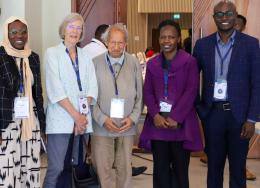
In 2026, Katiba Institute continued building on this work by hosting a Regional Term Limits and Debt Symposium in Nairobi.
The symposium brought together discussions on constitutional safeguards, democratic governance, public debt and accountability, highlighting the connections between the protection of democratic institutions and responsible governance.
Through its work between 2019 and 2026, the Institute has contributed to wider efforts to strengthen awareness of presidential term limits through sustained stakeholder engagement, public education and regional dialogue.
The public response to the 2024 amendment proposal illustrated the importance of citizen participation in protecting constitutional safeguards, while the 2026 symposium provided another platform for advancing discussions on term limits, public debt and accountable governance.
-1789385357-md.jpeg)