
Editor's Review
Some of the other countries facing partial restrictions include Gambia, Nigeria, Senegal, Zambia, and Zimbabwe.
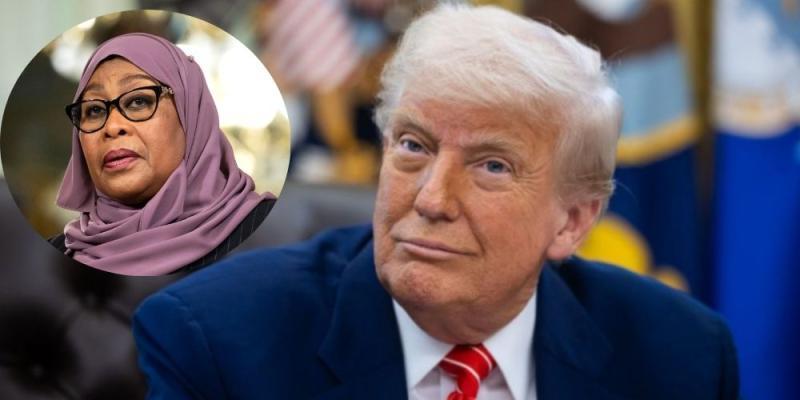
President Donald Trump has signed a proclamation imposing travel restrictions on nationals from multiple countries, with Tanzania among 15 nations facing new partial entry limitations based on security and immigration compliance concerns.
Tanzania has been placed under partial restrictions primarily due to its significant visa overstay rates, which demonstrate non-compliance with United States immigration laws.
According to the official Overstay Report, Tanzania recorded a B-1/B-2 visa overstay rate of 8.30 percent and an alarming F, M, and J visa overstay rate of 13.97 percent, figures that raised red flags for U.S. immigration authorities.
The partial restrictions on Tanzania are part of a broader effort by the Trump administration to address what it describes as persistent deficiencies in screening, vetting, and information-sharing that pose potential national security and public safety threats to the United States.
The proclamation continues full restrictions and entry limitations on nationals from the original 12 high-risk countries established under the previous Proclamation 10949.
Read More
These nations, Afghanistan, Burma, Chad, the Republic of the Congo, Equatorial Guinea, Eritrea, Haiti, Iran, Libya, Somalia, Sudan, and Yemen, remain subject to the strictest entry controls.
The new proclamation significantly expands the list of countries facing complete entry bans. Five additional nations have been added to the full restrictions category based on recent security analysis: Burkina Faso, Mali, Niger, South Sudan, and Syria. These countries join the original list due to demonstrated severe deficiencies in their vetting capabilities and information-sharing protocols.

Additionally, individuals holding Palestinian Authority-issued travel documents now face full restrictions and entry limitations under the new proclamation.
Two countries that were previously subject to only partial restrictions have been upgraded to full restrictions with comprehensive entry limitations: Laos and Sierra Leone.
Four countries from the original proclamation continue to face partial restrictions: Burundi, Cuba, Togo, and Venezuela. However, the scope of partial restrictions has expanded dramatically, with 15 additional countries now added to this category.
Besides Tanzania, the new countries facing partial restrictions include: Angola, Antigua and Barbuda, Benin, Cote d'Ivoire, Dominica, Gabon, The Gambia, Malawi, Mauritania, Nigeria, Senegal, Tonga, Zambia, and Zimbabwe.
In a rare positive development, Turkmenistan has seen its non-immigrant visa ban lifted after engaging productively with the United States and demonstrating significant progress.
The proclamation outlines several key justifications for the expanded travel restrictions.
According to the White House, many of the affected countries suffer from widespread corruption, fraudulent or unreliable civil documents, and criminal records, as well as nonexistent birth registration systems, all of which prevent the accurate vetting of travelers.
Some nations refuse to share passport exemplars or law enforcement data with U.S. authorities. In contrast, others permit Citizenship-by-Investment schemes that the administration argues conceal identities and bypass vetting requirements and existing travel restrictions.
High visa-overstay rates and refusal to repatriate removable nationals demonstrate what the proclamation describes as disregard for U.S. immigration laws and place undue burden on American enforcement resources.
Furthermore, terrorist presence, criminal activity, and extremist activity in several listed countries create instability and weaken government control, resulting in deficient vetting capabilities that pose direct risks to American citizens and interests.
Despite the broad scope of the restrictions, the proclamation includes several essential exceptions. Lawful permanent residents, existing visa holders, and individuals in specific visa categories such as athletes and diplomats are exempt from the entry limitations.
The proclamation also allows for case-by-case waivers for individuals whose entry serves U.S. national interests. However, it notably narrows broad family-based immigrant visa exceptions that officials claim carry demonstrated fraud risks.


 (1)-1791708588-md.jpg)
 (1)-1791175033-md.jpg)
-1791699761-md.jpg)

 (1)-1791708588-sm.jpg)
 (1)-1791175033-sm.jpg)