-1747120598-1755667473-xl.jpg)
Editor's Review
Maraga insisted that a pro-growth policy requires a clean government.
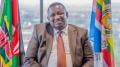
Former Chief Justice David Maraga has critiqued President William Ruto's governance approach, warning that Kenya is structurally moving away from the Singapore development model that the President frequently invokes.
In a statement released Thursday, December 18, Maraga argued that while President Ruto consistently tells Kenyans they are on track to becoming the "Singapore of Africa," the comparison is both attractive and deeply misleading.
"Singapore did not become Singapore by accident, slogans, or PR. It became Singapore through discipline, integrity, and leadership that treated public resources as sacred and corruption as an existential threat," Maraga wrote.
The 2027 Presidential aspirant emphasized that Kenya under the current administration is moving in the opposite direction.
"What Singapore's leaders understood, and President Ruto does not," Maraga wrote in his statement, is that a pro-growth policy requires a clean government, that the rule of law is an economic asset, and that leadership requires personal restraint and institutional discipline.
Read More
"These are precisely the values that President Ruto lacks, and precisely the values our president must have," he added.
Maraga emphasized that Kenya's challenge today is not a lack of ideas or talent. It is a lack of disciplined, ethical leadership that treats public office as a trust, corruption as an existential threat, and national resources as sacred.
Maraga outlined five foundational principles that drove Singapore's transformation, contrasting each with Kenya's current trajectory.
First, ruthless anti-corruption discipline. In Singapore, corruption ended careers and destroyed reputations regardless of rank. Ministers faced investigation, prosecution, and removal without hesitation.
Second, fiscal restraint and long-term planning. Singapore treated debt as a tool of last resort, not a governing strategy. For decades, it ran prudent budgets, accumulated national reserves, and funded development from productivity and savings rather than deficit financing.
Third, a disciplined and competent government. The Singaporean state was lean, professional, and performance-driven. Ministers were few, bureaucracies streamlined, and public service promotions tied to merit and outcomes, not political loyalty.
Fourth, zero tolerance for waste. Public money was regarded as sacred. Extravagance, duplication, and inefficiency were treated as forms of betrayal, not perks of office.
Fifth, internal wealth creation over labour export. Singapore invested heavily in skills, technology, and industry, enabling its citizens to prosper at home. Exporting labour was never confused with economic success.

Maraga argued that Kenya today exhibits almost none of these defining traits, detailing five critical failures.
Debt as a governing philosophy. When President Ruto took office, Kenya's public debt stood at approximately Ksh 8.6 trillion. By late 2025, it will have breached Ksh 12 trillion, marking an increase of close to 40 percent in under three years.
A political class that eats first. Kenya has developed one of the top-heaviest and expensive political systems in the world relative to its income level, Maraga observed. While most citizens struggle with rising costs of living, unemployment, and shrinking opportunities, the political and senior bureaucratic class enjoys world-class remuneration, travel, and benefits.
Corruption rewarded, not punished. In Singapore, corruption ended careers. In Kenya, Maraga asserted, corruption builds them. Individuals facing serious corruption allegations, active investigations, or unresolved audit queries continue to be appointed or maintained in positions of influence, assisted to control audit institutions and win elections.
Exporting youth as economic policy. The current government now actively promotes the export of its people as a development strategy, Maraga noted.
The critique comes a few weeks after President Ruto's November 20 State of the Nation address, where he outlined ambitious plans to transition Kenya into a first-world country, specifically modeling Singapore, Japan, South Korea, and Malaysia.
The President spoke of bold infrastructure projects potentially costing over Ksh 5 trillion, to be funded through novel mechanisms including a National Infrastructure Fund and a Sovereign Wealth Fund, rather than traditional debt or additional taxes.
His ten-year vision includes dual carriageways for over 2,500 kilometers of highways, tarmacking 28,000 kilometers of roads, completing the Standard Gauge Railway to Malaba, and constructing at least 50 mega dams alongside hundreds of smaller dams to bring 2.5 million acres under irrigation.
President Ruto stated that seed funding would come from natural resource revenues and proceeds from privatization of national assets, positioning the funds as, "a generational strategy to preserving value, mobilizing capital, accelerate delivery, and ensure Kenya becomes stronger, wealthier, and more competitive."
However, skepticism has emerged about the viability of these plans given Kenya's current economic challenges, including high debt servicing costs that consume the majority of government revenue, and credit ratings from major agencies that reflect concerns about fiscal sustainability.
-1791918941-md.jpeg)
-1791918941-sm.jpeg)