
Editor's Review
Kenya has recorded more than 1,600 femicide cases in the last three years, with Nairobi and Meru counties emerging among the worst-affected regions.
Kenya has recorded more than 1,600 femicide cases in the last three years, with Nairobi and Meru counties emerging among the worst-affected regions.
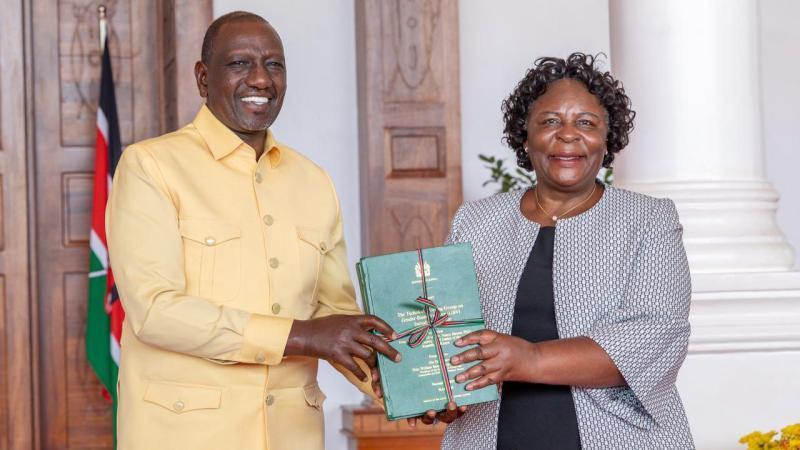
The revelations are contained in the Report of the Technical Working Group on Gender-Based Violence (GBV), Including Femicide, presented to President William Ruto after sustained public pressure over the growing number of women killed in violent circumstances.
"Over the 2022–24 period, a total of 1,639 cases involving the killing of women were recorded between 2022 and 2024. This represents a 10% rise in reported femicide between 2022 and 2024," the report read.
An analysis of police data shows that Nairobi, Meru and Nakuru counties consistently recorded the highest number of cases during the period under review.
"The high number of femicide cases reported in Nairobi, Meru, and Nakuru counties in 2023 and 2024 can be attributed to socio-cultural dynamics and varying levels of institutional capacity," the report added.
Read More
The report cautioned that counties reporting zero cases may not necessarily be safer, warning that gaps in reporting and documentation remain widespread.
It further establishes that most femicide cases occur within domestic or familiar settings, with perpetrators often known to their victims.
"The data shows that in 77% of cases, killings were committed by a person known by the victim," the report indicated.
In addition, women aged between 30 and 44 years were found to be the most affected group, a pattern linked largely to intimate partner violence and marital conflict.
However, the taskforce raised alarm over the increasing vulnerability of younger victims.
"Cases among adolescent girls aged 15-17 had a 4% increase, highlighting growing risks for teenage girls," the report further read.

Despite the scale of the killings, the report found that femicide remains legally unrecognised in Kenya, limiting accountability and prevention.
"Kenya lacks a clear legal definition or stand-alone offence of femicide, leading to inconsistent case handling and the inability to collect meaningful data for prevention, response and accountability," the taskforce noted.
As a result, the report stated that most cases are prosecuted as ordinary homicide, masking their gendered nature and weakening targeted state responses.
The report also placed blame on family and community interference, which it says frequently obstructs justice for victims.
"Families and community actors, who should play a critical role in protecting survivors, often obstruct justice by informally resolving GBV, including femicide cases, through clan elders or traditional systems," the report highlighted.
The report notes that such practices often involve pressure on families to withdraw complaints, allowing perpetrators to escape accountability.
Citing the rising death toll and systemic failures across law enforcement, prosecution and survivor protection, the taskforce urged the President to take decisive national action.
Among its key recommendations is an official declaration elevating the issue to emergency status.
"His Excellency the President [should] declare Gender-Based Violence (GBV), including Femicide as a national crisis to be given high-level attention and priority, emergency resources allocation and public attention," the report recommended.
The taskforce further called for the creation of a stand-alone femicide offence, the establishment of a national femicide database, stricter court timelines for GBV cases and penalties for those who interfere with investigations.
"The normalisation of gender-based violence, including femicide, is a direct threat to constitutional rights, community cohesion, and national development," the taskforce warned.
The 42-member taskforce, spearheaded by former Chief Justice Nancy Baraza, was appointed on January 10, 2025, to address the rising cases of GBV in the country.
Ruto tasked the 42-member team with identifying trends, hotspots, and causes contributing to GBV and Femicide as well as assessing the current legal and policy frameworks on GBV and femicide.
"The terms of Reference of the technical working group are to evaluate resource allocation, training levels, and operational effectiveness in managing prevention, response, support and investigations related to cases of GBV and Femicide.
"In furtherance of the objectives and purpose of the Technical Working Group, all State entities are directed to afford the Technical Working Group all necessary support and cooperation," Ruto said in a notice.


 (1)-1791178178-md.jpg)



 (1)-1791178178-sm.jpg)