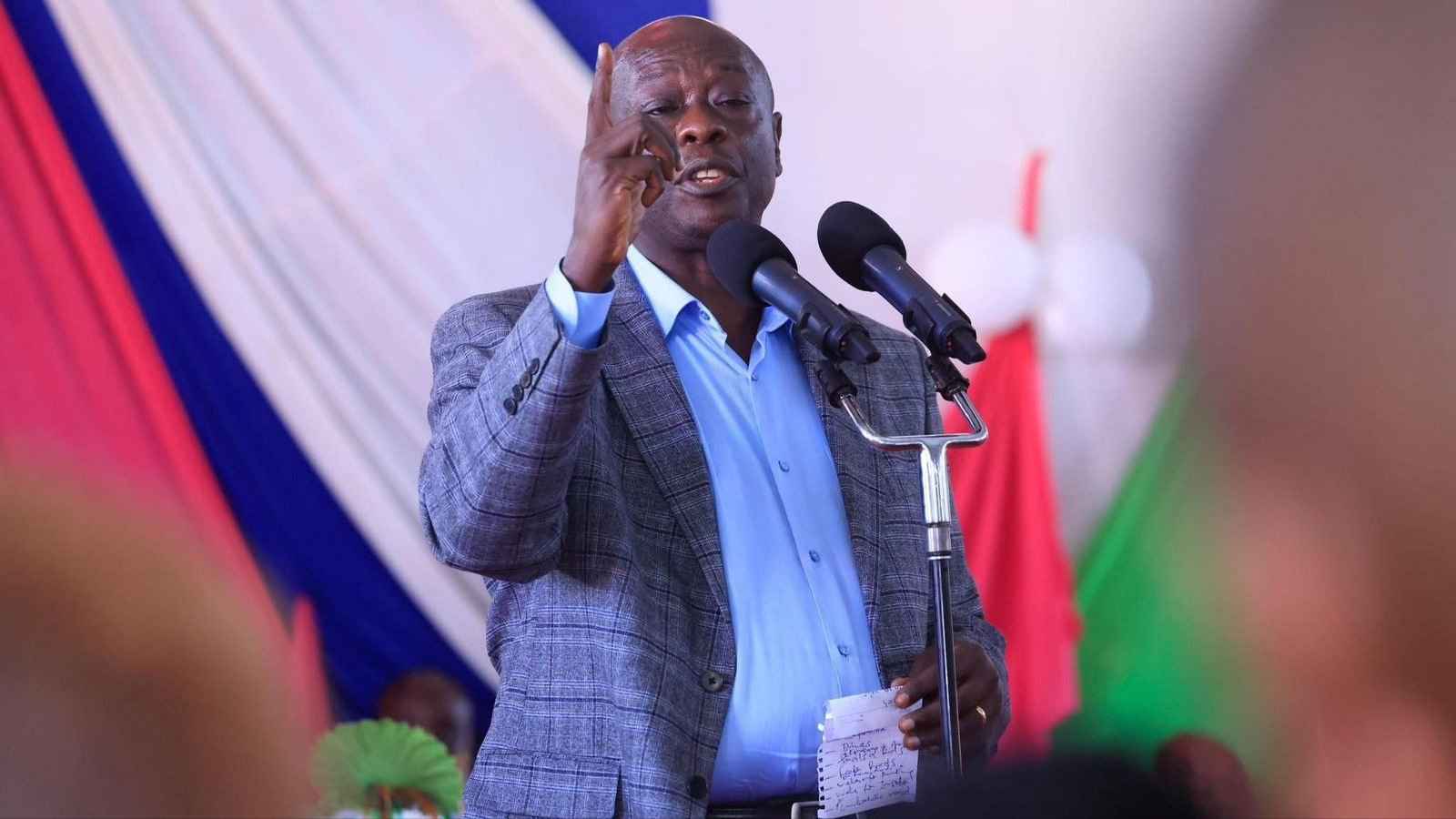
The Supreme Court has dealt a setback to former Deputy President Rigathi Gachagua after dismissing applications arising from the legal battles that followed his impeachment in 2024.
In a ruling delivered on Friday, January 30, the apex court dismissed applications filed by both Gachagua and the National Assembly, declining to halt proceedings or strike out any appeals before it.
According to the statement, the case traces its origins to the aftermath of Gachagua’s impeachment by the National Assembly in October 2024.
The court noted that the petitions raised weighty constitutional questions, prompting the empanelment of special High Court benches under Article 165(4) of the Constitution.
"The dispute arose in the aftermath of the impeachment of former Deputy President Hon. Rigathi Gachagua in October 2024. Following the impeachment in the National Assembly, six (6) petitions were filed in the High Court across the country by different parties, including Hon. Gachagua, challenging various aspects of the parliamentary proceedings," the statement read.
Read More
The court noted that the petitions raised weighty constitutional questions, prompting the empanelment of special High Court benches.
"The petitions raised significant constitutional questions and were required to be heard by special benches of more than one High Court judge. Consequently, the petitions were referred to the Hon. Chief Justice to constitute special benches of the High Court to hear and determine them in line with Article 165(4) of the Constitution," the statement added.
According to the statement, as the impeachment process progressed, a second wave of petitions was filed, including fresh applications by Gachagua seeking to block the Senate from confirming the impeachment and the swearing-in of Prof. Kithure Kindiki as Deputy President.
The controversy escalated when the Deputy Chief Justice empaneled the same judges to hear part of the second cluster while the Chief Justice was away, a move Gachagua challenged.
"As the events unfolded, a second cluster of petitions was filed, including new petitions by Hon. Gachagua and others seeking to block the Senate’s confirmation of the impeachment and the swearing-in of Prof. Kithure Kindiki as the Deputy President.
"It was this second round of empanelment by the Hon. Deputy Chief Justice that sparked the dispute. Hon. Gachagua instituted two sets of challenges before the High Court," the statement further read.
Gachagua questioned both the authority of the Deputy Chief Justice to empanel the bench and the impartiality of the judges themselves.
"First, he contested the Deputy Chief Justice’s authority to empanel the bench, and in the second challenge, Hon. Gachagua sought the recusal of all three judges on the grounds of bias and conflict of interest," the statement explained.

The High Court dismissed both challenges in October 2024, a position partly overturned by the Court of Appeal, which ruled that only the Chief Justice has the authority to empanel High Court benches, save for exceptional circumstances.
That appellate finding prompted the National Assembly to move to the Supreme Court.
“The finding that the Deputy Chief Justice lacked authority to empanel the High Court bench precipitated the filing of SC Petition No. Eo32 of 2025, by the National Assembly, the appellant, before this Court," the statement noted.
The Supreme Court emphasized that the issue before it is narrow and does not touch on the substantive impeachment.
“For purposes of clarity, it is the empanelment that is in question in the appeal before the Supreme Court and not the challenge of the impeachment proceedings concerning Hon. Gachagua, which is still pending before the High Court," the statement read.
Before the hearing of the main appeal, both sides filed applications seeking to strike out parts of the case.
“After the institution of the appeal and cross-appeal before the Supreme Court, two applications were brought. The first is an omnibus application by Hon. Gachagua seeking an order of stay of the proceedings before the High Court… The second application is by the National Assembly, seeking to strike out Hon. Gachagua’s Notice of Cross-Appeal," the statement added.
As such, the court rejected both attempts, delivering a decisive blow to Gachagua’s bid to freeze the process.
"The first omnibus application by Hon. Gachagua is dismissed for the reasons that the Supreme Court can only stay proceedings before the Court of Appeal and not the High Court as prayed for," the statement explained.
Similarly, the National Assembly’s application failed.
“The second application by the National Assembly is dismissed for the reason that the cross appeal by Hon. Gachagua equally does not fall within the parameters of summary dismissal," the statement concluded.
Elsewhere, United Opposition leaders led by Gachagua and Wiper Party leader Kalonzo Musyoka on Friday marched to the Inspector General of Police Douglas Kanja’s office.
Other leaders who were in the match included PLP leader Martha Karua, former Public Service CS Justin Muturi, DAP-K leader Eugene Wamalwa, DCP deputy party leader Cleophas Malala, and former nominated senator Gloria Orwoba.
The opposition leaders began their march at Nairobi CBD before proceeding to Vigilance House, where IG Kanja’s office is located.
On Thursday, Malala wrote to the police boss informing him of the plan by the United Opposition leaders to visit him and formally submit their complaints.
“I write to formally notify you that the leadership of the United Opposition will visit your office on Friday, 30th January 2026, at 10:00 a.m., for the purpose of officially raising serious complaints and engaging in discussions on the way forward regarding the safety and security of opposition leaders and their supporters,” read part of the statement.
Malala said the visit is prompted by sustained attacks, harassment, and intimidation of opposition leaders and their supporters across the country.
“These incidents have been reported to various police stations and relevant commands; however, to date, no investigations, updates, or corrective actions have been communicated or undertaken by the National Police Service,” he added.
-1774248214.png)
-1774246851.jpg)