
Editor's Review
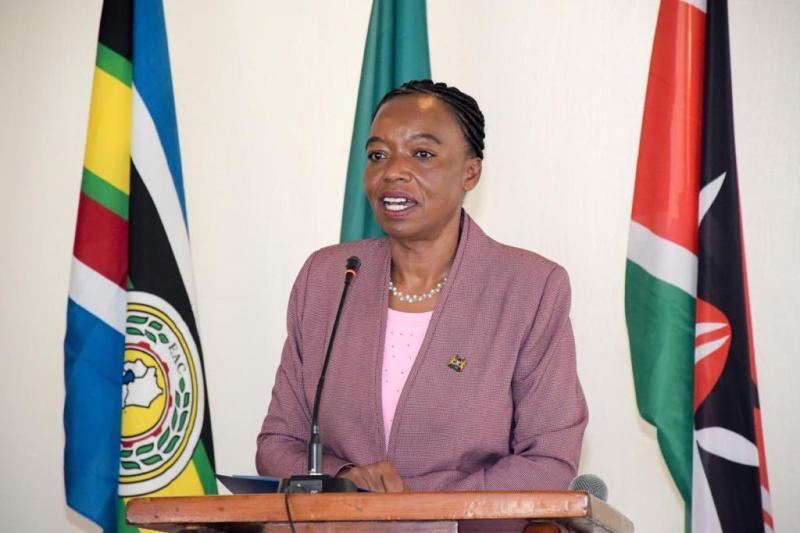
The United Nations Secretary-General António Guterres has appointed Kenyan diplomat and policy expert Monica Juma as Executive Director of the United Nations Office on Drugs and Crime (UNODC) and Director-General of the United Nations Office at Vienna (UNOV).
The United Nations Secretary-General António Guterres has appointed Kenyan diplomat and policy expert Monica Juma as Executive Director of the United Nations Office on Drugs and Crime (UNODC) and Director-General of the United Nations Office at Vienna (UNOV).
Juma will succeed Ghada Fathi Waly of Egypt, whom the Secretary-General thanked for her service to the organisation. Guterres also expressed appreciation to John Brandolino, Director of the Division for Treaty Affairs at UNODC, who will continue serving as Acting Executive Director of UNODC and Acting Director-General of UNOV until Juma formally assumes the roles.
The UNODC is the United Nations agency responsible for supporting member states in tackling issues such as illicit drugs, organised crime, corruption, and terrorism through research, policy guidance, and international cooperation.
Meanwhile, the United Nations Office at Vienna serves as one of the UN’s major headquarters, coordinating programmes and administrative functions for several UN bodies based in Vienna.

Read More
File image of UN Secretary-General António Guterres.
As Executive Director of UNODC and Director-General of UNOV, Juma will oversee the agency’s global efforts to address transnational crime and drug-related challenges while also managing the operations and strategic direction of the UN’s Vienna-based offices.
Juma currently serves as National Security Adviser to the President of Kenya, William Ruto, and Secretary to the country’s National Security Council, a position she has held since 2022. The UN described her as a senior strategic leader with extensive experience in public policy, diplomacy, security, and governance.
She has previously served in several senior roles within the Kenyan government, including Cabinet Secretary for Energy (2021–2022), Cabinet Secretary for Defence (2020–2021), and Cabinet Secretary for Foreign Affairs (2018–2020). In 2022, she also served as Acting Cabinet Secretary for Petroleum and Mining.

Earlier, she served as Principal Secretary in the Ministry of Foreign Affairs (2016–2018), the Department of Interior under the Ministry of Interior and Coordination of National Government (2014–2016), and the Ministry of Defence (2013–2014).
Her diplomatic career includes serving as Kenya’s Ambassador to Ethiopia and Djibouti between 2010 and 2013. During that time, she was also Kenya’s Permanent Representative to the African Union, the Intergovernmental Authority on Development (IGAD), and the United Nations Economic Commission for Africa (UNECA).
Beyond government service, Juma has held several academic and research positions. She previously served as Executive Director of the Research Africa Institute of South Africa (AISA) from 2008 to 2010 and as Executive Director of the Africa Policy Institute from 2006 to 2008.
She has also been an Adjunct Faculty Member at the African Centre for Strategic Studies at the National Defence University in Washington, D.C., since 2002, and earlier worked as a Senior Researcher and Policy Analyst at Safer Africa.
Juma holds a PhD from the University of Oxford in the United Kingdom and both a Master of Arts and Bachelor of Arts in Government and Public Administration from the University of Nairobi.
Juma's appointment comes weeks after the Court of Appeal of Kenya declined to suspend a High Court of Kenya ruling that declared the office of presidential advisers unconstitutional.
The appellate court rejected an urgent request by the Office of the Attorney General of Kenya seeking to halt the High Court orders while the government pursues an appeal.
On January 22, 2026, the High Court, through Justice Bahati Mwamuye, ruled that the creation of advisory offices for President Ruto and the appointment of 21 advisers violated constitutional principles, nullifying the positions and barring payments or official recognition linked to the offices.
The case was filed by Katiba Institute and lawyer Vincent Lempaa Suyianka, who argued the roles lacked a legal framework.



-1792071927-md.jpg)





-1792071927-sm.jpg)